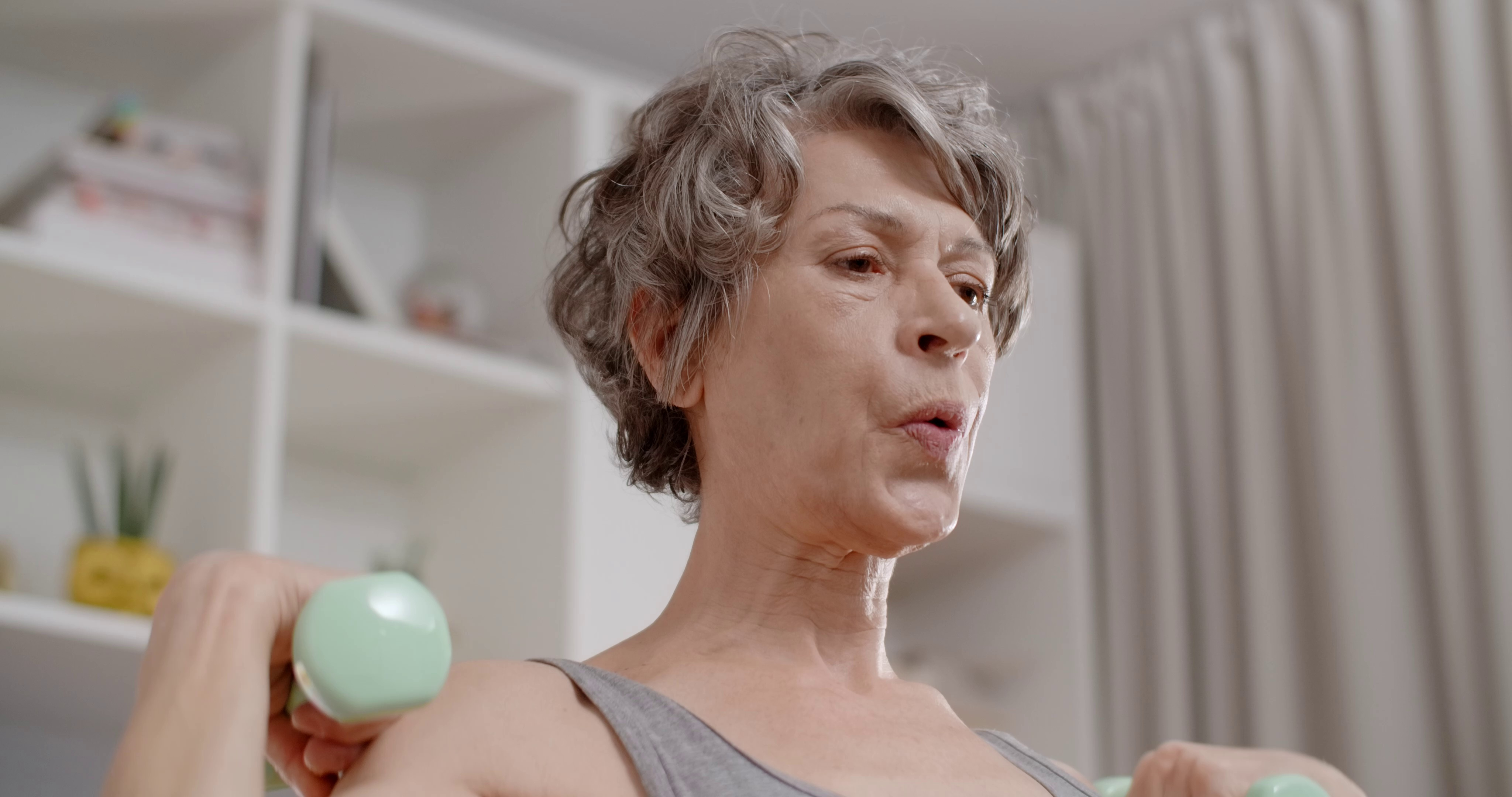
What's Actually Happening to Your Body During Perimenopause
Perimenopause is the transition into menopause — the years when your ovaries gradually reduce their output of oestrogen and progesterone. For most women, it begins in the mid-40s, sometimes earlier. It can last anywhere from 4 to 15 years.
The symptoms are not in your head. They are the direct consequence of a hormonal system that has regulated your metabolism, mood, sleep, body composition, and bone density for decades suddenly operating differently.
Oestrogen fluctuates and declines — and that's why joint pain, brain fog, and mood changes appear. Progesterone drops first, often years before oestrogen changes significantly — its loss drives the sleep disruption and heightened anxiety that often show up before the hot flushes everyone talks about. Cortisol regulation deteriorates too, which means your body gets worse at recovering from training.
So here's what tends to happen: the fitness program that worked well for you in your 30s stops working. The same training that left you energised and strong is now leaving you wiped out, injured, or unable to sleep.
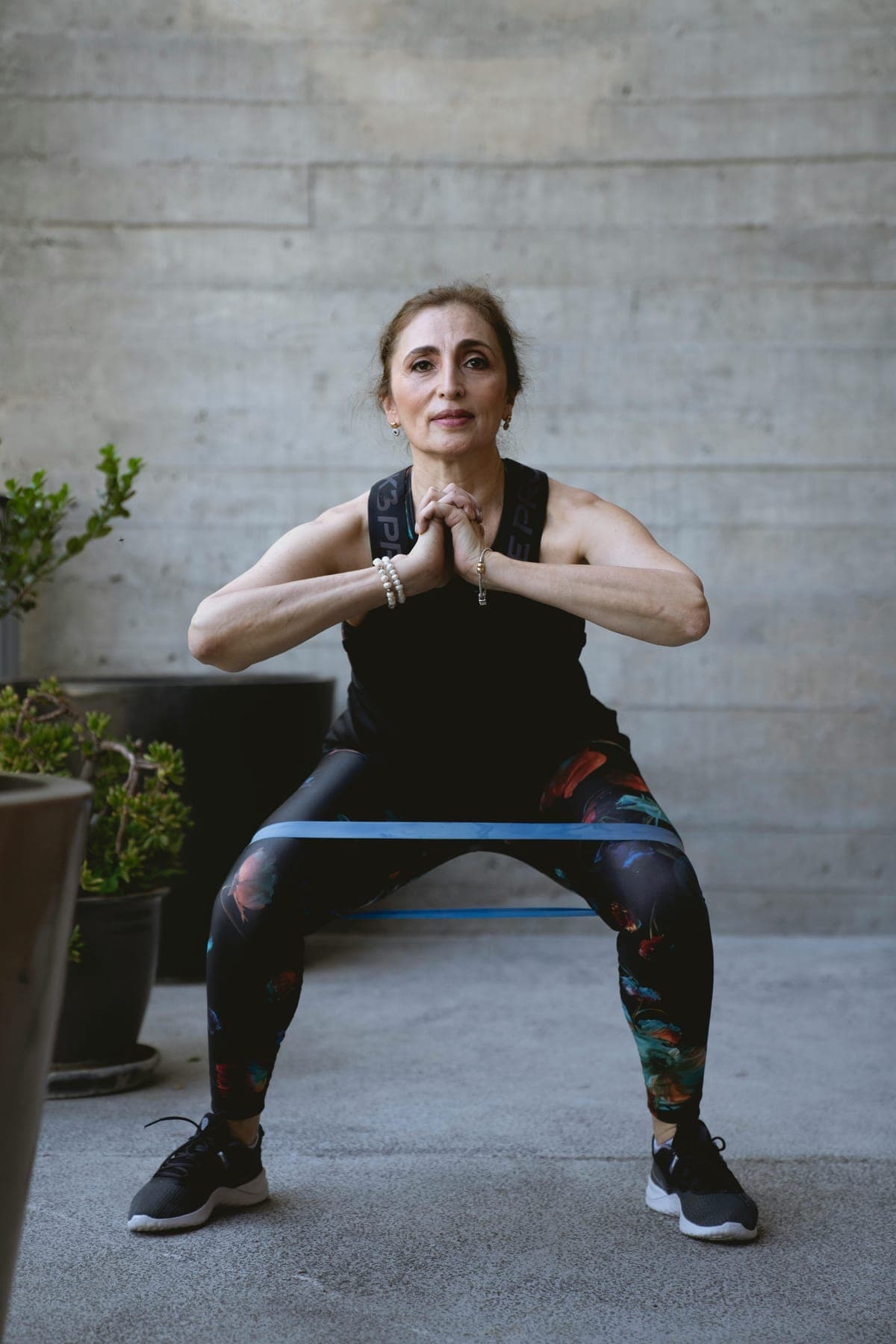
Why FitForHer Perimenopause Is Different
Most perimenopause fitness advice tells you to embrace the change and gives you the same workouts you did in your 30s with a few tweaks. Perimenopause isn't a logistical problem to be managed — it's a fundamental shift in your hormonal context, and your training needs to reflect that.
During perimenopause, three things start interacting badly: muscle loss accelerates, fat storage shifts toward your midsection, and your stress response gets harder to manage. These three don't operate independently — what you do to one affects the others. Training that only addresses one won't get you the results you want.
Every protocol in this program is drawn from peer-reviewed research on what actually works during the menopause transition — not just what sounds plausible.
The training is challenging, but it's designed to be sustainable. High-intensity work that pushes cortisol too high tends to backfire during perimenopause. This program gives you a real training stimulus without wiping out your recovery.
What You'll Get
Every program in the FitForHer library is built around the real physiological needs of the woman doing it — not a generic template with a life-stage label.
- Resistance training that actually counters the muscle loss that accelerates during perimenopause
- Weight-bearing exercise that helps maintain your bone density as oestrogen declines
- Training and nutrition timing built around how your metabolism actually works right now
- Programming designed to work with your cortisol levels, not strain them further
- Regular structured exercise that measurably reduces how severe your symptoms are
- Better insulin sensitivity and body composition as your hormones shift
- Improved clarity and focus from regular training and a consistent routine
- Progression that adapts as your hormonal environment changes over time
What the Program Covers
Resistance Training — The Non-Negotiable
Resistance training is the most important component of the Perimenopause program. The program uses a structured, phased loading approach that prioritises the muscle groups most at risk during the hormonal transition: the posterior chain, the hip extensors, and the upper back and shoulders.
Impact & Bone Loading
As oestrogen declines, bone loss accelerates. Impact loading is one of the most effective stimuli for maintaining bone density. The program incorporates appropriate impact loading as symptoms permit — beginning with low-impact variations and progressing as strength and symptom severity allow.
Stress, Sleep & Recovery
Sleep disruption is often the most disabling perimenopause symptom — and it directly impairs your ability to recover from training. The program includes specific guidance on training timing, sleep hygiene, and stress management practices. Morning training is prioritised over evening sessions.
Three Choices That Define Your Program
Every perimenopause program runs for either 6 weeks or 2 weeks — your call. You also choose your equipment level: no equipment needed, basics (dumbbells and resistance bands), or full gym. And more programs are added regularly as the library grows.
Frequently Asked Questions
Explore All Life Stages
FitForHer programs are built for every chapter of a woman's life.