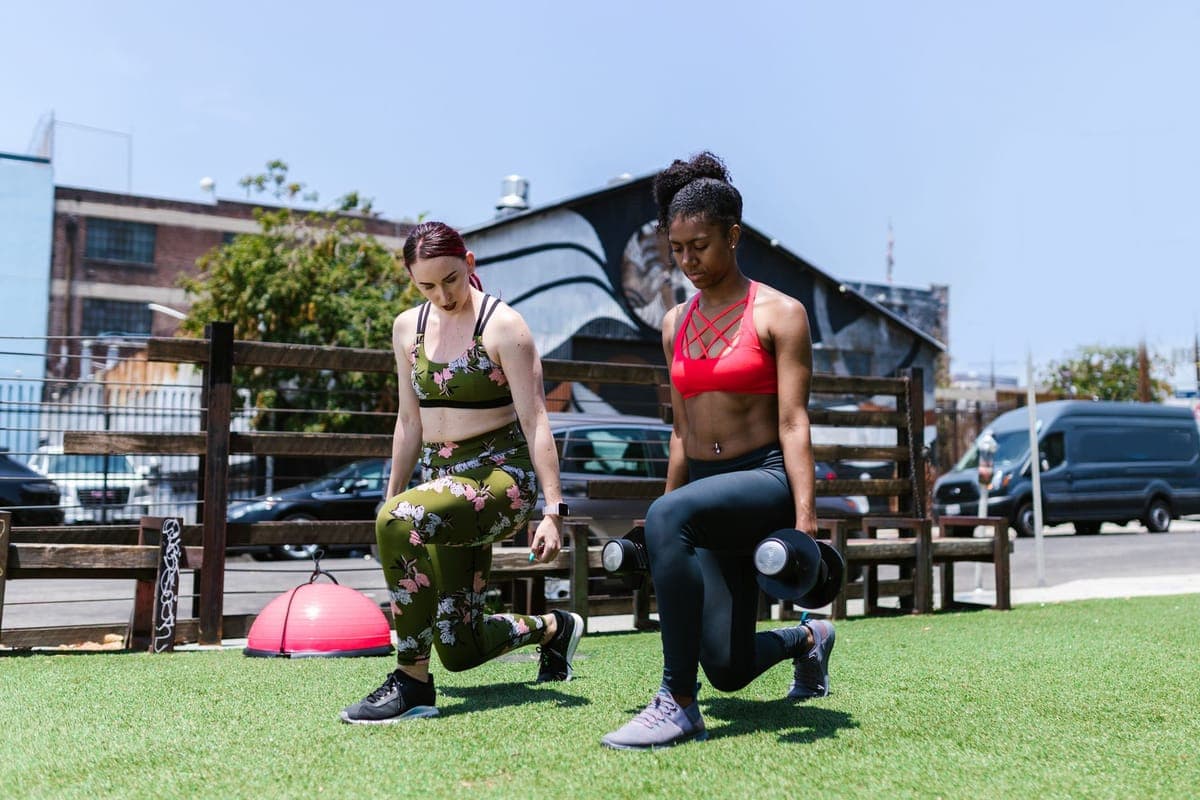
Picking up a heavy weight will not turn you into a bodybuilder overnight. Here is what the evidence actually says about women, muscle, and the bulky myth.
Will strength training make you bulky? Here's the straight answer
No, not in the way you have been told it will. The idea that picking up a heavy weight turns a woman into a bodybuilder overnight is one of the most stubborn myths in women's fitness, and it has been steering women away from one of the most useful forms of exercise for decades. Strength training builds muscle, yes, but the kind of muscle it builds is firm, functional, and slow to grow. Bulky, in the bodybuilding sense, requires years of deliberate training, a calorie surplus, and a hormonal environment most women simply don't have. Strength training, done well, makes you stronger. That is the headline, and it is worth repeating.
Why women and muscle are not a quick combination
The biological reason this myth has hung around for so long comes down to hormones. Women have about 10–20% of the testosterone levels of men, and testosterone is the primary driver of muscle hypertrophy, meaning meaningful increases in muscle size. With that hormonal ceiling in place, the way a typical woman's body responds to a strength session is fundamentally different from a man's. Her nervous system adapts, her tendons and bones strengthen, her coordination improves, and yes, some lean tissue is added, but the dramatic visible size change that men can experience in a few months is not on the table for most women without extreme, sustained intervention.
This is not a guess. The relationship between testosterone and muscle hypertrophy has been demonstrated in peer-reviewed research, and it is the reason sports medicine bodies like the American College of Sports Medicine have repeatedly stated that women cannot bulk up accidentally from moderate strength work. When you hear a woman say she "got bulky" from lifting, what usually happened is one of three things: she gained a small amount of muscle under a layer of unchanged body fat, her training was never specifically designed for hypertrophy, or she interpreted normal post-exercise water retention and bloat as permanent size gain.
What the evidence actually shows
Strength training produces measurable changes in women, but they are not the changes the myth predicts. Research consistently shows that women who lift weights two to four times a week within a balanced program gain strength, improve endurance, and develop leaner muscle without significant size increases. The word "leaner" matters here. Muscle is denser than fat, so a kilogram of muscle takes up noticeably less space than a kilogram of fat. As women add small amounts of muscle and either maintain or gradually reduce body fat through their training, clothes fit differently. Waistbands feel looser. Shoulders look more defined. That is not bulk. That is a body composition shift, and it is one of the most consistent outcomes in the exercise science literature.
There is also the metabolic piece. More muscle on your frame increases your resting metabolic rate, meaning your body burns more energy at rest than it did before. Strength training combined with cardiovascular work is widely recommended by exercise physiologists as the ideal pairing for sustainable body composition change, metabolic health, and long-term weight management. It is not a short cut, and it is not a fat-burning miracle, but it is the combination with the most robust evidence behind it.
The slow road to "bulky"
Let's talk about what actually has to happen for a woman to look "bulky" in the way the myth describes. Gaining a large amount of muscle mass is a slow process. It requires years of dedicated, progressive training, often five or more sessions a week, with carefully structured volume and intensity. It requires eating in a sustained calorie surplus, which means consistently consuming more energy than the body burns. It usually requires supplementation or, in some cases, pharmacological support, which falls outside what any responsible women's fitness program would recommend. None of this happens by accident. None of it happens because you deadlifted twice a week for a month.
What does happen is something more useful: stronger bones, better joint stability, and a body that holds up well into your 50s, 60s, and beyond. Weight-bearing exercise, which includes any strength work where your body supports a load, is one of the best-supported interventions for maintaining bone density and reducing fracture risk as oestrogen levels change. That is not a cosmetic benefit. That is a structural one, and it is one of the strongest arguments for lifting at every life stage.
How this looks across life stages
Strength training does not behave identically in your 30s, 40s, and 50s, and the way you train can shift across those decades. In your 20s and 30s, recovery is faster, and you can typically handle higher training volumes with less joint complaint. In your 40s, hormonal changes begin to affect how your body holds and uses muscle, and strength work becomes even more important as a counterbalance to natural age-related muscle loss. In your 50s and beyond, the bone-density and metabolic-rate benefits become the headline, and lifting heavier, rather than lighter, is what the evidence now supports for maintaining independence and reducing fall risk.
The myth about bulk does not respect life stages. A 28-year-old and a 54-year-old have both, at some point, been warned away from weights by someone who believed the myth. The warning is the same, but the actual risk is the same too: zero, unless you are deliberately training for a hypertrophy-focused outcome.
Common mistakes that keep the myth alive
A few habits make the myth feel true even when it isn't. First, training only with light weights in the belief that heavy weights cause bulk. In reality, lifting heavier weights within a challenging rep range is one of the most effective ways to build strength and muscle definition without increasing size, because heavier loads let you do fewer total reps and accumulate less training volume per session. Second, judging results by the scale. Muscle is denser than fat, so the scale may not move in the direction you expect even as your body composition improves. Third, eating in a way that actively prevents the body composition shift you want. You cannot out-train a calorie surplus, and if you are eating significantly more than you burn, any lean tissue you build will sit under additional fat, which can read as "bulk" even though the muscle component is modest.
The fourth mistake is comparing your week six to someone else's year six. Visible muscle development in women takes time, and the women you admire for their physiques have usually been training consistently for years, often with coaching, nutrition support, and recovery practices that go well beyond a standard gym membership.
What to do this week
If you have been avoiding strength training because of the bulky myth, this is your sign to start. Here is a practical, no-drama plan for the next seven days.
Book in three strength sessions this week, with at least a day between each. Pick full-body movements: a squat pattern, a hinge pattern (think deadlift or hip thrust), a push (chest press or push-up), a pull (row or lat pulldown), and a loaded carry. Choose a weight that feels challenging by the last three reps of each set, and aim for three sets of eight to twelve reps per movement. If you are new to lifting, start lighter and focus on form before adding load. If you have been lifting for a while, pick weights that genuinely challenge you for the full rep range, because heavier loads, used well, build strength without adding size.
Add two short cardio sessions, twenty to thirty minutes each, on the days between your strength work. Walking, cycling, swimming, or rowing all count. This pairing is what the evidence supports for body composition and metabolic health, and it is the combination most Australian sports medicine practitioners recommend.
Track how your clothes fit, not just what the scale says. Take a photo in the same lighting and outfit every two weeks. Notice how you feel moving through your day: easier stairs, heavier groceries, fewer aches. Those are the real markers of progress, and they are the ones that do not lie.
Finally, if you have a specific health concern, including anything related to pelvic floor function, bone density, or recovery after pregnancy, talk to your GP or a women's health physiotherapist before starting a new program. They can help you adapt strength work to your situation safely.
Educational content only. Not a substitute for medical advice. Talk to your doctor about your specific situation.
References
- Bregman S, Smith L. (2026). Physical activity levels and quality of life in osteoporosis patients.. Frontiers in sports and active living
- Zhou X, Yang N, Xi C, Ji J, Xu T. (2026). A network meta-analysis of the effects of different aerobic exercise prescriptions on bone density in osteoporosis patients.. Frontiers in endocrinology
Common Questions
Will strength training make women bulky?
Not in the way the myth suggests. Women have roughly 10 to 20 percent of the testosterone men do, and testosterone is the primary hormone driving large muscle growth. Moderate strength training two to four times a week typically produces leaner muscle, better strength, and a body composition shift rather than visible bulk. The bodybuilding look most women fear takes years of deliberate training, a sustained calorie surplus, and a hormonal environment most women simply do not have. If you are concerned about how your body is responding, talk to your doctor or an Accredited Exercise Physiologist about your specific situation.
Why do some women feel like they look bulky after lifting weights?
Most often it is one of three things: a small amount of muscle gained under an unchanged layer of body fat, normal post-exercise water retention that reads as puffiness, or a perception shift rather than a real size change. Because muscle is denser than fat, adding even a kilogram of lean tissue can make clothes fit differently and the body feel tighter before fat is gradually reduced. Many women also underestimate how much a small visual change in the shoulders or thighs can feel dramatic when you are hyper-focused on your own body. Pairing strength work with sensible nutrition and some cardio tends to produce the leaner look most people are actually after.
How long does it take for women to build visible muscle from lifting?
Noticeable muscle growth in women is slow, even with consistent training. Evidence suggests measurable strength gains appear within four to eight weeks, while visible muscle size changes typically take many months of progressive overload, adequate protein, and recovery. Putting on the kind of muscle most people picture when they say 'bulky' usually requires years of structured hypertrophy-focused work, often five or more sessions a week, alongside a sustained calorie surplus. For most women lifting a few times a week, the result is firmer, more defined muscle rather than dramatic size increases.
Can women build muscle without getting bulky?
Yes, and that is in fact the typical outcome of sensible strength training. As women add modest amounts of lean tissue and maintain or gradually reduce body fat, their shape tends to look more toned, not larger. Waistbands feel looser, shoulders look more defined, and posture often improves, all without a meaningful increase in scale weight. This body composition shift is one of the most consistent findings in the exercise science literature. If your goal is a leaner look rather than size, an Accredited Exercise Physiologist can help you programme your training and recovery around that outcome.
Does lifting weights make women look masculine?
No, because the hormonal environment that drives a masculine-looking physique is not present in most women. Visible muscle growth is heavily influenced by testosterone, and women's lower baseline levels put a natural ceiling on how much hypertrophy is possible without extreme intervention. What strength training does change is how strong, capable, and resilient your body feels, which many women find shifts their relationship with exercise in a positive way. It also supports bone density, metabolic health, and joint stability across the lifespan, benefits that go well beyond appearance.
Jess Mizzi, CPT
Certified Personal Trainer and founder of FitForHer. Specialises in women's life-stage specific fitness — postnatal recovery, perimenopause, and menopause. About Jess →
Medical disclaimer: This article is for informational purposes only and does not constitute medical advice. Always consult a qualified healthcare professional before making changes to your exercise or nutrition programme.