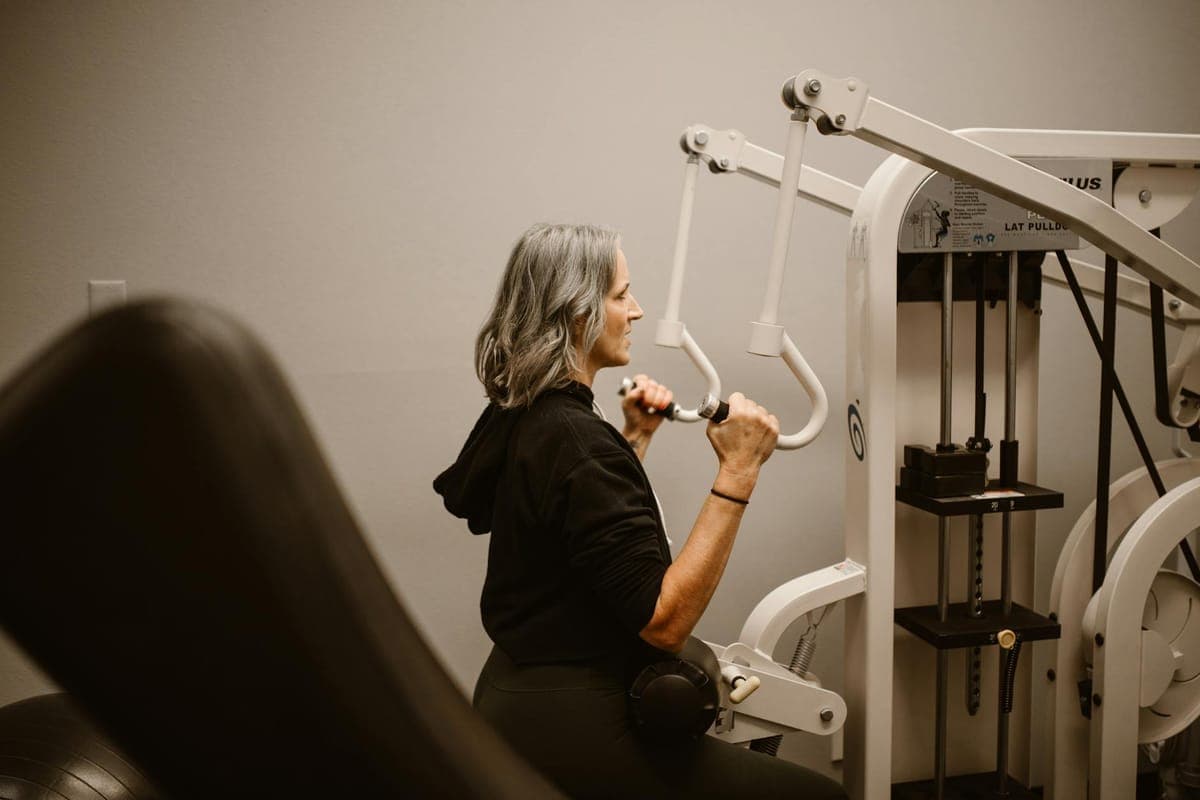
Science-backed research on 51 real women proves that modest strength training can dramatically shift how you feel in your 40s and beyond.
Why Your Body Starts Working Against You in Your 40s
Here's something nobody tells you: after age 30, your muscle mass starts declining at a rate of roughly 3–8% per decade. That's not a warning. That's a fact from Sipilä et al. (2020). For women, this process accelerates around menopause, when hormonal shifts trigger rapid bone loss—particularly in the first five years after ovarian function ends.
The consequences aren't abstract. One in two post-menopausal women are expected to experience an osteoporotic-related fracture during their remaining lifetime, according to research by Crandall et al. (2021) and Force (2011. And if you think resistance training is just about building "toned arms," the data suggests you've been sold an incomplete picture.
What the Research Actually Tested
A recent women-specific intervention called "Beginner to 5kg" set out to examine whether structured strength training could move the needle on physical performance, wellbeing, and menopausal symptoms in real women. The study involved 51 female participants with a mean age of 52.5 ± 8.9 years. The breakdown: n = 12 were pre-menopausal, n = 12 were perimenopausal, and n = 27 were post-menopausal. That spread matters—it captures the full spectrum of where most women in their 40s and 50s actually sit.
The protocol was straightforward. Participants completed strength training twice weekly for 40 minutes per session, either online or in-person, plus one 20-minute health education session weekly delivered online. Total commitment: roughly 100 minutes per week over six weeks.
What Actually Changed
After six weeks, the results were clear on some measures. Participants showed significant improvements in the sit-to-stand test, which measures lower-body strength and functional capacity, and the box press-up test, which assesses upper-body power. Both results reached statistical significance at p < 0.05.
Static one-legged stance balance, however, didn't show significant change on either side. That matters too—not every outcome moves at the same speed, and balance training may require different or longer intervention to shift the needle.
Beyond the Physical: How Women Felt
Here's where the data gets interesting. Post-intervention results showed significant improvements not just in physical tests, but in wellbeing, physical self-efficacy, physical activity participation, and menopausal symptoms—all at p < 0.05.
That combination matters. You don't just want to pass a sit-to-stand test. You want to feel capable in your body. You want to experience fewer hot flashes and sleep disruptions. You want the confidence to keep showing up at the gym or your living room. The data suggests strength training delivered across multiple dimensions, not just physical ones.
What This Means for You Right Now
Here's the practical part. You don't need to spend hours in the gym. The protocol that produced measurable results involved roughly 80 minutes of strength training per week, plus 20 minutes of education. That's less than an hour and a half weekly to see statistically significant improvements in strength, wellbeing, and menopausal symptoms.
Start where you are. If you've never lifted, begin with movements your body can handle—even if that means bodyweight or very light resistance. The "Beginner to 5kg" label isn't arbitrary; it's an actual starting point. Getting to 5 kilograms of actual weight lifted over weeks is a legitimate goal that builds competence and confidence.
Balance work may need its own dedicated attention—it's the one area in this study that didn't shift in six weeks. Consider adding specific balance exercises alongside your strength training rather than expecting one modality to do everything.
The numbers are stark: muscle loss accelerates without resistance training, bone density drops sharply around menopause, and fractures become a real statistical threat. But the same research that documents those risks demonstrates a straightforward countermeasure. Two sessions per week. Consistent effort. Measurable outcomes.
References
- Ward K, Kavanagh R, O'Connor S, Cooper D. (2026). 'Beginner to 5kg': A 6-Week Novel Hybrid Strength Training and Health Education Programme for Middle-Aged and Older Women. Physical Activity and Health. 10(1):1-14.
- Sipila S, Tormakangas T, Sillanpaa E, Aukee P, Kujala UM, Kovanen V, Laakkonen EK. (2020). Muscle and bone mass in middle-aged women: role of menopausal status and physical activity. J Cachexia Sarcopenia Muscle. 11(3):698-709.
- Buckinx F, Aubertin-Leheudre M. (2022). Sarcopenia in Menopausal Women: Current Perspectives. Int J Womens Health. 14:805-819.
- Crandall CJ, Larson JC, LaCroix AZ, et al. (2021). Risk of Subsequent Fractures in Postmenopausal Women After Nontraumatic vs Traumatic Fractures. JAMA Intern Med. 181(8):1055-1063.
- Doherty J, Giles M, Gallagher AM, Simpson EEA. (2018). Understanding pre-, peri- and post-menopausal women's intentions to perform muscle-strengthening activities using the Theory of Planned Behaviour. Maturitas. 109:89-96.
- Berin E, Hammar M, Lindblom H, Lindh-Astrand L, Ruber M, Spetz Holm AC. (2019). Resistance training for hot flushes in postmenopausal women: A randomised controlled trial. Maturitas. 126:55-60.
- Shojaa M, von Stengel S, Kohl M, Schoene D, Kemmler W. (2020). Effects of dynamic resistance exercise on bone mineral density in postmenopausal women: a systematic review and meta-analysis. Osteoporos Int. 31(8):1427-1444.
- Sa KMM, da Silva GR, Martins UK, et al. (2023). Resistance training for postmenopausal women: systematic review and meta-analysis. Menopause. 30(1):108-116.
Common Questions
Why does muscle and bone health decline so rapidly in women over 40?
After age 30, women lose approximately 3-8% of muscle mass per decade, but this decline accelerates significantly around menopause when estrogen levels drop sharply. Estrogen plays a protective role in maintaining both muscle protein synthesis and bone density, so when ovarian function declines, women experience accelerated bone loss—particularly in the first five years post-menopause. This dualDecline creates a compounding risk for osteoporosis and reduced functional capacity, making targeted interventions increasingly important for women in their 40s and beyond.
What specific benefits did the 'Beginner to 5kg' study show for menopausal women?
The six-week intervention with 51 women across pre, peri, and post-menopausal stages showed statistically significant improvements in both lower-body strength (sit-to-stand test) and upper-body power (box press-up test) at p < 0.05. Importantly, participants also reported significant improvements in wellbeing, physical self-efficacy, physical activity participation, and menopausal symptoms—this means strength training delivered benefits across physical AND psychological dimensions, not just athletic performance metrics.
How much strength training do I actually need to see results?
The study protocol that produced measurable results involved just two 40-minute strength training sessions per week—totalling approximately 80 minutes weekly over six weeks. This is far less than the hour-a-day gym routines often promoted in fitness culture, yet it produced significant improvements in physical performance, self-efficacy, and menopausal symptoms. This suggests that consistency with moderate, well-structured strength training matters far more than volume, making it accessible for busy women.
Can strength training actually help reduce menopause symptoms like hot flashes?
Yes, the Beginner's to 5kg study demonstrated significant improvements in menopausal symptoms at p < 0.05 following structured strength training. While the mechanism isn't fully understood, strength training helps regulate hormonalmilieu by supporting muscle mass (which influences metabolic health and insulin sensitivity), reducing systemic inflammation, and improving sleep quality—all factors that can exacerbate vasomotor symptoms like hot flashes. The combination of physical and psychological improvements reported suggests strength training addresses symptom clusters holistically rather than targeting isolated issues.
I already do cardio—why do I need to prioritize strength training specifically?
Cardio provides cardiovascular benefits, but it doesn't address the primary concerns women face during menopause: sarcopenia (muscle loss) and accelerated bone density decline. Unlike aerobic exercise, strength training provides mechanical loading that stimulates bones to maintain density and muscles to preserve mass. Research shows one in two post-menopausal women will experience an osteoporotic-related fracture, and muscle loss directly impacts functional capacity and independence. The study data confirms strength training moves the needle on both physical performance tests and wellbeing measures in ways that cardio alone cannot replicate.
Jess Mizzi, CPT
Certified Personal Trainer and founder of FitForHer. Specialises in women's life-stage specific fitness — postnatal recovery, perimenopause, and menopause. About Jess →
Medical disclaimer: This article is for informational purposes only and does not constitute medical advice. Always consult a qualified healthcare professional before making changes to your exercise or nutrition programme.