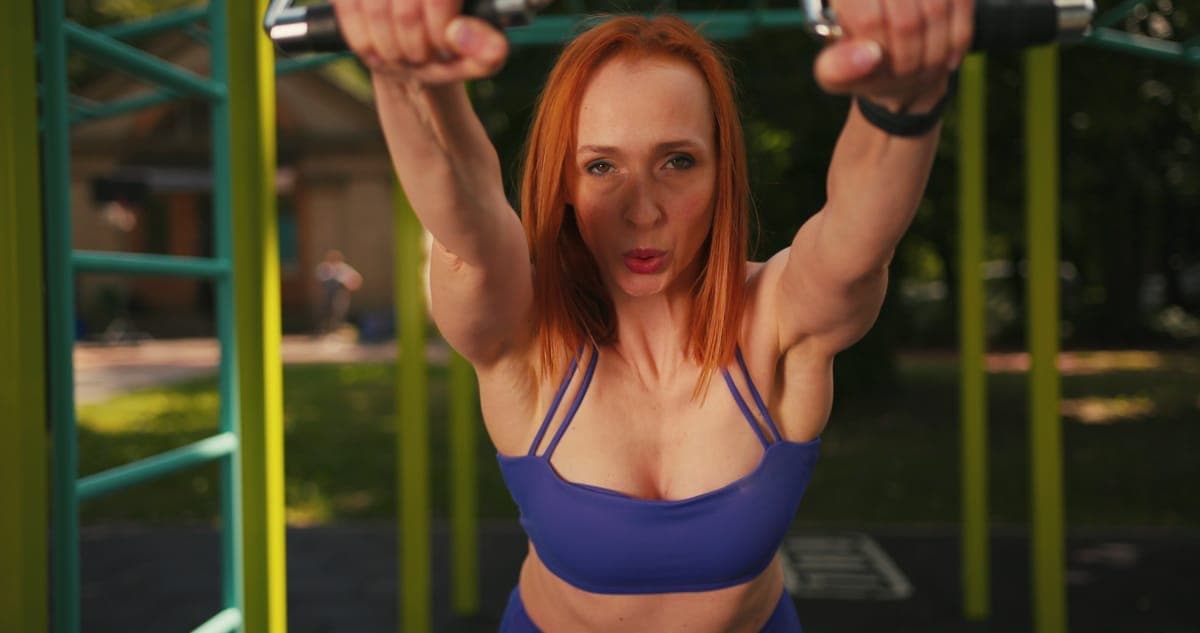
There's a lot of noise around fitness after 40. Powdered collagen. Metabolism boosters. Programs designed to make you feel like your body has fundamentally betrayed you. Most of it is nonsense.
Why Fitness After 40 Is Different — and Why Most Advice Ignores That
There's a lot of noise around fitness after 40. Powdered collagen. "Metabolism boosters." Programs designed to make you feel like your body has fundamentally betrayed you.
Most of it is nonsense.
The truth is: your body is doing exactly what it's designed to do. And with the right approach, you can be stronger, leaner, and more capable at 45, 55, and beyond than you were at 35.
Here's what's actually worth knowing.
The Thing That Actually Changes After 40
Let's start with the thing people talk about most: metabolism.
Yes, your metabolism slows. But not in the dramatic, sudden way supplement companies want you to believe. Research from the Journal of Clinical Endocrinology & Metabolism shows your metabolism doesn't really start declining noticeably until your 60s — and even then it's about 1-2% per decade.
The more significant change is what's happening to your muscle.
After 30, women lose roughly 3-8% of their muscle mass per decade. By your 40s and 50s, this adds up. Muscle is metabolically expensive — it burns calories at rest. So as muscle mass decreases, so does the number of calories you burn just existing.
This is why the number on the scale might climb even when nothing else has changed. It's not your metabolism "breaking." It's muscle loss, and it can be slowed and partially reversed.
Strength Training Is the Single Most Important Thing You Can Do
Forget endless cardio. If you do one thing for your fitness after 40, make it strength training.
Here's why:
Muscle keeps you functional. Carrying groceries. Getting up off the floor. Lifting your kids or grandkids. Muscle is what keeps you capable. Losing it isn't just an aesthetic issue — it's a mobility issue.
Bone density matters. After menopause, oestrogen levels drop significantly, which accelerates bone loss. Weight-bearing exercise — including strength training — stimulates bone formation. Women who strength train regularly have significantly lower rates of osteoporosis.
Metabolic benefit. Muscle burns more calories at rest than fat. More muscle = higher resting metabolic rate. Not a magic fix, but it adds up over time.
Joint health. Stronger muscles support and protect your joints. This is especially important for knees, hips, and the lower back — common problem areas for women as they age.
How much? Two to three sessions per week is genuinely enough. Full-body workouts hitting the major muscle groups. You don't need to live in the gym.
Nutrition Gets More Important, Not Less
Protein is the big one. As you age, your body becomes less efficient at using dietary protein to build and repair muscle. This is called "anabolic resistance."
The practical result: you need more protein than a younger person doing the same workout. Research suggests women over 40 should aim for 1.2–1.6 grams of protein per kilogram of bodyweight per day — that's roughly 90-120g per day for a 70kg woman.
Good sources:
- Eggs, Greek yoghurt, cottage cheese - Chicken, fish, lean red meat - Legumes and lentils - Tofu and tempeh - Protein supplements if you're struggling to hit your target through food alone
Prioritise protein at breakfast and after workouts — that's when your muscles are most receptive to using it.
Sleep and Stress Are Part of Your Fitness Program
This is the one most people skip over, but it's genuinely critical.
Sleep: During deep sleep, your body releases growth hormone — a key hormone for muscle repair and recovery. Poor sleep directly impairs muscle protein synthesis. If you're sleeping five hours a night and wondering why you're not recovering from workouts, sleep is the answer.
Aim for 7-9 hours. If that's a struggle (and it often is, especially during perimenopause), protecting your sleep hygiene matters as much as your training.
Cortisol: Chronic stress raises cortisol, which breaks down muscle and stores fat, particularly around the midsection. High-stress, low-recovery is a combination that works against everything else you're doing in the gym.
Both sleep and stress management aren't "optional extras" — they're part of the fitness equation after 40.
What About HIIT?
High-intensity interval training is genuinely excellent for cardiovascular health, fat oxidation, and time efficiency. It's not bad for women over 40 — but there are a couple of considerations.
One: recovery matters more. HIIT creates a significant stress response. If you're doing HIIT three times a week on top of strength training, poor sleep, and high life stress, you may be digging yourself into a hole rather than getting fitter.
Two: intensity is personal. What feels "high intensity" at 40 is different from what it was at 25. Learn to read your heart rate and your perceived exertion.
A practical approach: one to two HIIT sessions per week, mixed with your strength work. If you're new to exercise, start with lower-intensity intervals and build up.
The Bottom Line
None of this requires expensive supplements, restrictive diets, or programs that treat your 40s like some kind of fitness emergency.
It requires:
- Strength training, two to three times per week - Enough protein in your diet - Decent sleep - Managing stress - Consistency over months and years, not weeks
That's it. The gimmicks exist because simple is hard to sell. The good news is that simple works — and you have enough life experience to know that lasting change doesn't come from a 30-day challenge.
It comes from what you do most of the time.
If you're over 40 and ready to start training with a program built for your body — our Perimenopause programs are designed with exactly this in mind.
References
- Pontzer H, Yamada Y, Sagayama H, et al. (2021). Daily energy expenditure through the human life course. Science. 373(6556):808-812.
- Cruz-Jentoft AJ, Bahat G, Bauer J, et al. (2019). Sarcopenia: revised European consensus on definition and diagnosis. Age and Ageing. 48(1):16-31.
- Mitchell WK, Williams J, Atherton P, Larvin M, Lund J, Narici M. (2012). Sarcopenia, dynapenia, and the impact of advancing age on human skeletal muscle size and strength; a quantitative review. Frontiers in Physiology. 3:260.
- Rizzoli R, Stevenson JC, Bauer JM, et al. (2014). The role of dietary protein and vitamin D in maintaining musculoskeletal health in postmenopausal women: a consensus statement from the ESCEO. Maturitas. 79(1):122-132.
Common Questions
Is it too late to start strength training in your 40s or 50s?
No. Research consistently shows that women can build muscle and increase strength at any age. Starting in your 40s or 50s is not only possible — it's one of the best investments you can make in your long-term health, bone density, and quality of life.
How much protein do women over 40 actually need?
Most research suggests 1.2–1.6 grams of protein per kilogram of bodyweight per day. For a 70kg woman, that's roughly 85–112 grams daily. Prioritise protein at breakfast and post-workout, when your muscles are most receptive to using it.
Does metabolism really slow down after 40?
Less dramatically than the supplement industry wants you to believe. Research shows resting metabolic rate doesn't decline significantly until your 60s. The bigger factor is muscle loss — as muscle mass decreases, so does the number of calories you burn at rest. Strength training addresses this directly.
How many times per week should women over 40 strength train?
Two to three full-body sessions per week is sufficient for meaningful results. Recovery becomes increasingly important as you age, so more is not always better. Consistency over months and years matters far more than training frequency.
Jess Mizzi, CPT
Certified Personal Trainer and founder of FitForHer. Specialises in women's life-stage specific fitness — postnatal recovery, perimenopause, and menopause. About Jess →
Medical disclaimer: This article is for informational purposes only and does not constitute medical advice. Always consult a qualified healthcare professional before making changes to your exercise or nutrition programme.