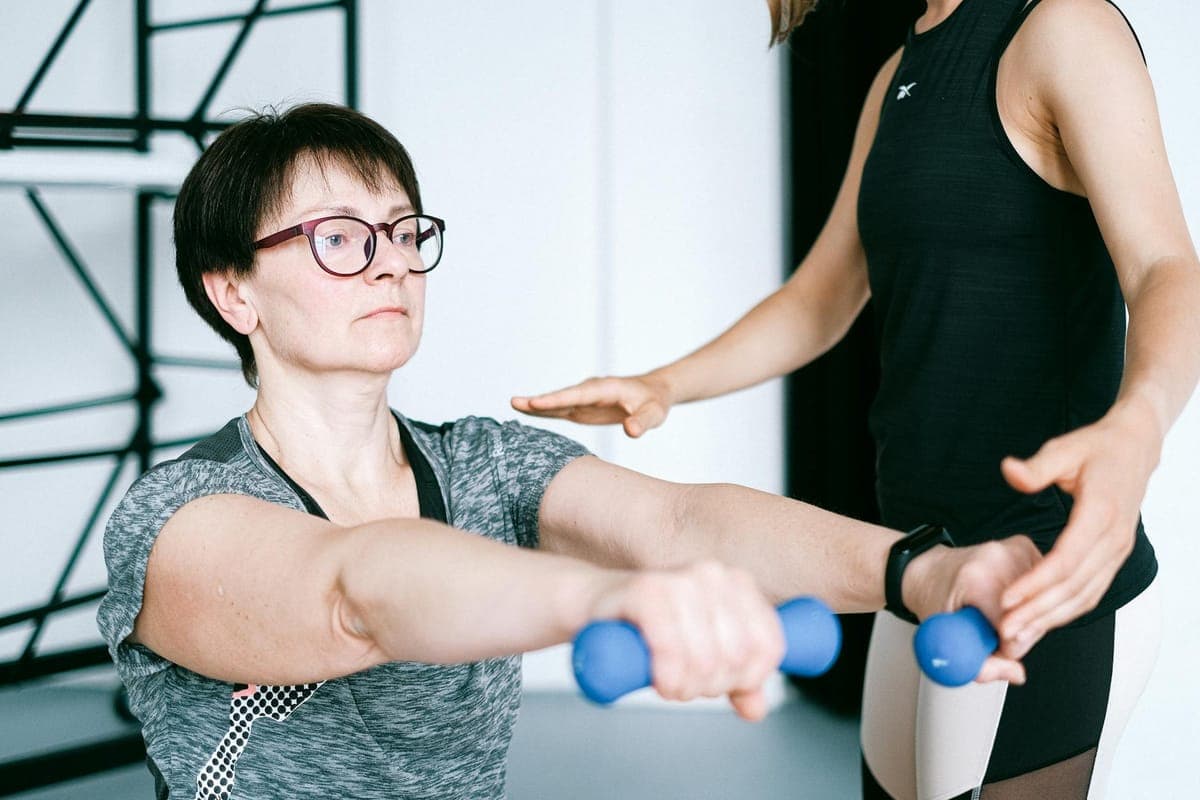
Over 40% of women over 50 will suffer osteoporotic fractures—but science shows a powerful, drug-free countermeasure most aren't using.
The Fracture Risk You Probably Haven't Heard Enough About
Here's a number worth sitting with: approximately 40% of women over the age of 50 will suffer from osteoporotic fractures during their remaining lifetimes. Not "might." Not "could." Will. That single statistic puts osteoporosis in postmenopausal women among the most serious and under-addressed health issues women face as they age. And unlike some health threats, this one has a evidence-backed, drug-free countermeasure that most women aren't using.
What Actually Happens to Your Bones After Menopause
The mechanism is straightforward, even if the consequences are severe. As estrogen levels decline during and after menopause, postmenopausal women experience accelerated bone loss. The word "accelerated" matters here. Bone density that took years to build can thin measurably in months. Without intervention, this loss compounds — increasing fracture risk, reducing mobility, and fundamentally diminishing quality of life. The body continues breaking down bone faster than it rebuilds it, and without a targeted signal to lay down new bone, the structural integrity of the skeleton quietly erodes.
The Research: What a Meta-Analysis of 690 Women Found
A systematic review and meta-analysis of 17 randomized controlled trials involving 690 subjects set out to answer a specific question: does resistance training actually move the needle on bone mineral density in postmenopausal women, and if so, what training parameters matter most?
The results are substantive. Resistance training significantly improves bone mineral density at the lumbar spine, the femoral neck, and the total hip — three of the most fracture-vulnerable sites in the body. At the lumbar spine, the effect size reached SMD = 0.88 (95% CI [0.21, 1.56], P = 0.01). At the femoral neck, it was SMD = 0.89 (95% CI [0.40, 1.39], P = 0.0004). Both are considered large effect sizes. For the total hip, the finding was SMD = 0.30 (95% CI [0.10, 0.50], P = 0.003). The trochanter showed a trend toward improvement (SMD = 0.23) but did not reach statistical significance (P = 0.06).
Those effect sizes matter. They tell you that meaningful bone adaptation is happening — not marginal change, but a structural response in the sites where fractures are most debilitating. Hip fractures in particular routinely mark a before-and-after in independent living for older women. The fact that resistance training produced measurable effects at the femoral neck and total hip makes this a clinical concern, not just a performance goal.
The Dose Question: What Separates Effective Programs from Underperforming Ones
Not all resistance training is created equal when it comes to bone health. The meta-analysis drilled into training parameters to identify what actually drives the response.
Intensity was the clearest differentiator. High-intensity training at 70% or greater of one-repetition maximum had a significant effect on both the total hip and femoral neck. Programs below that threshold simply did not produce the same stimulus. Loading the skeleton hard matters because bone remodels in response to mechanical load — and that load needs to challenge the tissue meaningfully.
Frequency also showed up clearly in the data. Training three times per week significantly improved bone mineral density across all measured sites, including the lumbar spine, femoral neck, total hip, and trochanter. Skipping to twice weekly — which is common in many recreational programs — may leave gains on the table.
Duration changed the picture further. Intervention durations of 48 weeks or longer had a significant impact on femoral neck and total hip density. Short-term programs of a few months are likely too brief to produce lasting skeletal adaptation. The bone remodeling process takes time, and the evidence suggests programs need to be sustained.
The Bottom Line on Optimal Parameters
Putting the data together, the strongest evidence points to a specific prescription. A high-intensity training regimen at 70% or greater of one-repetition maximum, performed three times per week, maintained over 48 weeks or longer — that combination shows the most consistent and significant effects across the fracture-prone sites that matter most for postmenopausal women.
That is a concrete, actionable framework. It removes the guesswork. You are not relying on a vague recommendation to "strength train more." You are looking at a set of parameters with evidence behind them.
What This Means for Your Training Right Now
The evidence from 17 randomized controlled trials is clear: resistance training is not optional if bone health is a priority for you after menopause. It is a legitimate, non-pharmacological intervention — one that increases muscle strength while simultaneously promoting bone formation.
This is not about aesthetics. It is not about fitting into a smaller size or achieving a performance milestone. It is about whether your hip survives a fall at 65 or 75. It is about whether your spine fractures under a load that should never have been dangerous. The data gives you a blueprint. Use it.
References
- Zhao F, Su W, Sun Y, Wang J, Lu B, Yun H. (2025). Optimal resistance training parameters for improving bone mineral density in postmenopausal women: a systematic review and meta-analysis. Journal of Orthopaedic Surgery and Research. 20(1):523.
- Riggs BL, Melton LJ 3rd. (1995). The worldwide problem of osteoporosis: insights afforded by epidemiology. Bone. 17(5 Suppl):505S-511S.
- Shojaa M, von Stengel S, Kohl M, Schoene D, Kemmler W. (2020). Effects of dynamic resistance exercise on bone mineral density in postmenopausal women: a systematic review and meta-analysis with special emphasis on exercise parameters. Osteoporosis International. 31(8):1427-1444.
- Sá KMM, da Silva GR, Martins UK, et al. (2023). Resistance training for postmenopausal women: systematic review and meta-analysis. Menopause. 30(1):108-116.
Common Questions
How does menopause affect bone density and increase fracture risk?
During menopause, estrogen levels decline significantly, which accelerates bone loss. The body begins breaking down bone faster than it can rebuild it, causing bone mineral density to decrease measurably over months rather than years. This accelerated loss particularly affects the lumbar spine, femoral neck, and hip—sites where fractures have the most devastating impact on independence and quality of life. Without intervention, this process compounds over time, making fracture prevention a critical health priority for postmenopausal women.
What does the research say about resistance training and bone health in postmenopausal women?
A meta-analysis of 17 randomized controlled trials involving 690 postmenopausal women found that resistance training significantly improves bone mineral density at clinically important sites. Large effect sizes were observed at the lumbar spine (SMD = 0.88) and femoral neck (SMD = 0.89), with a moderate effect at the total hip (SMD = 0.30). These findings indicate that structured resistance training produces meaningful structural adaptations in the exact locations where fractures cause the greatest disability, making this a clinically relevant intervention rather than just a fitness goal.
What intensity of resistance training is needed to improve bone density?
Research indicates that high-intensity training at 70% or greater of one-repetition maximum is the clear differentiator for bone health outcomes. Programs using this intensity threshold showed significant effects at both the total hip and femoral neck—two of the most fracture-vulnerable sites. Lower intensity protocols don't appear to produce the same bone-adaptive response, suggesting that progressive overload and meaningful resistance are essential components of any bone-preserving exercise program.
Can I reverse osteoporosis or only slow its progression with exercise?
While exercise cannot completely reverse established osteoporosis, the research shows it can produce measurable improvements in bone mineral density at clinically significant sites. The effect sizes reported in meta-analyses suggest meaningful structural change, not just maintenance. Early intervention during perimenopause and the early postmenopausal years offers the best opportunity for building and preserving bone density before significant loss occurs.
What other strategies complement resistance training for bone health?
Beyond resistance training, adequate calcium and vitamin D intake support bone remodeling, while minimizing smoking, excessive alcohol, and prolonged sedentary time provides additional protective effects. Weight-bearing activities like walking and stair climbing complement resistance work, though they typically don't provide enough mechanical load to drive the bone adaptation that targeted strength training achieves. A comprehensive approach combining resistance training with appropriate nutrition and lifestyle factors offers the best strategy for maintaining skeletal integrity through menopause.
Jess Mizzi, CPT
Certified Personal Trainer and founder of FitForHer. Specialises in women's life-stage specific fitness — postnatal recovery, perimenopause, and menopause. About Jess →
Medical disclaimer: This article is for informational purposes only and does not constitute medical advice. Always consult a qualified healthcare professional before making changes to your exercise or nutrition programme.