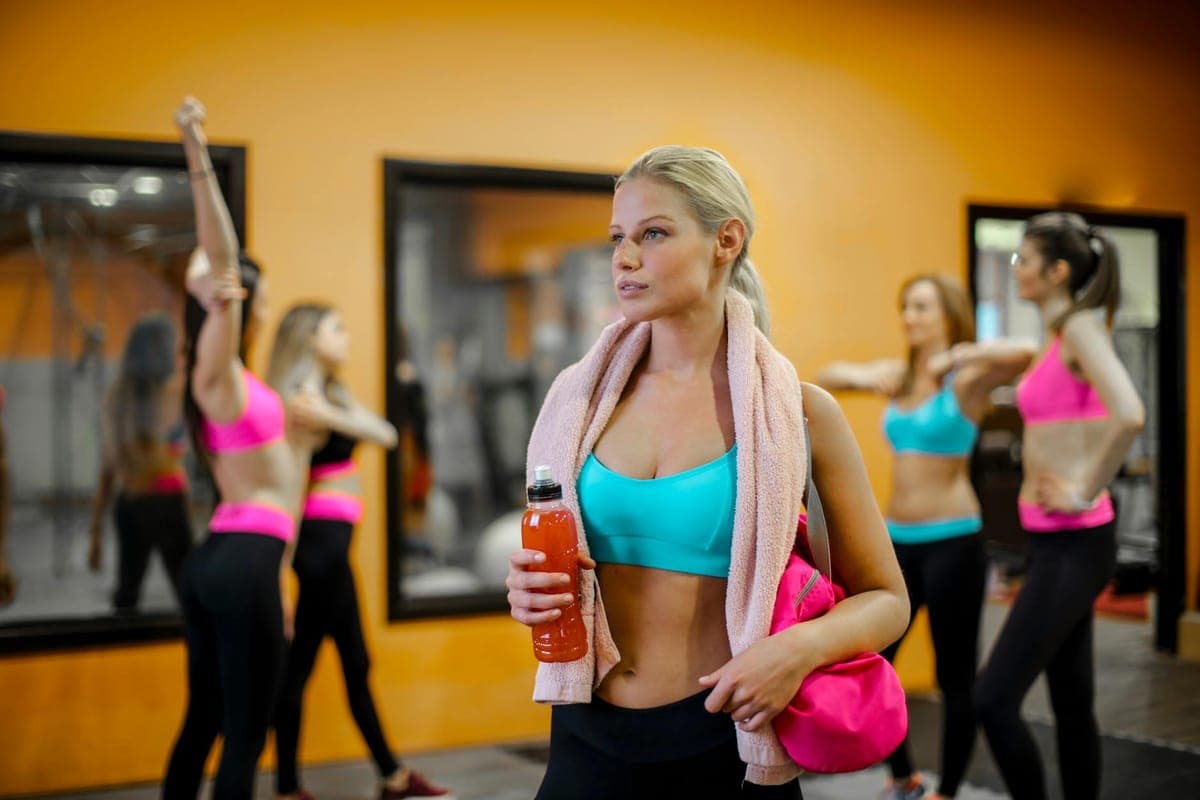
The standard protein recommendation isn't designed for women who move. Here's what your body actually needs to thrive.
The Number That Started It All
If you've ever felt confused about how much protein you actually need, you're not alone. The numbers floating around can feel contradictory—one source says this, another says that. The recommended daily allowance (RDA) for protein is about 1 gram per kilogram (kg) of body weight, or roughly 0.45 grams per pound (lb). That figure comes from the RDA and it's the absolute baseline for someone doing almost nothing physical all day. But let's be honest: most of us aren't sedentary. We're walking, working out, carrying groceries, chasing kids, stress-sweating through traffic. The question isn't really "what's the minimum to not fall apart?" It's "what does my body actually thrive on?"
The Baseline Most Women Actually Need
Here's the uncomfortable truth about the RDA: this amount is just about sufficient for sedentary individuals. If you spend most of your day sitting, this might technically keep you from developing a deficiency. But "technically not deficient" is a pretty low bar. Your body needs protein to maintain muscle, support immune function, keep hormones balanced, and recover from whatever you put it through. If you're moving with any regularity—taking stairs, doing yoga, walking the dog—your needs creep upward. Most active women discover that the bare minimum leaves them feeling hungry, tired, or just not quite recovered between workouts.
What Active Women Actually Need
Sports scientists suggest aiming for 1 gram of protein per pound of body weight. Yes, that's more than double the RDA. Before you dismiss this as excessive, consider what that means in practice. A 150-pound woman would aim for 150 grams of protein daily. This isn't about becoming a bodybuilder. It's about giving your muscles what they need to repair, your metabolism what it needs to stay revved, and your energy levels what they need to stay steady throughout the day.
Research published in 2023 found that for women aged 20-35, optimal daily protein intake falls between 1.6-2.2g/kg/day (0.7g-1g/lb/day). That's a range, not a strict prescription. Some days you might land at the lower end. Some days might call for more—especially if you're training hard or feeling particularly run-down. Your body isn't a machine, and neither are your protein requirements.
Why Your Age and Cycle Matter
Here's something the generic protein calculators often miss: where you are in life affects your needs. Older women, especially those in perimenopause and menopause, may need slightly higher amounts. That's not scaremongering—it's physiology. As estrogen levels shift, muscle protein synthesis becomes less efficient. Your body becomes more resistant to the muscle-building signals protein sends. You need more input to get the same output. This same 2023 study recommends that daily protein intake should fall within 1.4-2.2g/kg/day (0.6g-1g/lb/day) for this reason. The range accounts for where you are in the menopause transition and how active you remain.
Your menstrual cycle introduces another layer of variation. Studies have shown that overall daily protein needs are higher during the luteal phase of the menstrual cycle—the roughly two weeks between ovulation and your period. This is when progesterone peaks and your body is preparing for a possible pregnancy. Metabolic rate increases slightly, body temperature rises, and recovery demands go up. If you've ever noticed you feel hungrier, more sore, or more like you need extra rest in that second half of your cycle, you're not imagining it. Your body is asking for more.
Timing and Distribution
Here's a detail that often gets buried: protein should be distributed evenly across meals every 3-4 hours. This 2023 study recommendation isn't just about convenience. When you space protein intake throughout the day, you give your body regular opportunities to build and repair tissue. Eating 5 grams at breakfast and 80 grams at dinner means your body can only use so much at once. Protein synthesis is a process that requires consistent building blocks. Three to four meals spaced across your waking hours, each containing a meaningful amount of protein, keeps that process running smoothly. Ideally, you want roughly 25-40 grams per meal, though this varies based on body size and individual needs.
What You Can Actually Do This Week
Forget chasing perfection. Here's what actually works. Start by calculating your baseline using the active range: aim for 0.7 to 0.8 grams per pound of body weight. If you weigh 140 pounds, that's roughly 100 to 110 grams daily. This is your starting point, not a life sentence. Adjust up if you're training hard, recovering from illness, or finding you're constantly sore. Adjust down if you're eating this way and feeling overly full or bloated.
Next, look at your distribution. How many meals do you eat? If you're hitting protein only at dinner, spread it out. Add eggs or Greek yogurt at breakfast. Make sure lunch has a solid protein source—chicken, fish, tofu, legumes. Snack on cottage cheese or jerky if needed. Protein should be distributed evenly across meals every 3-4 hours.
If you're over 40 or in perimenopause, give yourself permission to eat more. The research supports it. If you're in your luteal phase, stop fighting the increased appetite and work with it—reach for protein-dense foods instead of empty carbs.
The goal isn't to hit some perfect number every single day. It's to understand what your body actually needs and build habits that honor that, most of the time, without making food your whole personality.
References
- Institute of Medicine. (2005). Dietary Reference Intakes for Energy, Carbohydrate, Fiber, Fat, Fatty Acids, Cholesterol, Protein, and Amino Acids. National Academies Press.
- Jager R, Kerksick CM, Campbell BI, et al. (2017). International Society of Sports Nutrition Position Stand: protein and exercise. Journal of the International Society of Sports Nutrition. 14:20.
- Morton RW, Murphy KT, McKellar SR, et al. (2018). A systematic review, meta-analysis and meta-regression of the effect of protein supplementation on resistance training-induced gains in muscle mass and strength in healthy adults. British Journal of Sports Medicine. 52(6):376-384.
- Stokes T, Hector AJ, Morton RW, McGlory C, Phillips SM. (2018). Recent Perspectives Regarding the Role of Dietary Protein for the Promotion of Muscle Hypertrophy with Resistance Exercise Training. Nutrients. 10(2):180.
- Sims ST, Heather AK. (2018). Myths and Methodologies: Reducing scientific design ambiguity in studies comparing sexes and/or menstrual cycle phases. Experimental Physiology. 103(10):1309-1317.
- Lamont LS, McCullough AJ, Kalhan SC. (2001). Gender differences in leucine, but not lysine, kinetics. Journal of Applied Physiology. 91(1):357-362.
Common Questions
Is 1 gram of protein per pound of body weight too much for women?
No, for active women this range is supported by research. The 2023 meta-analysis found optimal intake for women aged 20-35 falls between 1.6-2.2g/kg/day, which translates to roughly 0.7-1g per pound. While this sounds high compared to the RDA, the RDA only prevents deficiency in sedentary individuals. Active women need more to support muscle repair, immune function, and hormone production. Your body uses what it needs and excretes excess protein if intake is appropriate for your activity level.
Does perimenopause change how much protein women need?
Yes, significantly. During perimenopause and menopause, declining estrogen levels make muscle protein synthesis less efficient—your muscles become more resistant to the signals protein sends for repair and growth. This means you need more protein input to achieve the same muscle-building output. Research recommends that women in the menopause transition aim for 1.4-2.2g/kg/day (0.6-1g/lb) to compensate for this metabolic shift. Prioritizing protein becomes especially important during this life stage to maintain muscle mass, metabolic health, and bone density.
Should I calculate my protein needs based on my goal weight or current weight?
For most active women, using current body weight is a practical starting point. If you're significantly overweight, some practitioners use an adjusted weight, but current research doesn't strongly favor this approach. The key is starting with your current weight as a baseline—150 grams for a 150-pound woman—then adjusting based on how you feel, your training intensity, and your goals. If you're training hard and not recovering well, you may need to move toward the higher end of your range.
Can I spread my protein intake throughout the day or should I eat it all at once?
Spreading protein throughout the day is generally more effective than consuming most of it in one meal. Research suggests aiming for 25-40 grams per meal, spaced across breakfast, lunch, and dinner, optimizes muscle protein synthesis. Your body can only use a certain amount of protein per meal for muscle building—the rest gets used for other processes or stored. Three to four protein-rich meals gives your body regular opportunities to repair and build muscle, especially important if you're training regularly or in midlife.
What happens if I consistently eat less protein than my body needs?
Chronic insufficient protein intake leads to muscle loss over time, even if you're strength training, because your body lacks the building blocks to repair and grow muscle. You may also experience persistent fatigue, poor recovery between workouts, weakened immunity, and difficulty maintaining a healthy weight. For women, this becomes more pronounced with age—as protein synthesis efficiency decreases in perimenopause and beyond, inadequate intake accelerates muscle loss, which impacts metabolism, bone health, and long-term functional strength. Think of protein as non-negotiable infrastructure for how you move and feel.
Jess Mizzi, CPT
Certified Personal Trainer and founder of FitForHer. Specialises in women's life-stage specific fitness — postnatal recovery, perimenopause, and menopause. About Jess →
Medical disclaimer: This article is for informational purposes only and does not constitute medical advice. Always consult a qualified healthcare professional before making changes to your exercise or nutrition programme.