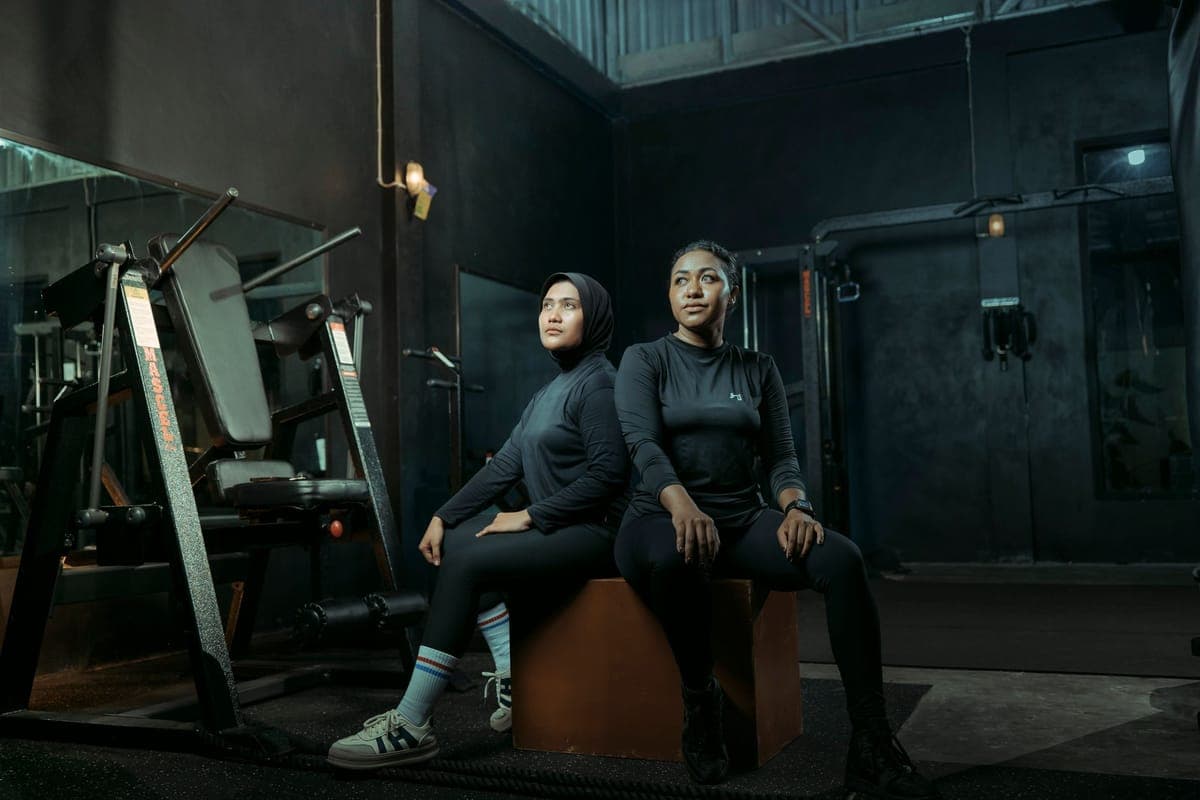
Most protein advice for women isn't backed by science. Here's what the research actually says about how much protein active women need.
The Science of Protein: What Active Women Need to Know
If you're a woman who trains regularly, you've probably wondered whether your protein needs differ from what the research suggests for athletes in general. Maybe you've been told women build muscle differently, or that your requirements shift throughout your cycle. The fitness industry has spent years perpetuating myths about female protein metabolism, often without solid evidence behind the claims.
The reality is more straightforward than the noise suggests. Current research indicates that dietary essential amino acids are crucial for muscle growth, recovery, and adaptation, regardless of sport, age, or sex. Your body responds to protein the same way most athletes' bodies do.
Does Sex Actually Change Your Protein Needs?
Here's what the research actually shows: sex-based differences in dietary protein needs are, if they exist at all, minimal. This matters because it means you can follow the same evidence-based protein guidelines as any other athlete, rather than searching for obscure female-specific formulas that don't exist in the literature.
Regular exercise places increased demands on nutrient needs, including protein. Dietary protein supports tissue remodelling during exercise recovery. This process is fundamental to how your muscles adapt and grow stronger over time, whether you're lifting weights, running, or doing any other physical activity that challenges your body.
Hormones, Menstrual Cycles, and Menopause: What the Research Says
You may have heard that protein needs fluctuate across your menstrual cycle or change with oral contraceptive use. The research doesn't support this. Dietary protein needs do not change substantially, or at all, across the menstrual cycle or with the use of oral contraceptives. This means you don't need to adjust your protein intake based on where you are in your cycle.
The conversation shifts when it comes to aging. Age-related muscle loss and anabolic resistance appear to be primarily driven by aging itself, rather than oestrogen deficiency. This distinction matters because it reframes how we think about maintaining muscle mass as we get older. Your protein intake and training become even more critical, not because of hormonal changes, but because your muscles respond less efficiently to the stimuli that once built strength easily.
How Much Protein Do You Actually Need?
Let's get specific. Research recommends a total protein intake of 1.4–1.6 g/kg⁻¹/day⁻¹ (0.6-0.7 g/lb⁻¹/day⁻¹). This forms the baseline for active women who want to support muscle maintenance and recovery.
During periods of energy restriction or heavy training, higher intakes of more than 1.6 and up to 2.2 g/kg⁻¹/day⁻¹ (0.7-1.0 g/lb⁻¹/day⁻¹) are recommended. This accounts for the increased demands when you're training hard or when your body needs to preserve muscle mass during a calorie deficit.
These figures come from protein intake recommendations backed by sports nutrition research and represent the amounts shown to support muscle protein synthesis and recovery in active populations.
Timing and Distribution: The 2-Hour Window
Here's where many women underperform without realising it. Following protein ingestion, muscle protein synthesis rates peak and return to baseline within approximately 2 hours post-protein ingestion, even when amino acids remain available. This finding from Atherton et al., 2010 tells you something important: you can't just eat protein once and expect your muscles to keep building throughout the day.
The solution is distribution. Athletes should distribute protein intake evenly across the day, every 3-4 hours. The research suggests aiming for approximately 0.31 g/kg⁻¹/meal⁻¹ (~0.14 g/lb⁻¹/meal⁻¹) per eating occasion, according to Moore, 2019. For a 65kg woman, that's roughly 20 grams per meal.
This means if you're eating three meals a day with minimal protein at breakfast and lunch, you're missing the opportunity to maximise muscle protein synthesis during those peak windows. Spreading your protein intake across four or five meals gives your body repeated signals to build and repair tissue throughout the day.
Putting It Into Practice
Forget the marketing gimmicks about female-specific supplements or cycle-based nutrition protocols that aren't backed by evidence. What works is consistent, sufficient protein distributed across your day.
Start with your total daily target and work backwards. If you're training regularly and want to support recovery, aim for the higher end of the recommended range. Divide that across four meals spread evenly throughout your day, with protein at each one. Prioritise whole food sources where possible, and time your protein intake within a couple of hours of your training session.
This approach is simple, grounded in the research, and doesn't require you to overthink your nutrition or follow restrictive eating patterns. Your muscles need amino acids to rebuild. Feed them regularly, and let your training do the rest.
Educational content only. Not a substitute for medical advice. Talk to your doctor about your specific situation.
References
- Wohlgemuth KJ, Arieta LR, Brewer GJ, Hoselton AL, Gould LM, Smith-Ryan AE. (2021). Sex differences and considerations for female specific nutritional strategies: a narrative review. Journal of the International Society of Sports Nutrition. 18(1):27.
- Jäger R, Kerksick CM, Campbell BI, et al. (2017). International Society of Sports Nutrition Position Stand: protein and exercise. Journal of the International Society of Sports Nutrition. 14:20.
- Atherton PJ, Etheridge T, Watt PW, Wilkinson D, Selby A, Rankin D, Smith K, Rennie MJ. (2010). Muscle full effect after oral protein: time-dependent concordance and discordance between human muscle protein synthesis and mTORC1 signaling. The American Journal of Clinical Nutrition. 92(5):1080-1088.
- Areta JL, Burke LM, Ross ML, Camera DM, West DWD, Broad EM, Jeacocke NA, Moore DR, Stellingwerff T, Phillips SM, Hawley JA, Coffey VG. (2013). Timing and distribution of protein ingestion during prolonged recovery from resistance exercise alters myofibrillar protein synthesis. The Journal of Physiology. 591(9):2319-2331.
- Moore DR. (2019). Maximizing Post-exercise Anabolism: The Case for Relative Protein Intakes. Frontiers in Nutrition. 6:147.
Common Questions
Do women need less protein than men for building muscle?
Current research shows sex-based differences in protein requirements are minimal or non-existent for active women. Your body responds to dietary protein the same way most athletes do, meaning you can follow the same evidence-based protein guidelines as any other athlete. Focus on meeting your total daily protein intake rather than looking for female-specific formulas that don't exist in the literature.
Does protein need change throughout the menstrual cycle?
Dietary protein needs do not change substantially across the menstrual cycle, according to available research. You don't need to adjust your protein intake based on where you are in your cycle. The same applies if you use oral contraceptives—your protein requirements remain consistent throughout the month, so you can maintain a steady protein intake regardless of hormonal fluctuations.
How does menopause affect protein needs for women?
Research suggests age-related muscle loss and anabolic resistance are primarily driven by aging itself, rather than oestrogen deficiency. However, your protein intake and training become even more critical as you age because your muscles respond less efficiently to the stimuli that once built strength easily. This means maintaining adequate protein intake (1.4–2.2 g/kg/day) becomes increasingly important for preserving muscle mass and supporting recovery during and after menopause.
How much protein should an active woman eat per day?
Research recommends a baseline total protein intake of 1.4–1.6 g/kg/day for active women supporting muscle maintenance and recovery. During periods of energy restriction or heavy training, higher intakes of 1.6–2.2 g/kg/day are recommended to account for increased demands and preserve muscle mass. These figures are general guidelines—individual needs can vary based on training volume, goals, and body composition targets.
Can women build muscle effectively with the same protein intake as male athletes?
Yes, women can build muscle effectively following the same evidence-based protein guidelines as other athletes. Dietary essential amino acids support muscle growth, recovery, and adaptation regardless of sex. Regular exercise does increase nutrient demands, including protein, to support tissue remodelling during recovery. The key is consistent daily protein intake spread across meals rather than timing protein around workouts specifically.
Jess Mizzi, CPT
Certified Personal Trainer and founder of FitForHer. Specialises in women's life-stage specific fitness — postnatal recovery, perimenopause, and menopause. About Jess →
Medical disclaimer: This article is for informational purposes only and does not constitute medical advice. Always consult a qualified healthcare professional before making changes to your exercise or nutrition programme.