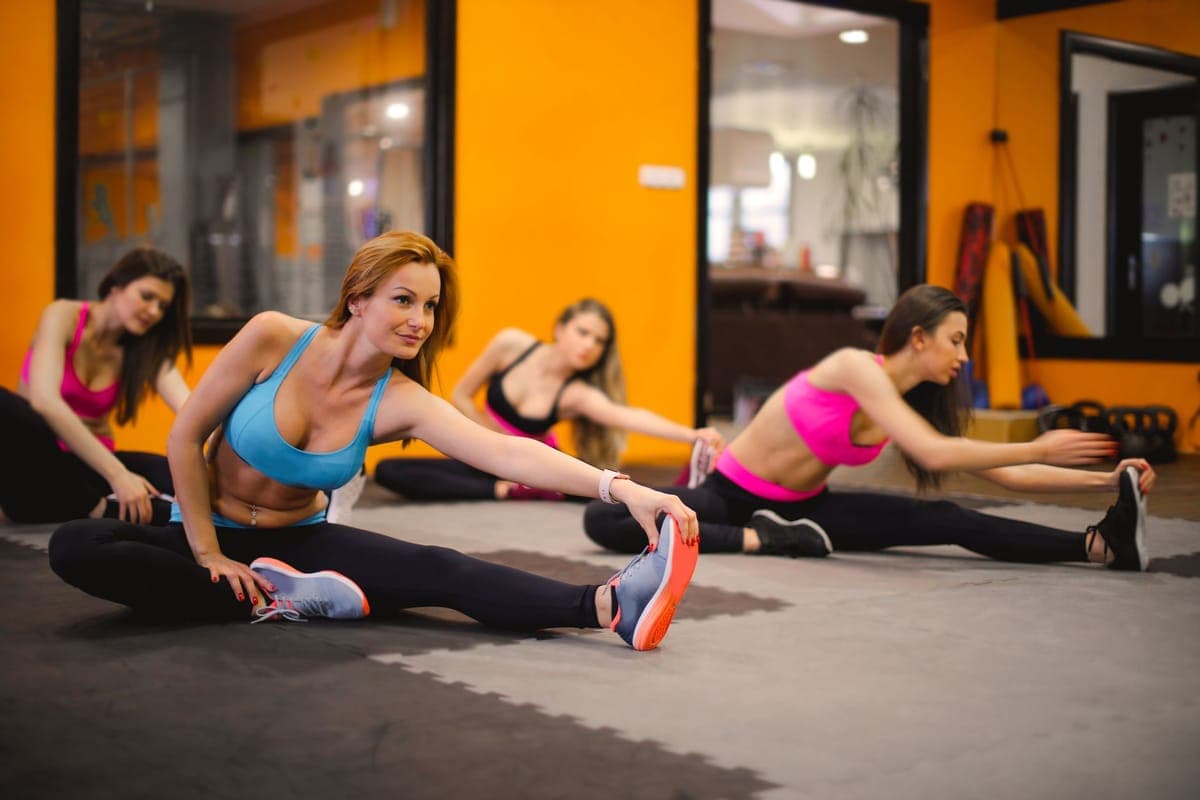
Worried exercise will dry up your milk supply? The evidence is more reassuring than the forums suggest.
The Postpartum Workout Question Nobody Warned You About
Six weeks after birth, your GP clears you for exercise. You're running on caffeine and adrenaline, your body feels foreign, and you want your strength back. Then the question lands: will exercise tank your milk supply? It's the right question to ask, and the answer, based on current evidence, is more reassuring than the parenting forums suggest.
What the Research Actually Says About Milk Supply
Multiple studies and reviews show that moderate physical activity does not negatively impact milk supply or infant growth. That sentence deserves a second read, because the fear of "drying up" stops a lot of new mothers from returning to movement at all.
The mechanics make sense. Breastfeeding itself is an energy-hungry process, drawing roughly 300 to 600 kcal per day, which is why nursing can leave you genuinely ravenous. If anything, you're already in an energy deficit just by feeding your baby. Adding moderate exercise on top of that is a separate calculation, and one you can manage with food and rest rather than avoidance.
The Weight Thing, Honestly
Here's the part most articles skate past. Moderate physical activity on its own is not sufficient for postpartum weight loss. Read that again. You cannot out-walk a calorie surplus, especially when your body is busy making milk.
Looking at the longer picture, breastfeeding is associated with improved postpartum weight management over 24 months. Within the first 3 months, that effect is less visible. And the retention picture is real: at one year postpartum, about one in six women retains 10 pounds or more of weight gained during pregnancy.
So if your jeans still don't fit at three months postpartum, that is not a personal failure. It is, for many women, the timeline. Nutrition and sleep do more than your treadmill right now, which is why a conversation with an Accredited Practising Dietitian is worth having rather than grinding through cardio hoping for a number on the scale.
How Hard, How Often, and How Soon
If you're cleared to move, a sensible starting structure looks like this. For cardiovascular work, 45 minutes, 5 days a week. For resistance training, 30 minutes, 3 to 4 days a week. Those are targets to build toward, not benchmarks to feel guilty about on day one.
At 6 weeks postpartum, the majority of mothers do not yet have their normal level of energy. Your training age just got reset. Treat the first month back like you're brand new to exercise, because physiologically, you essentially are. Walking, slow resistance circuits, and pelvic floor work are a strong place to start before you chase intensity.
On the intensity question, there is one breastfeeding-specific note. Vigorous exercise produces lactic acid, and lactic acid in breast milk has been associated with decreased acceptance by some babies. The good news is that effect resolves within 30 to 60 minutes after exercise. Timing your feed before a workout, or pumping and waiting an hour afterwards, usually sidesteps the issue.
The Two Rules That Matter Most
**Rule one: rate of weight loss.** Weight loss in most situations, but particularly while breastfeeding, should not exceed 0.75 to 1 pound per week. Faster drops signal a deficit steep enough to affect energy, recovery, and potentially milk production. Slow is not just safer, it is more sustainable.
**Rule two: hydration.** Hydration during exercise matters more for your own thirst and performance than for milk volume, but the extra fluid is still non-negotiable. Increase fluid intake during and after exercise by about 1 litre. Keep a bottle within reach of wherever your baby naps. You will forget otherwise.
A Practical Starting Point
If you take one thing from this, take this: feed your baby, walk for 30 minutes, drink an extra litre of water, eat a meal with protein and carbohydrates within the hour, and repeat tomorrow. That sequence is postpartum training at its foundation, and it stacks.
Layer resistance work in when energy allows, ideally 3 to 4 days a week. Watch for signs of overreach: dizziness, a sudden drop in output, fatigue that does not improve with sleep. These are signals to pull back and talk to your GP or a women's health physiotherapist.
Your body built a person. It is not broken. It is recalibrating, and movement is part of how you rebuild capacity, energy, and the version of yourself you are meeting on the other side of this.
Educational content only. Not a substitute for medical advice. Talk to your doctor about your specific situation.
References
- Carey GB, Quinn TJ. Exercise and lactation: are they compatible?. Canadian journal of applied physiology. 2001 Feb 1;26(1):55-74.
- da Silva MD, Oliveira Assis AM, Pinheiro SM, de Oliveira LP, da Cruz TR. Breastfeeding and maternal weight changes during 24 months post‐partum: a cohort study. Maternal & child nutrition. 2015 Oct;11(4):780-91.
- Daley AJ, Thomas A, Cooper H, Fitzpatrick H, McDonald C, Moore H, Rooney R, Deeks JJ. Maternal exercise and growth in breastfed infants: a meta-analysis of randomized controlled trials. Pediatrics. 2012 Jul 1;130(1):108-14.
- Elliott SA, Pereira LC, Guigard E, McCargar LJ, Prado CC, Bell RC. Association between breastfeeding, maternal weight loss and body composition at 3 months postpartum. The FASEB Journal. 2016 Apr;30(1_supplement):45-.
- Kolasa KM, Firnhaber G, Haven K. Diet for a healthy lactating woman. Clinical obstetrics and gynecology. 2015 Dec 1;58(4):893-901.
- Lovelady C. Balancing exercise and food intake with lactation to promote post-partum weight loss. Proceedings of the Nutrition Society. 2011 May;70(2):181-4.
Common Questions
Does exercise reduce milk supply when breastfeeding?
Current evidence suggests that moderate physical activity does not negatively affect milk supply or infant growth. Breastfeeding itself draws roughly 300 to 600 kcal per day, so your body is already managing an energy demand separate from exercise. The key is fuelling adequately with food and rest rather than avoiding movement altogether. If you notice changes, working with a women's health physiotherapist or an Accredited Practising Dietitian can help you troubleshoot the picture.
When can I start working out after giving birth?
Most women are cleared for exercise at around 6 weeks postpartum, though individual recovery varies and your GP's clearance matters most. At that point, your energy levels are typically not yet back to pre-pregnancy baseline, so treat the first month back like you are brand new to training. Walking, slow resistance circuits, and pelvic floor work are sensible starting points before intensity. Pushing too hard too soon can worsen fatigue and delay genuine recovery.
Will postpartum exercise help me lose the baby weight?
Moderate physical activity on its own is generally not sufficient for postpartum weight loss, and that is not a personal failure on your part. Evidence suggests breastfeeding is associated with improved weight management over a 24-month window, though the effect is less visible within the first 3 months. At one year postpartum, around one in six women retain 10 pounds or more of pregnancy weight. Nutrition, sleep, and stress management do more for the scale than grinding through cardio right now, so a chat with an Accredited Practising Dietitian is often more useful than another treadmill session.
Can vigorous exercise affect breast milk?
Vigorous exercise produces lactic acid, and elevated lactic acid in breast milk has been associated with decreased acceptance by some babies during the feed immediately after exercise. The good news is this effect generally resolves within 30 to 60 minutes after you finish training. Timing a feed or expressing milk before your workout is a practical way around it. If your baby consistently refuses the post-workout feed, adjusting intensity or timing usually solves the issue.
What does a sensible postpartum workout look like in the early weeks?
A realistic starting structure is roughly 45 minutes of cardiovascular work, 5 days a week, plus 30 minutes of resistance training, 3 to 4 days a week, built up gradually rather than hit on day one. Pelvic floor work should be part of the picture, particularly in the first 12 weeks, and a women's health physiotherapist can assess whether you have any separation or weakness to address. Walking, bodyweight circuits, and breathing-based core work are all appropriate foundations. Talk to your doctor about your specific situation, especially if you had a caesarean or experienced any complications during birth.
Jess Mizzi, CPT
Certified Personal Trainer and founder of FitForHer. Specialises in women's life-stage specific fitness — postnatal recovery, perimenopause, and menopause. About Jess →
Medical disclaimer: This article is for informational purposes only and does not constitute medical advice. Always consult a qualified healthcare professional before making changes to your exercise or nutrition programme.