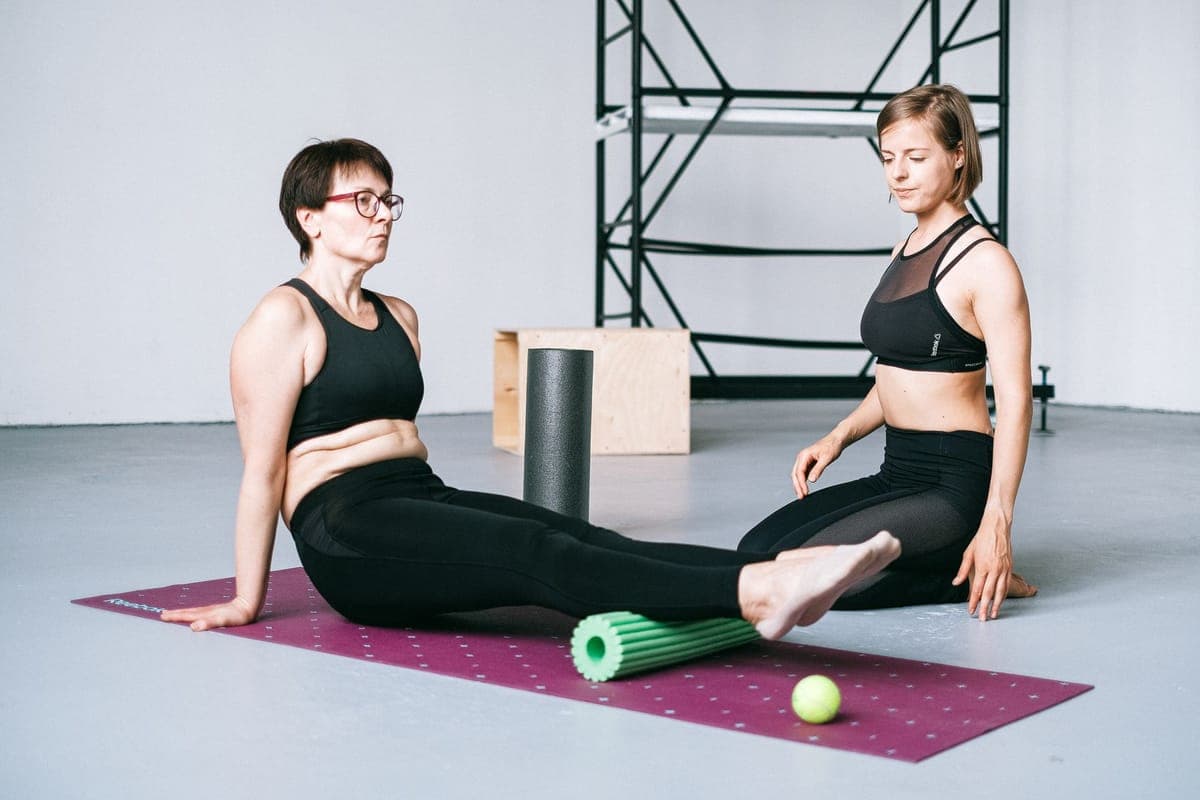
Your postpartum core is adapting, not failing. Here's how a structured rehabilitation program restores strength and coordination from the inside out.
Your Postpartum Core Isn't Broken. It's Adapting.
Something shifts the moment a baby arrives. The body that grew a human for roughly forty weeks of gestation suddenly has a different centre of gravity, a different relationship with gravity, and a pelvic floor that has just done the heaviest work of its life. If your core feels unfamiliar in those first months, that is not failure. It is a normal adaptation to an enormous physical event. Postpartum core rehabilitation exists to meet that moment with structure, not hustle.
The goal isn't to snap back to anything. It is to rebuild strength, coordination and confidence from the inside out, at a pace your body can actually sustain.
What Actually Happens to Your Core During Pregnancy
Your abdominal wall stretched to accommodate a growing uterus. Your pelvic floor carried increasing downward load as pregnancy progressed. Your spine adjusted its curvature to balance a shifting centre of mass. Hormonal changes altered the elasticity of connective tissue throughout your trunk and pelvis.
One structure worth knowing about is the linea alba, the fibrous band of connective tissue that joins the left and right halves of the rectus abdominis. During pregnancy, this band thins and widens as the abdominal muscles move apart to make room. Some degree of this separation, called diastasis recti abdominis or DRA, is considered a normal adaptation, occurring in up to 100 percent of women by the third trimester.
What matters more than the gap itself is how the deep core system functions after birth.
The Numbers That Often Get Skipped Over
A clinically significant DRA is not a permanent sentence. Research suggests that approximately 33 percent of women still have a clinically significant DRA at twelve months post-delivery, which means a meaningful proportion of women do recover within that window, particularly with the right approach.
Recovery timelines vary widely. Current guidelines suggest running should begin no earlier than eight weeks postpartum, and only after you can walk thirty minutes without symptoms and pass functional readiness tests. Many women are ready between three and six months postpartum to return to higher-impact work, while others need six to twelve months or longer. There is no prize for being fastest.
Most women benefit from twelve to sixteen weeks of guided rehabilitation to establish a solid foundation before progressing to running, lifting, or sport-specific training.
What a Realistic Postpartum Core Program Looks Like
A postpartum core rehabilitation program is a structured, evidence-based physiotherapy approach designed to restore the strength, coordination, and function of the deep core and pelvic floor muscles following pregnancy and childbirth.
It begins with foundational breathing strategies and gentle deep-muscle activation. The breath is the entry point, because the diaphragm, pelvic floor and deep abdominals work as a coordinated system. You cannot strengthen a system you cannot coordinate.
From there, the work systematically builds toward functional strength, dynamic stability, and eventually, a confident return to exercise and sport. The progression is specific. Reformer Pilates, clinical Pilates, weighted training, and running each arrive at a different point on the timeline.
One thing worth flagging early: traditional sit-ups and crunches are not recommended in the early postpartum period, as they can increase intra-abdominal pressure and can worsen diastasis recti. If your current routine leans on these movements, that is worth a conversation with a qualified physiotherapist.
Who to Work With
If you are in Australia, you do not need a GP referral to see a physiotherapist. You can book directly with a women's health or pelvic health physiotherapist, who can assess your abdominal wall, pelvic floor function, and overall movement patterns.
This matters because postpartum recovery is not a one-size-fits-all pathway. A postpartum check at six weeks with your GP or women's health physio is the standard clearance point for returning to structured exercise. From there, your physio can guide your progression and flag anything that needs medical input.
A Practical Starting Point This Week
If you are in the early postpartum weeks and unsure where to begin, here is a grounded starting framework:
Book an assessment with a women's health or pelvic health physiotherapist before guessing your way through it. They can measure, palpate and tailor a program to your specific recovery.
Practise 360-degree breathing before adding any exercise. Lie on your side, inhale gently into the lower ribcage and pelvic floor, exhale with soft engagement of the deep lower abdominals. This is not a workout. It is the foundation of one.
Skip the sit-ups, crunches, and heavy loading until you have clearance and a tailored plan.
Track readiness for higher-impact work against the guideline markers: walking thirty minutes without symptoms, and functional readiness tests cleared by your physio.
Running should not begin before eight weeks postpartum, and not until those markers are genuinely met.
Give yourself twelve to sixteen weeks of guided rehabilitation before expecting your body to handle anything demanding.
Be patient with the timeline. Many women need six to twelve months or longer to feel fully restored to higher-intensity training, and that is within the range of normal recovery.
Your postpartum body is not a problem to solve. It is a system to support. The right rehabilitation, started at the right time and progressed with the right guidance, gives that system the best possible foundation for the decades of movement ahead.
Educational content only. Not a substitute for medical advice. Talk to your doctor about your specific situation.
References
- Baumann et al., 2024. A 2024 scoping review in the International Urogynecology Journal confirmed that current best practice for postpartum diastasis recti abdominis (DRA) rehabilitation prioritizes inner-unit muscle activation and tension-free diaphragmatic breathing in the immediate postpartum period before progressing to more demanding exercises.
- Selman et al., 2022. A landmark timeline paper published in the International Journal of Sports Physical Therapy established a phased return-to-activity model spanning from the immediate postpartum period through twelve months and beyond.
Common Questions
How long does it take to rebuild core strength after birth?
Recovery timelines vary widely and depend on your delivery, symptoms, and baseline fitness. Many women benefit from twelve to sixteen weeks of guided rehabilitation before progressing to higher-impact work like running or heavy lifting. Some feel ready to return to more demanding exercise between three and six months, while others need six to twelve months or longer. There is no prize for being fastest, and pacing yourself supports better long-term outcomes. A women's health physiotherapist can help you assess readiness and progress safely.
Is diastasis recti permanent?
No. Some degree of abdominal separation during pregnancy is a normal adaptation, occurring in up to 100 percent of women by the third trimester. Research suggests that about 33 percent of women still have a clinically significant separation at twelve months postpartum, which means a meaningful proportion recover within that window, particularly with the right approach. What matters most is how the deep core system functions, not just the width of the gap. Targeted rehabilitation focused on the deep abdominals and pelvic floor can support recovery well beyond the early postpartum months.
When can I return to running after giving birth?
Current guidelines suggest waiting at least eight weeks postpartum before returning to running, and only after you can walk for thirty minutes without symptoms and pass basic functional readiness tests. Many women are ready between three and six months, while others need longer. Jumping back too early can worsen pelvic floor symptoms, abdominal doming, or back pain. A women's health physiotherapist can assess your readiness and guide a gradual return-to-run program that protects your recovery.
Do I need a postpartum core program even if I had a c-section?
Yes. Whether you birthed vaginally or via caesarean, pregnancy itself changes the deep core system, the pelvic floor, and connective tissue elasticity. A c-section adds an additional layer of abdominal healing on top of those changes, so a structured rehabilitation approach is just as relevant. Beginning with breath work and gentle deep-muscle activation allows the tissue to recover without excess load. A women's health physiotherapist experienced in postnatal recovery can tailor the program to your specific situation.
Can I close my diastasis recti with exercise alone?
Exercise can support significant improvement in how the deep core functions, even if some width remains in the linea alba. The goal of rehabilitation is restoring tension, coordination, and load transfer across the abdominal wall, not simply closing the gap. Targeted work on the deep transverse abdominis, pelvic floor, and breath coordination is consistently supported in the evidence. For an individualised assessment, a women's health physiotherapist can guide you through the right progression for your body.
Jess Mizzi, CPT
Certified Personal Trainer and founder of FitForHer. Specialises in women's life-stage specific fitness — postnatal recovery, perimenopause, and menopause. About Jess →
Medical disclaimer: This article is for informational purposes only and does not constitute medical advice. Always consult a qualified healthcare professional before making changes to your exercise or nutrition programme.