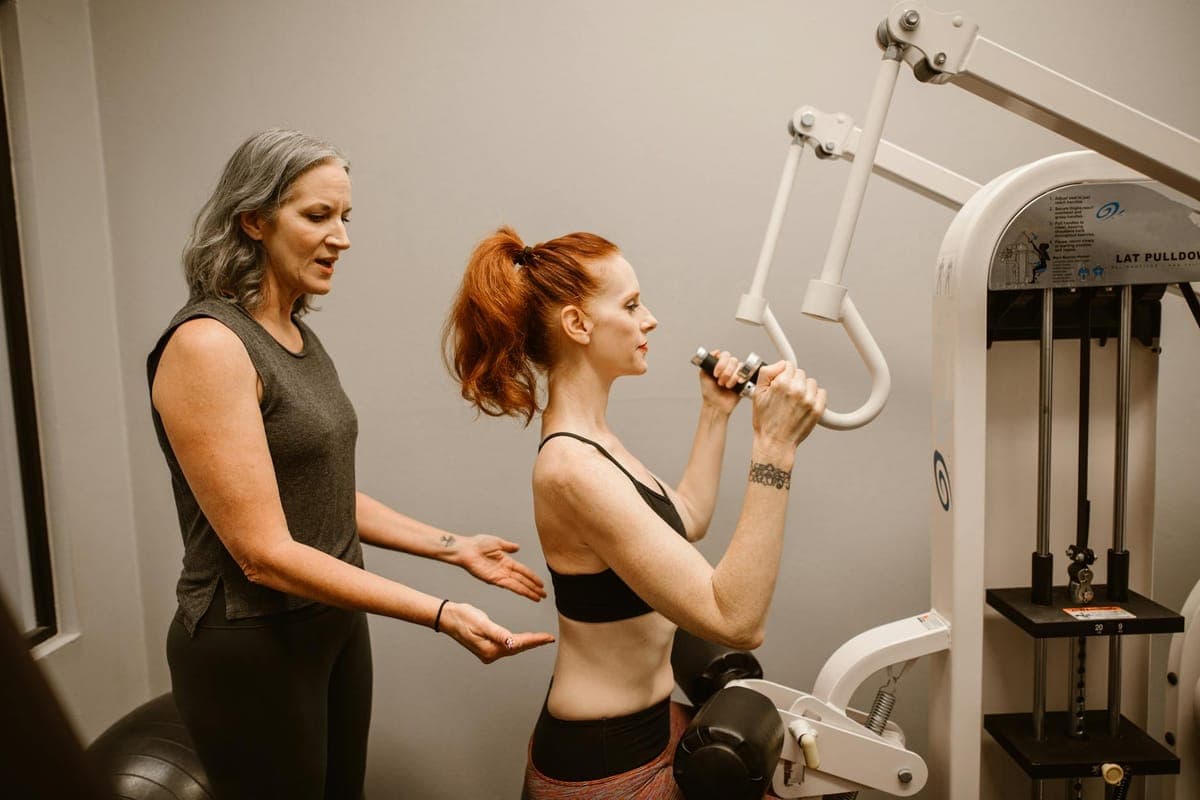
Crunches won't fix your postpartum core—here's why activating the deep system first actually works.
Why Your Core After Pregnancy Is Different
If you've recently had a baby, someone's probably told you to "strengthen your core." That's not wrong, but it's incomplete. Your core after pregnancy isn't the same as it was before, and treating it like a six-pack problem can set you back.
The core is actually two interconnected systems. One works invisibly in the background. The other does the visible, heavy lifting. Knowing the difference matters more than you might think.
Two Systems, One Core
The deep core muscles are stabilizers. They work behind the scenes to keep your spine, pelvis, and organs supported. This system includes the transverse abdominis, pelvic floor, diaphragm, and multifidus. When these muscles function well, they protect your spine and keep everything in place during movement.
The superficial core muscles are movers. They help with bending, twisting, and generating power. This group includes the rectus abdominis, obliques, and erector spinae. These are the muscles people typically think of when they say "core workout."
Think of it like a building. A skyscraper needs a strong foundation and internal structure before the exterior goes up. Your core works the same way.
Why Deep Core Activation Must Come First
Here's where many postpartum women run into trouble. If your deep core isn't strong, the superficial muscles take over. That sounds helpful until you consider the consequences. Over-reliance on superficial muscles can lead to back pain, poor posture, and pelvic floor problems.
Research shows that after a caesarean section, the abdominal muscles recover to only 51–59% of their original strength by six weeks, and reach 73–93% by six months. That's a slow rebuild, and it requires patience.
Starting with deep core activation before jumping into harder exercises is the right approach. Traditional or stronger core training exercises like crunches are usually best left until at least 12 weeks postpartum. Doing them earlier doesn't make you tougher. It makes you more likely to compensate with muscles that aren't designed for heavy lifting on their own.
When You Can Start Exercising
Most women can begin gentle exercises for their deep core within the first six weeks after giving birth. That might feel surprising if you've seen fitness content pushing for fast postpartum comebacks.
Gentle doesn't mean ineffective. It means appropriate for where your body actually is, not where you wish it would be. Breathing exercises, gentle activation of the transverse abdominis, and basic pelvic floor engagement fit into this category.
Crunches, planks, and other traditional core exercises belong in a later phase. Waiting until at least 12 weeks postpartum gives your deep core system time to engage properly. Jumping in earlier doesn't speed up recovery. It often creates compensating patterns that take longer to correct.
Pelvic Floor Deserves Its Own Attention
Pelvic floor muscles help control bladder and bowel function and provide support for pelvic organs including bladder, uterus, and bowel. They are also important for core stability.
That last point gets overlooked constantly. Your pelvic floor isn't separate from your core. It's a critical part of it. When pelvic floor function is compromised, core stability suffers. When core stability is compromised, pelvic floor problems often worsen.
This is why the pelvic floor shouldn't be an afterthought in postpartum recovery. It should be a starting point.
Where to Start
If you're within the first six weeks postpartum and your recovery has been uncomplicated, focus on breath-based core activation. Sync your breathing with gentle engagement of the transverse abdominis. Practice basic pelvic floor awareness without forcing anything.
If you're past six weeks and haven't done deep core work yet, start now. Work backward through the foundation before adding load.
If you're experiencing symptoms like leakage, heaviness, or significant abdominal separation, work with a pelvic floor specialist before following any generic program. These symptoms aren't a normal part of having given birth. They're signals that deserve attention.
Build the foundation first. The visible strength follows.
References
- Beamish NF, Davenport MH, Ali MU, et al. (2025). Impact of postpartum exercise on pelvic floor disorders and diastasis recti abdominis: a systematic review and meta-analysis. Br J Sports Med. 59(8):562-575.
- Skoura A, Billis E, Papanikolaou DT, et al. (2024). Diastasis recti abdominis rehabilitation in the postpartum period: a scoping review of current clinical practice. Int Urogynecol J. 35(3):491-520.
- Luo X, Leng X, Jiang J, Yang K, Ma R. (2025). The relationship between transversus abdominis and rehabilitation exercises for diastasis recti abdominis: a scoping review. J Bodywork Mov Ther. 45:619-626.
- Bigdeli N, Yalfani A, Doosti-Irani A, Qodrati A. (2025). Evidence-based comparison of rehabilitation strategies for diastasis recti abdominis in postpartum women: a systematic review and network meta-analysis. Sci Rep. 15(1):39591.
- Bo K, Naess K, Star-Jensen J, Siafarikas F, Ellstrom Engh M, Hilde G. (2022). Recovery of pelvic floor muscle strength and endurance 6 and 12 months postpartum in primiparous women. Int Urogynecol J. 33(12):3455-3464.
Common Questions
What's the difference between deep core and superficial core muscles?
Your core has two distinct systems that work together. The deep core system acts as your body's inner stabilizer—it includes the transverse abdominis, pelvic floor, diaphragm, and multifidus. These muscles protect your spine and maintain internal pressure. The superficial core muscles (rectus abdominis, obliques, and erector spinae) are the movers responsible for bending and generating power. Think of the deep system as your building's foundation and the superficial system as the walls. Both matter, but they need to be trained in the right order.
Why are traditional core exercises like crunches not recommended early postpartum?
Traditional core exercises like crunches and planks place significant load on your superficial muscles without adequately engaging your deep core stabilizers first. When your deep system isn't functioning well, your superficial muscles compensate, which can lead to back pain, poor posture, and pelvic floor dysfunction. Research shows that after a caesarean section, abdominal muscles recover to only 51-59% of their original strength by six weeks. Jumping into traditional ab exercises before this system is ready creates compensating movement patterns that take longer to correct than if you'd started with gentle deep core activation.
When can I safely start exercising my core after giving birth?
Most women can begin gentle deep core exercises within the first six weeks postpartum, but you should always get clearance from your healthcare provider first. Gentle doesn't mean ineffective—it means appropriate for your body's actual state. Start with breathing exercises, basic pelvic floor engagement, and light transverse abdominis activation. More challenging exercises like crunches, planks, and traditional core workouts should wait until at least 12 weeks postpartum, and even longer after a C-section. The key is progressing gradually based on how your body responds, not a predetermined timeline.
Why does my Caesarean scar affect my core recovery?
A Caesarean section involves cutting through multiple layers of tissue, including your abdominal muscles, which significantly impacts recovery. Studies show that after C-section, abdominal muscle strength reaches only 51-59% of pre-pregnancy levels at six weeks and 73-93% by six months. This slower recovery means the deep core system may not engage properly for months, making it easier to over-rely on superficial muscles and develop compensating patterns. This is why a graduated, gentle approach focused first on re-establishing deep core connection is particularly important after surgical delivery.
How does the pelvic floor fit into postpartum core training?
The pelvic floor is a critical component of your deep core system, not something separate to think about later. It works with your diaphragm, transverse abdominis, and multifidus to maintain intra-abdominal pressure and stabilize your pelvis and spine. When the pelvic floor is weak or uncoordinated—which is common after pregnancy and delivery—it compromises the entire deep core system. This is why effective postpartum core training always includes pelvic floor work alongside deep abdominal activation. Addressing the pelvic floor first or simultaneously helps ensure the entire stabilizing system functions properly before adding more challenging exercises.
Jess Mizzi, CPT
Certified Personal Trainer and founder of FitForHer. Specialises in women's life-stage specific fitness — postnatal recovery, perimenopause, and menopause. About Jess →
Medical disclaimer: This article is for informational purposes only and does not constitute medical advice. Always consult a qualified healthcare professional before making changes to your exercise or nutrition programme.