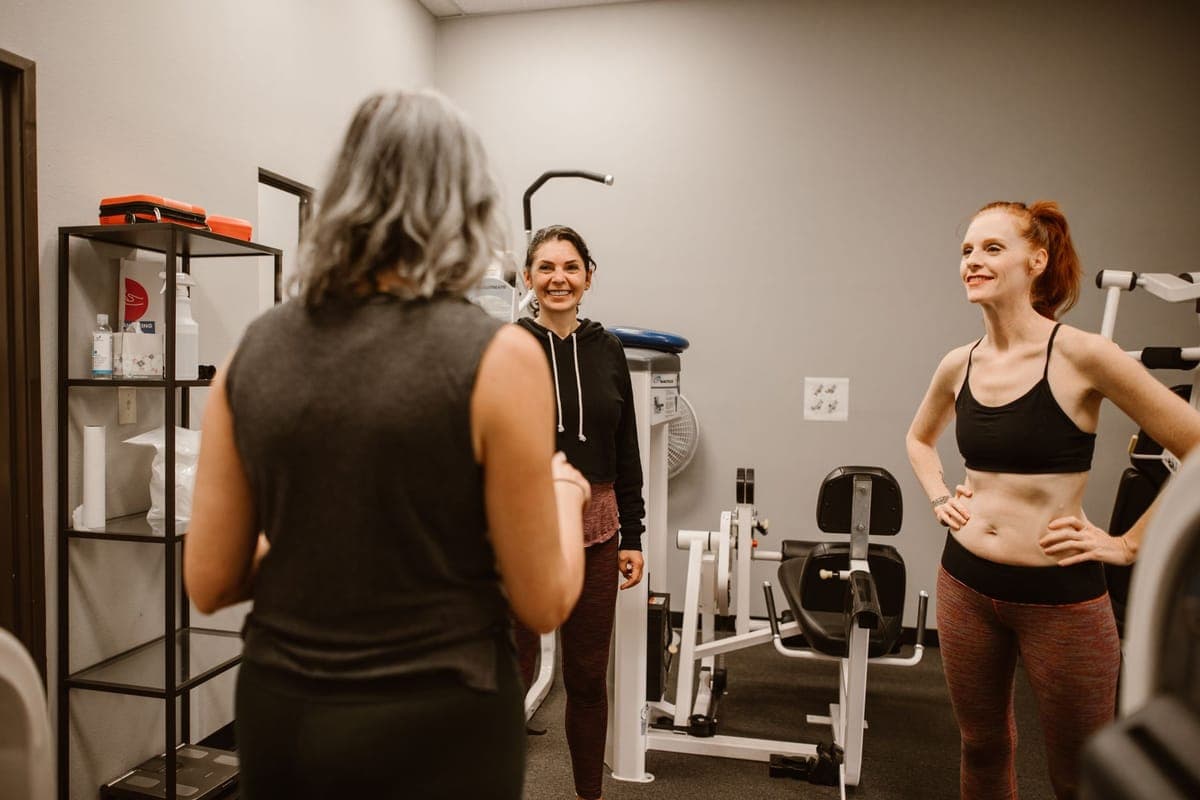
The first six weeks postpartum aren't a finish line, they're the foundation of smarter recovery.
The first six weeks aren't a finish line, they're a foundation
You've just done the most physically demanding thing your body will probably ever do. Whether you birthed vaginally or via caesarean, your core, your pelvic floor, and your energy reserves have all been through it. The pull to "bounce back" is loud, but the smarter play is to treat the early postnatal period as a rebuild, not a return.
Here's what the evidence actually says about starting movement again after birth, and how to do it without setting yourself back.
What postpartum exercise is actually for
Forget the aesthetic. Postnatal training has four jobs: restore core stability, look after pelvic floor health, rebuild overall strength, and support cardiovascular fitness. That's the order things matter in too. Core and pelvic floor come first because pregnancy and delivery genuinely weaken those muscles, and jumping into higher-intensity work before they're ready tends to create problems that linger for years.
A 2022 review in BMJ Open Sport & Exercise Medicine noted that appropriately timed postpartum exercise can support recovery and is associated with improved mental health and energy levels. Note the framing: support and associated with, not fixes or reverses. That's deliberate. Your body is doing the healing. Movement is how you assist the process, not how you override it.
The timeline nobody wants to hear
There are real guardrails here, and they exist for a reason.
If you had a vaginal birth without complications, light walking can usually begin once you feel able, with many guidelines suggesting building up to a daily 30-minute walk as you recover. Higher-intensity work and any meaningful weightlifting should wait until after your six-week postnatal check, where your GP or women's health physio can clear you based on how you've actually healed.
If you had a caesarean, the rules are stricter. Avoid lifting anything heavier than your baby for the first six weeks. Full healing from a caesarean typically takes around three months. The instinct to push through that timeline is strong, especially when sleep deprivation makes you feel desperate to do something for yourself, but the abdominal tissue needs that window.
Across both delivery types, the broad guidance is to avoid returning to your pre-pregnancy training levels until around four to six months postpartum. That doesn't mean doing nothing. It means choosing movements that match where your body actually is.
Where to start in week one
Two exercises carry more early-postnatal weight than anything else you'll do in a gym for months.
Pelvic floor work. The instruction set is unglamorous and specific: repeat 10 to 15 times, 2 to 3 times a day, holding each contraction for 3 to 5 seconds before relaxing. This isn't optional recovery work. Pregnancy and delivery genuinely weaken these muscles, and rebuilding them early is one of the most evidence-supported things you can do. If you notice leaking, heaviness, or a feeling of something not quite right, that's a signal to see a women's health physiotherapist rather than pushing harder.
Diaphragmatic breathing. Often called 360 breathing, this is the entry point for core rehab. Perform for 5 to 10 minutes daily, breathing so your ribcage expands laterally and your belly softens on the inhale, rather than bracing outwards. It teaches your deep core to switch back on without loading it, and it pairs naturally with pelvic floor work.
Walking. Start with what you can tolerate around the block. For many women this looks like building up to a daily 30-minute walk in the early weeks if they feel able. It's enough.
What to deliberately skip until you're cleared
High-intensity interval training. Heavy lifting. Running. Anything that creates significant intra-abdominal pressure or repetitive impact on a pelvic floor that hasn't been rehabbed yet. The peer-reviewed guidance is consistent: avoid moderate to high-intensity exercise and weightlifting until your six-week checkup, and ease back into previous activity levels around the four to six month mark.
This is where comparison does the most damage. The athlete on social media who "returned" at eight weeks almost certainly had a different birth, a different pelvic floor, and a different rehab team behind the scenes. Your timeline is yours.
A realistic first three months
Once cleared, a sensible progression usually looks like: continuing daily walking, layering in strength work that starts with bodyweight and progresses slowly, reintroducing low-impact cardio, and only then considering higher-intensity training if everything is tracking well.
Throughout, keep an eye on signals: pelvic heaviness, abdominal doming, leaking, pain that doesn't settle. These aren't signs to push through. They're signs to pause and loop in a women's health physio. Australia's Continence Foundation and the Australian Physiotherapy Association both maintain directories if you need a starting point.
Mental health matters here too. Postpartum Support International can be contacted via telephone at 1-800-944-4773, and in Australia the PANDA national helpline (1300 726 306) supports perinatal mental health. If the low mood feels bigger than tiredness, that's a conversation for your GP.
The takeaway
Postpartum fitness isn't a race. The first six weeks belong to breathing, walking, and pelvic floor work, with clearance from your GP or women's health physio before anything heavier. The first three months after a caesarean are about healing, not loading. And somewhere between four and six months, you can begin rebuilding toward the training you actually want to do, on a foundation that will hold you for decades rather than weeks.
Educational content only. Not a substitute for medical advice. Talk to your doctor about your specific situation.
References
- Jie S, Fu A, Wang C, Rajabi S. (2025). A comprehensive review on the impact of polyphenol supplementation and exercise on depression and brain function parameters.. Behavioral and brain functions : BBF
- Byeon NE, Shin JH, Kim SJ, Kim WS, Lee WH. (2025). Comparative Study of the Rehabilitation Exercise 5R System and Aerobic Exercise on Postpartum Recovery: Impacts on Muscle Function and Metabolic Health.. Medical science monitor : international medical journal of experimental and clinical research
Common Questions
When can I start exercising after giving birth?
Light walking can usually begin within days of a straightforward vaginal birth, with many guidelines suggesting a gradual build toward 30 minutes daily as you feel able. Higher-intensity work and meaningful strength training should wait until after your six-week postnatal check, where your GP or women's health physiotherapist can assess how your body has actually healed. For caesarean births, lifting restrictions are stricter for the first six weeks, and full tissue healing typically takes around three months. Evidence suggests that appropriately timed postnatal exercise is associated with improved recovery and energy levels, rather than being a quick fix.
Is it safe to do pelvic floor exercises straight after birth?
Yes, gentle pelvic floor work is generally encouraged early in postnatal recovery and is one of the most evidence-supported things you can do. The standard guideline is 10 to 15 repetitions, 2 to 3 times a day, holding each contraction for 3 to 5 seconds before fully relaxing. Pregnancy and delivery genuinely weaken these muscles, and rebuilding them early may support long-term pelvic health and continence. If you notice leaking, heaviness, or pain during these exercises, talk to your doctor or a women's health physiotherapist about your specific situation.
What exercises should I avoid in the first six weeks postpartum?
In the early weeks, avoid high-intensity cardio, heavy lifting, crunches, sit-ups, and any movement that creates significant intra-abdominal pressure before your core and pelvic floor have recovered. After a caesarean, avoid lifting anything heavier than your baby for the first six weeks to protect healing abdominal tissue. Jumping, running, and loaded squats are generally not recommended until you're cleared at your postnatal check and have rebuilt baseline strength. The goal is to choose movements that match where your body actually is, rather than rushing back to pre-pregnancy training.
How long does it take to recover core strength after pregnancy?
Core recovery is gradual and depends on factors like delivery type, whether you experienced diastasis recti, and your baseline strength before pregnancy. Gentle deep core and breathing work can begin in the early weeks, but returning to higher-load core training typically takes several months. Broad guidance suggests waiting around four to six months before returning to your pre-pregnancy training levels, though this varies for everyone. A women's health physiotherapist can assess your abdominal wall and give you a tailored progression plan.
Can postnatal exercise help with mental health and energy?
Evidence suggests that appropriately timed postnatal exercise is associated with improved mood, energy levels, and overall wellbeing, though it is not a substitute for clinical support if you're struggling. Gentle movement such as walking, pelvic floor work, and light stretching can support sleep and reduce feelings of fatigue, especially when paired with realistic expectations. If you're experiencing persistent low mood, anxiety, or symptoms of postnatal depression, please talk to your doctor or a qualified mental health professional about your specific situation. Movement is one helpful tool, but postnatal mental health care often requires a broader plan.
Jess Mizzi, CPT
Certified Personal Trainer and founder of FitForHer. Specialises in women's life-stage specific fitness — postnatal recovery, perimenopause, and menopause. About Jess →
Medical disclaimer: This article is for informational purposes only and does not constitute medical advice. Always consult a qualified healthcare professional before making changes to your exercise or nutrition programme.