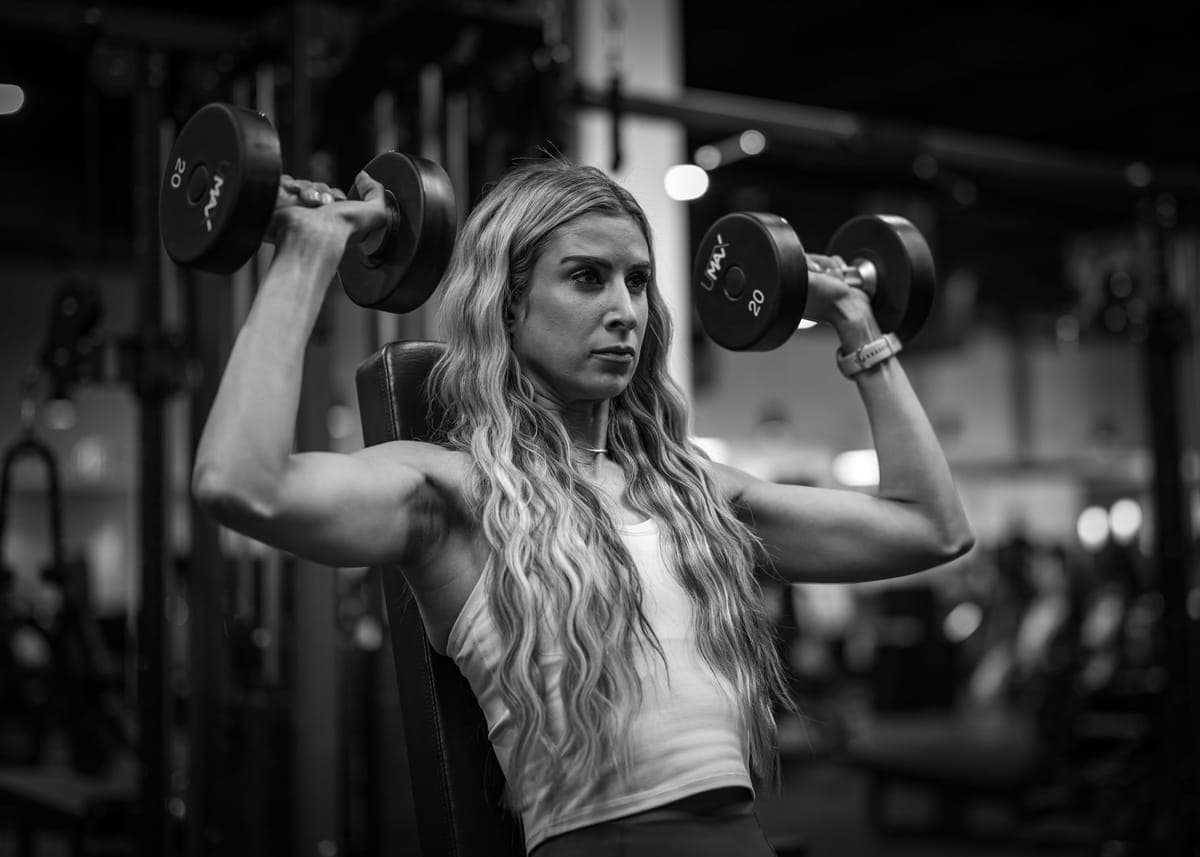
Hormones, sleep and muscle loss shift the game in your 40s, but movement still works when paired with realistic expectations.
Yes, perimenopause can shift how your body holds weight. Here's the honest read.
Perimenopause weight gain exercise is one of the most-Googled questions for women in their 40s, and the short answer is uncomfortable: the playing field genuinely changes. Hormones are shifting, sleep is harder to come by, and the muscle you built in your 30s is starting to quietly hand back to the universe. None of that means weight gain is fated. It means the strategy that worked at 32 may need a reset, and that's where this article lands.
If you've noticed your clothes sitting differently around the middle, you're not imagining it. The combination of falling oestrogen, disrupted sleep, and progressive muscle loss makes weight easier to gain and harder to lose. Movement still helps. It just does its best work when paired with the right expectations.
Why the middle: what's actually happening in your body
Perimenopause is the years-long runway before menopause, which is officially reached when you have not had a period for 12 months in a row. It can start in your 40s, sometimes earlier, and often runs for several years.
The headline shift is oestrogen. As levels drop, fat stores around the body redistribute. Instead of settling on the hips and thighs, fat tends to land around the belly. This isn't cosmetic preference, it's biology. The fat that gathers deep inside the abdomen, called visceral fat, is linked to higher health risks, including heart disease. So the change you're noticing on the outside reflects something happening on the inside.
Two other shifts ride alongside oestrogen. Sleep often gets choppier, and when you're short on shut-eye, hunger hormones like ghrelin rise while fullness hormones like leptin fall. Cue the 3pm biscuit run. Stress has its own signature too: chronic stress raises cortisol, and when cortisol stays elevated, the body is more inclined to store fat around the midsection. Hormones, sleep, stress, and muscle loss together make perimenopausal weight gain frustrating in a way that's qualitatively different from weight changes earlier in life.
The muscle piece: why strength training stops being optional
Here's the part that tends to get skipped: muscle is metabolically expensive. It burns energy even when you're on the couch. So when you lose it, your daily spend drops, often without you changing a thing.
The general trajectory: muscle mass and strength can decline at a rate of 3% to 8% every 10 years after your 30s. Sarcopenia, the clinical term for age-related muscle loss, doesn't just shrink your biceps; it changes your baseline. Two women of the same weight and age can have meaningfully different body compositions depending on how much lean tissue they've kept.
This is also where the standard "just eat less, move more" advice falls apart. You can cut calories and still lose muscle, which makes the next round of weight management harder. The lever most people under-pull in perimenopause is resistance training, not cardio.
The 150-minute rule, and why it isn't the whole story
Public health guidance in Australia points to 150 minutes of moderate-intensity exercise each week, plus two strength training sessions. It's a solid floor. It's also not the magic bullet for body composition on its own.
The good news for time-poor women: getting in three 10-minute walks throughout the day is the same as walking for 30 minutes. Step counts broken into chunks count the same as a single block. So if carving out a gym session feels impossible, three brisk walks after meals is a genuine substitute on the cardio side.
But the strength side is harder to fragment. Two sessions a week means two sessions a week. Heavy isn't required; consistent is. The Australian physical activity guidelines from the Department of Health explicitly pair aerobic activity with resistance training, because each one does different work.
The mistakes most women make in this decade
A few patterns show up repeatedly in perimenopausal women who feel stuck.
Treating cardio as the primary tool. Walking, running, cycling, classes, they all count. None of them, on their own, offset the muscle decline already happening under the surface.
Under-eating protein. Perimenopausal women often eat at a level that doesn't support muscle maintenance, particularly if they've been yo-yo dieting for years. Protein adequacy becomes load-bearing for strength training to actually work.
Ignoring sleep because "it's just how I am now." Sleep is the upstream lever. Nothing you do in the gym reliably offsets chronic poor sleep, including the hunger hormone disruption that comes with it.
Treating stress as separate from the body. Cortisol-driven fat storage is real. The stress response isn't a personality flaw to push through; it's physiology. Movement is one of the better tools for it, but so is genuine rest, and so is professional support when stress is overwhelming.
Chasing the scale. Perimenopausal bodies are recomposing, not just shrinking. If your weight holds steady while your waistband loosens, your muscle-to-fat ratio is shifting in the right direction, even when the number doesn't move.
How it differs from earlier decades
The weight changes women fight in their 20s and 30s tend to be simpler equations: calories in, calories out, with hormonal contraception and cycle-related shifts layered on top. Perimenopause adds three more variables at once.
In your 30s, fat storage tends to be more peripheral, on the hips, thighs, and butt, and the lever is mostly diet and consistent training. In your 40s, fat settles centrally because oestrogen has fallen, muscle is leaving faster, sleep is fighting you, and stress is doing its own thing. The same diet that held weight steady at 35 may produce slow gain at 44, not because you've suddenly lost willpower, but because the inputs and outputs have both shifted.
The implication isn't that you're broken. It's that the intervention needs to match the moment.
What to do this week
Pick two strength sessions and book them like meetings. They can be 25 minutes. They can be a bodyweight circuit at home, a dumbbell session, or a class. What matters is two a week, with progressive challenge over time.
Stack three 10-minute walks into days you don't train, ideally after meals. Walk to a coffee shop. Walk during a phone call. Park further away. The dose-response between walking and metabolic health is strong, and three short walks count the same as one longer one.
Protect sleep like it's a training session. Same bedtime, dark room, no caffeine after early afternoon if you can manage it. If perimenopausal sleep symptoms are sharp, including hot flushes that wake you, that conversation belongs with your GP.
Hit your protein. A common starting point is roughly 1.2 to 1.6 grams of protein per kilogram of body weight per day for adults doing strength work, though individual targets depend on your health, kidneys, and goals, and an Accredited Practising Dietitian can tailor this for you. Eggs, yoghurt, legumes, fish, chicken, tofu, and protein-fortified milk all count.
Manage the stress signal. Brief walks, breathwork, time outside, whatever reliably takes your nervous system down a notch. The goal isn't zen, it's reducing the cortisol load driving midsection fat storage.
Drop the daily weigh-in if it's making you miserable. Take a waist measurement monthly instead, or notice how your clothes fit. The scale tells you your total mass; it doesn't tell you what's muscle and what's fat.
Get your baseline checks. Perimenopausal weight gain in the belly can coincide with shifts in blood pressure, cholesterol, and blood sugar. A standard check-up with your GP covers all of these and gives you a real starting line.
A note on what this article isn't. No internet article can tell you exactly how your hormones, your sleep, or your stress response are behaving, and there's no exercise, food, or supplement regime that overrides those things on its own. For personalised support through perimenopause, your GP, a women's health physiotherapist, and an Accredited Practising Dietitian are the right team.
Educational content only. Not a substitute for medical advice. Talk to your doctor about your specific situation.
References
- Kodoth V, Scaccia S, Aggarwal B. Adverse changes in body composition during the menopausal transition and relation to cardiovascular risk: a contemporary review. Women's Health Reports. 2022;3(1):573-581.
- Alemany M. Estrogens and the regulation of glucose metabolism. WJD. 2021;12(10):1622-1654.
- Ko SH, Jung Y. Energy metabolism changes and dysregulated lipid metabolism in postmenopausal women. Nutrients. 2021;13(12):4556.
- Liu S, Wang X, Zheng Q, Gao L, Sun Q. Sleep deprivation and central appetite regulation. Nutrients. 2022;14(24):5196.
- Erdélyi A, Pálfi E, Tűű L, et al. The importance of nutrition in menopause and perimenopause—a review. Nutrients. 2023;16(1):27.
Common Questions
What is the best exercise for perimenopause weight gain?
There is no single best exercise, but evidence suggests resistance training is the most under-used lever. Two strength sessions a week help preserve lean muscle, which supports your resting metabolic rate as oestrogen declines. Walking and moderate aerobic activity still matter for heart health and stress regulation, but on their own they don't fully offset the muscle changes that show up in this decade. A blended approach of strength work plus movement you enjoy tends to be the most sustainable.
Why am I gaining weight in my stomach during perimenopause?
Falling oestrogen changes where your body stores fat, shifting the pattern away from hips and thighs and toward the abdomen. This is also influenced by rising cortisol from chronic stress and disrupted sleep, both common in this stage. Some of that abdominal fat sits deeper around the organs and is associated with higher cardiovascular and metabolic risk, which is why the shift is worth taking seriously. Exercise, protein adequacy and sleep are the levers with the strongest evidence behind them.
How many times a week should I strength train in perimenopause?
Australian physical activity guidelines suggest at least two strength sessions per week on top of aerobic activity. This floor is supported by research on maintaining muscle mass and bone density during the menopause transition. Sessions don't need to be long or heavy to be effective; consistency matters more than load when you're starting out. If you're new to resistance work, a women's health physiotherapist or accredited exercise physiologist can help you build a safe starting programme.
Can you lose belly fat during perimenopause?
You can reduce it, though the path looks different from your 30s. A combination of resistance training, adequate protein, daily movement and sleep hygiene is associated with lower visceral fat in this life stage. Spot reduction is not supported by evidence, so crunches alone won't shift belly fat, but overall body composition can still improve meaningfully. Talk to your doctor about your specific situation, especially if weight gain is sudden or paired with other symptoms.
Does perimenopause cause weight gain even with exercise?
Hormonal shifts can make weight management harder even when your habits haven't changed, because muscle mass is gradually declining and fat is redistributing toward the abdomen. Exercise still helps with body composition, mood, sleep and long-term health, even when the scale moves slowly. The realistic goal in perimenopause is often recomposition, losing fat while keeping or building muscle, rather than a number on the scales. An Accredited Practising Dietitian can support you with a plan that fits your training and life stage.
Jess Mizzi, CPT
Certified Personal Trainer and founder of FitForHer. Specialises in women's life-stage specific fitness — postnatal recovery, perimenopause, and menopause. About Jess →
Medical disclaimer: This article is for informational purposes only and does not constitute medical advice. Always consult a qualified healthcare professional before making changes to your exercise or nutrition programme.