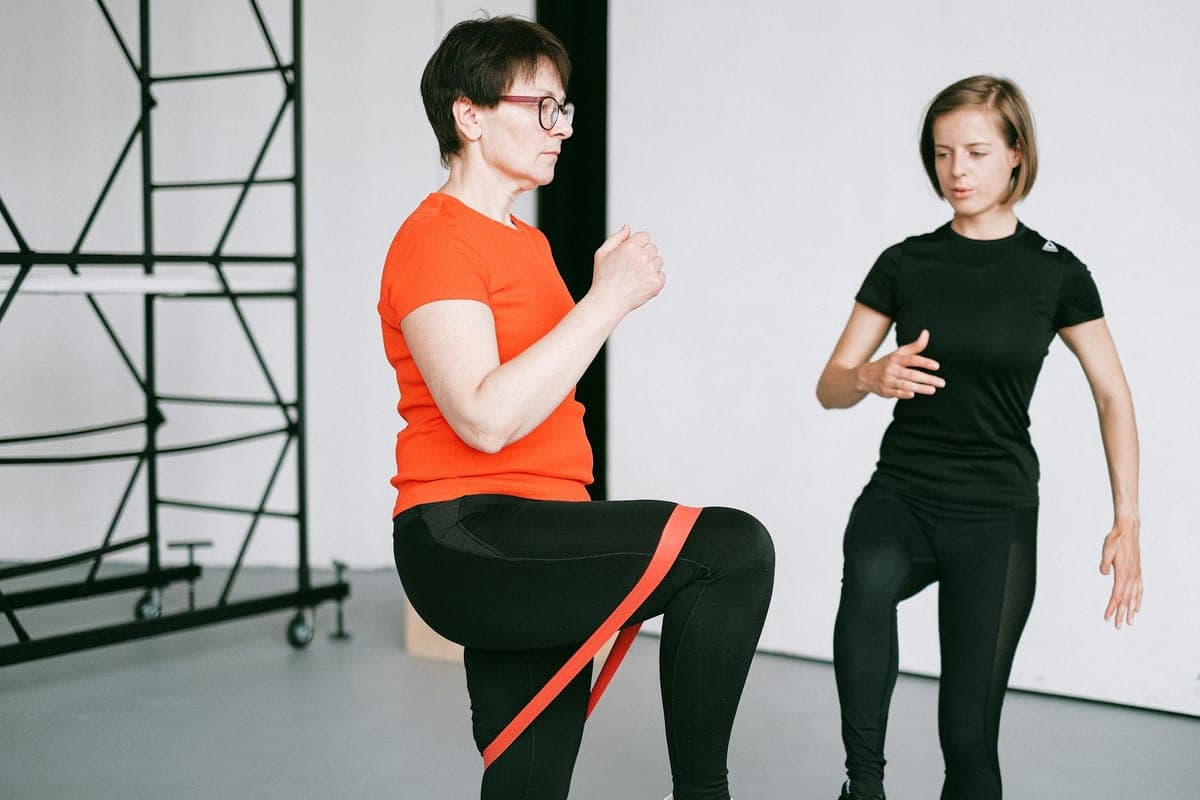
As estrogen drops in your 40s, your fitness strategy needs to change—here's what the science says.
The Hormonal Shift Nobody Warns You About
Somewhere in your 40s, your body starts a quiet overhaul. Perimenopause is marked by a dramatic decline in estrogen and progesterone, and these hormones do far more than regulate your reproductive system. They influence how your body stores fat, builds muscle, and maintains metabolic health.
Here's what the research shows: estrogen loss promotes insulin resistance and changes in body composition, including more visceral fat accumulation around the midsection. Your postmenopausal metabolic rate declines, increasing the likelihood of weight gain and visceral fat accumulation. Meanwhile, you're losing lean muscle mass at a rate of around 1% per year, starting in your 30s.
This isn't about aesthetics. It's about what your body can actually do for you—how it moves, how it burns energy, how it protects your bones and metabolic health as you age.
Why Cardio Isn't the Whole Answer
If you've been logging miles on the treadmill hoping to counteract these changes, the evidence is less forgiving. Cardio alone does not build or preserve muscle mass. It does not substantially improve bone density. And critically, it does not counteract the anabolic resistance that develops with falling estrogen.
Your muscles need direct stimulation to maintain themselves. Without resistance training, your body has no reason to hold onto the lean tissue that keeps your metabolism humming. This is where many women find themselves stuck—exercising regularly but watching their body composition slowly shift toward less muscle and more central fat.
What Resistance Training Actually Does
The picture isn't bleak. Resistance exercises counteract muscle atrophy by stimulating protein synthesis and neuromuscular adaptation. When you challenge your muscles with meaningful load, you send a signal that this tissue is still needed.
This matters beyond strength. Strength training enhances resting metabolic rate by increasing lean muscle mass, which burns more calories even at rest. More muscle means your body works harder when you're not working out—24 hours a day.
For bone health, controlled loading through resistance training creates the mechanical stress that bones need to maintain their density. The research points to loads of 70-85% of one-repetition maximum as most effective for both muscle hypertrophy and bone adaptation in this population. This isn't about lifting the heaviest weight possible. It's about working with enough load to challenge your tissues effectively.
The HIIT Question
High-intensity interval training has its place, but it requires thoughtful programming during perimenopause. HIIT should be periodized—alternated with easier training weeks—particularly when elevated cortisol from chronic high-intensity training can actually worsen hormonal symptoms.
What does this mean practically? If HIIT is part of your routine, build in deliberate recovery weeks with lower intensity. Your hormonal profile during perimenopause is different from your 20s or 30s, and pushing through fatigue with endless high-intensity work can backfire.
Your Timeline for Change
One of the most practical questions is: how long until this actually works? Research shows a 12 weeks minimum duration with one to three sessions per week for observing significant health changes in perimenopause and postmenopause.
This matters because most women expect faster results from a new training program. The hormonal environment you're working in requires patience. You're not just building muscle—you're counteracting years of gradual decline while managing a physiology that's actively working against muscle preservation. Twelve weeks is the baseline, not the ceiling.
Putting This Together
If you're in perimenopause or postmenopausal, structured resistance training isn't optional—it's the primary tool for maintaining the body you've built. Two to three sessions per week, working in that 70-85% one-repetition maximum range, gives you the stimulus your muscles and bones need.
Balance your intensity. If high-intensity intervals are part of your week, follow them with lower-intensity recovery days or complete rest. Monitor how you feel. Persistent fatigue, disrupted sleep, or worsening symptoms may be signals that your nervous system needs a break.
Start with compound movements—squats, presses, rows, hip hinges—and build from there. If you're new to resistance training, a qualified strength coach or exercise physiologist can help you establish good technique and appropriate loading.
The hormonal changes of midlife are significant, but they're not a one-way street. Targeted training gives you something you can control: a stimulus that tells your body to hold onto muscle, maintain bone density, and keep your metabolism running efficiently.
Educational content only. Not a substitute for medical advice. Talk to your doctor about your specific situation.
References
- Khalafi M, Habibi Maleki A, Sakhaei MH, et al. (2023). The effects of exercise training on body composition in postmenopausal women: a systematic review and meta-analysis. Frontiers in Endocrinology. 14:1183765.
- Zhao F, Su W, Sun Y, Wang J, Lu B, Yun H. (2025). Optimal resistance training parameters for improving bone mineral density in postmenopausal women: a systematic review and meta-analysis. Journal of Orthopaedic Surgery and Research. 20(1):466.
- Watson SL, Weeks BK, Weis LJ, Harding AT, Horan SA, Beck BR. (2018). High-intensity resistance and impact training improves bone mineral density and physical function in postmenopausal women: the LIFTMOR randomized controlled trial. Journal of Bone and Mineral Research. 33(2):211-220.
- Hansen M. (2018). Female hormones: do they influence muscle and tendon protein metabolism? Proceedings of the Nutrition Society. 77(1):32-41.
- Gharahdaghi N, Phillips BE, Szewczyk NJ, Smith K, Wilkinson DJ, Atherton PJ. (2021). Links between testosterone, oestrogen, and the growth hormone/insulin-like growth factor axis and resistance exercise muscle adaptations. Frontiers in Physiology. 11:621226.
- Ko SH, Jung Y. (2021). Energy metabolism changes and dysregulated lipid metabolism in postmenopausal women. Nutrients. 13(12):4556.
Common Questions
Why do I seem to lose muscle more easily during perimenopause?
Declining estrogen directly affects your body's ability to maintain lean muscle tissue. Estrogen plays a role in protein synthesis and muscle repair, so as levels drop, your muscles become less efficient at rebuilding after exercise. Research shows women lose approximately 1% of muscle mass per year starting in their 30s, and this accelerates as estrogen declines further. Your body also develops anabolic resistance—meaning your muscles require more stimulation to respond to training than they did previously. This is why the same workout routine that worked in your 30s may not preserve muscle as effectively in your 40s and beyond.
Why am I gaining visceral fat even though nothing has changed in my diet or exercise?
This is one of the most common and frustrating experiences during perimenopause, and it's primarily driven by hormonal changes rather than lifestyle choices. Estrogen helps regulate where your body stores fat, and as levels decline, your body redistributes fat toward the midsection. Estrogen loss also promotes insulin resistance, meaning your body becomes less efficient at processing carbohydrates and more likely to store excess energy as visceral fat. This fat accumulates around internal organs and is metabolically active, increasing inflammation and cardiovascular risk. Talk to your doctor about having your insulin sensitivity assessed, as this may guide nutritional strategies alongside exercise.
I've been doing steady-state cardio regularly—why isn't that enough?
Steady-state cardio is excellent for cardiovascular health and should remain part of a balanced routine, but it does not protect against the specific changes happening in your body during perimenopause. Cardio does not provide sufficient stimulus to maintain or build lean muscle mass, nor does it meaningfully improve bone density. Your postmenopausal metabolic rate declines, meaning you burn fewer calories at rest, and muscle tissue is what keeps your metabolism running. Many women who exercise regularly but don't include resistance training find their body composition gradually shifts—losing muscle and gaining central fat—despite consistent effort. This is not a failure of effort; it's a mismatch between the type of exercise and what your body now requires.
Can I still do HIIT workouts during perimenopause?
Yes, HIIT can be included, but it requires thoughtful programming to avoid exacerbating hormonal symptoms. HIIT elevates cortisol, and if performed too frequently without adequate recovery, chronic cortisol elevation can worsen perimenopausal symptoms like weight gain, sleep disruption, and mood changes. The key is periodisation—alternating between high-intensity weeks and lower-intensity or recovery weeks. A common approach is three weeks of lower intensity for every one week of higher intensity work. Listen to your body: if you're exhausted, sleeping poorly, or noticing symptom flare-ups, this may indicate your HIIT frequency needs to decrease. Consider adding yoga, walking, or swimming on non-HIIT days to support recovery.
How heavy should I lift to maintain bone density during perimenopause?
Research suggests training with loads of 70-85% of your one-repetition maximum is most effective for both muscle hypertrophy and bone adaptation in this population. However, this doesn't mean you need to test your one-rep max or train to failure every session. Working with a qualified exercise professional who can help you identify appropriate loads for your current fitness level is valuable. The key principle is progressive overload—gradually increasing weight, reps, or sets over time to continue challenging your muscles and bones. Bone is living tissue that adapts to the mechanical stress placed upon it, so consistent, appropriately loaded resistance training sends the signal your body needs to maintain density. Talk to your doctor if you have existing osteoporosis or osteopenia before beginning a new resistance programme.
Jess Mizzi, CPT
Certified Personal Trainer and founder of FitForHer. Specialises in women's life-stage specific fitness — postnatal recovery, perimenopause, and menopause. About Jess →
Medical disclaimer: This article is for informational purposes only and does not constitute medical advice. Always consult a qualified healthcare professional before making changes to your exercise or nutrition programme.