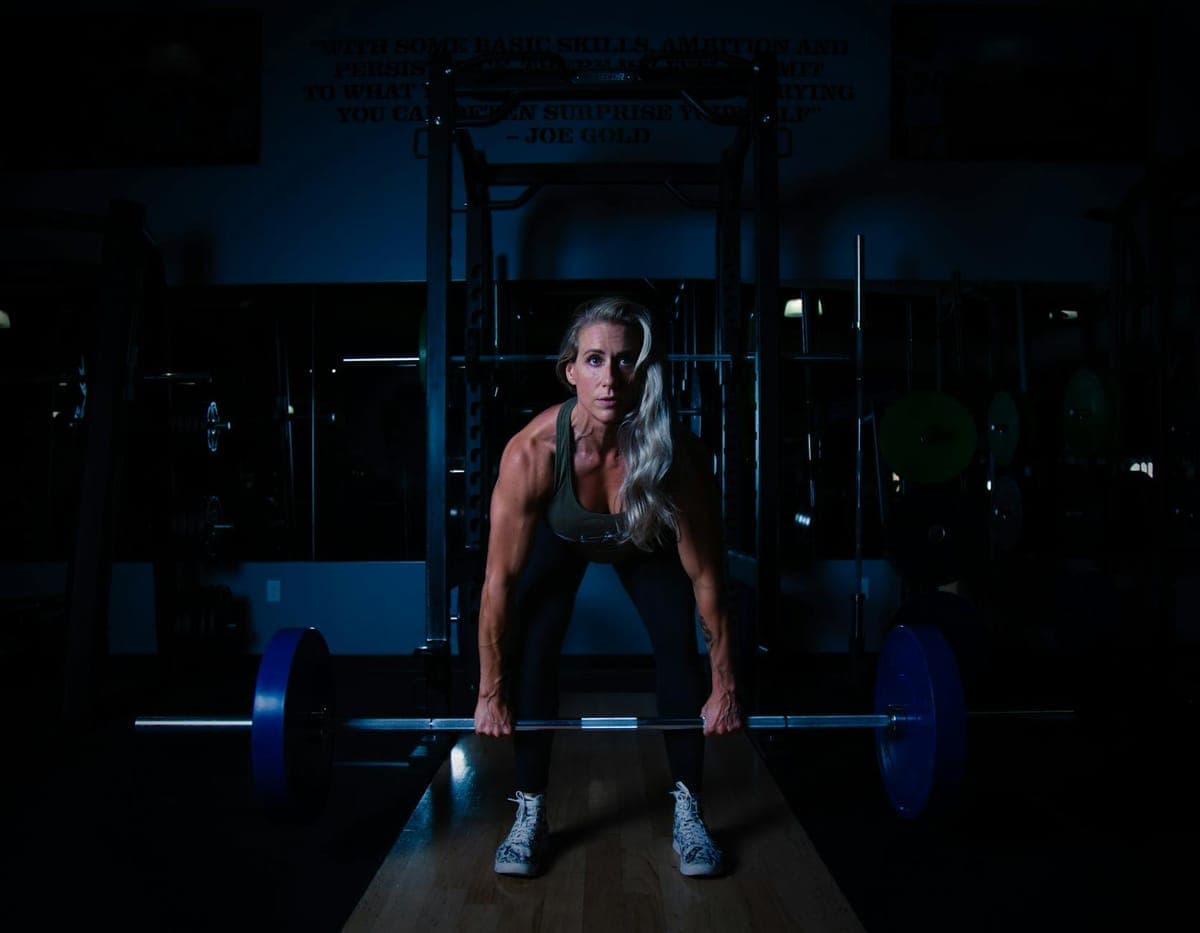
Your muscles rebuild stronger after every workout—but are you giving them the protein they need to grow?
Your Body Rebuilds Itself After Every Workout
When you finish a training session, your muscles don't just repair—they adapt. This process, called muscle protein synthesis (MPS), is the driving force behind getting stronger, faster, and more capable over time. Understanding how it works gives you a real edge.
Skeletal muscle isn't just about looking strong. It generates the force and power required for sport-specific movements, maintains joint stability, and contributes to overall metabolic health and adaptation. It's the engine you're building every time you train.
But here's what many women don't realize: the fundamentals of muscle protein synthesis are remarkably consistent regardless of your sex, age, or sport. The research is clear on this point, and it's time to stop overcomplicating what your body actually needs.
The Mechanics of Muscle Growth
Resistance exercise stimulates MPS through skeletal muscle contraction. It serves as the primary driver of muscle growth and adaptation. This means your workout creates the signal; the nutrients you consume provide the building blocks.
Dietary protein supports tissue remodelling during exercise recovery. Regular exercise places increased demands on nutrient needs, including protein. Your body needs adequate raw material to rebuild what you've broken down.
Dietary essential amino acids are crucial for muscle growth, recovery, and adaptation. This applies regardless of the sport you participate in, how old you are, or whether you identify as male or female. The underlying biochemistry follows the same rules for everyone.
One essential amino acid—leucine—acts as a signaling molecule to promote MPS. Think of it as the trigger that tells your muscles it's time to start building. Research shows this mechanism works consistently across different populations.
MPS rates peak and return to baseline within approximately two hours after protein ingestion, according to Atherton et al., 2010. This is why timing matters, and it's why spreading your protein intake throughout the day matters more than any single meal.
What the Science Says About Sex Differences
Here's where the conversation often gets muddled. Sex-based differences in dietary protein needs are, if they exist at all, minimal. The research hasn't found meaningful variations that would change your nutrition strategy.
Protein needs do not change substantially across the menstrual cycle or with the use of oral contraceptives. You don't need to adjust your protein intake based on where you are in your cycle. Your requirements stay relatively stable.
Age-related muscle loss and anabolic resistance appear to be primarily driven by aging itself, rather than estrogen deficiency. This is important because it shifts the conversation away from hormones as the primary driver of muscle changes. Your age matters more than your hormonal status when it comes to protein needs.
What this means practically: female athletes can follow the same protein guidelines that apply to male athletes. The dosage recommendations, timing strategies, and distribution patterns don't need to be adjusted for sex.
How Much Protein You Actually Need
Most active women are undershooting their protein goals without realizing it.
You should target intakes of 1.4–1.6 grams per kilogram of body weight per day, which translates to approximately 0.6–0.7 grams per pound per day. This is the baseline recommendation for athletes engaged in regular training.
During periods of energy restriction or heavy training, higher intakes are recommended—greater than 1.6 and up to 2.2 grams per kilogram per day (0.7–1.0 grams per pound per day). If you're cutting calories while maintaining training volume, or you're in a particularly demanding training block, your protein needs increase.
Calculate this based on your actual body weight, not your ideal weight. A 65-kilogram woman training regularly needs roughly 91–104 grams of protein daily as a baseline, with potential increases to 104–143 grams during calorie-restricted periods or high-training-volume phases.
The Science of Per-Meal Dosing
Beyond total daily intake, how you distribute that protein throughout the day matters significantly.
Research from Moore, 2019, demonstrates that approximately 0.31 grams per kilogram per meal (about 0.14 grams per pound) is the per-meal protein dose that elicits a maximal MPS response. This means roughly 20 grams of protein for a 65-kilogram woman, 25 grams for an 80-kilogram woman.
You should distribute protein intake evenly across the day, approximately every three to four hours. This keeps MPS elevated throughout the day rather than spiking briefly after a single large meal.
For most women eating three meals daily, hitting this distribution is challenging. Adding a protein-rich snack or beverage between meals, or front-loading protein at breakfast after an overnight fast, helps you hit the optimal distribution. Many active women consume minimal protein at breakfast and concentrate their intake at dinner. This pattern leaves gains on the table.
Putting It Into Practice
Here's where the science becomes actionable. You don't need to overthink this, but you do need to be intentional.
First, calculate your baseline target. If you weigh 60–70 kilograms, aim for 84–112 grams of protein daily. If you're training hard or intentionally restricting calories, push toward the higher end of that range or slightly above.
Second, spread your intake across at least four eating occasions. Aim for 20–30 grams of protein at each meal and one or two snacks. Greek yogurt with nuts, cottage cheese, a protein shake, eggs with toast—these simple combinations get you there.
Third, front-load protein after overnight fasting. Your first meal after waking essentially restarts MPS, which has been suppressed during sleep. This meal often gets neglected but matters for recovery and adaptation.
Fourth, don't chase perfection. Consistency with reasonable targets beats occasional heroic efforts followed by neglect. Your body responds to patterns, not isolated events.
The research is unambiguous: protein requirements for muscle growth and recovery follow consistent principles across sexes and most populations. Your job isn't to find a female-specific workaround. It's to apply the science consistently and adjust only based on training demands, not unnecessary worry about your physiology holding you back.
References
- D'Souza AC, Wageh M, Williams JS, et al. (2023). Menstrual cycle hormones and oral contraceptives: a multimethod systems physiology-based review of their impact on key aspects of female physiology. Journal of Applied Physiology. 135(6):1284-1299.
- Elliott-Sale KJ, Minahan CL, de Jonge XAKJ, et al. (2021). Methodological Considerations for Studies in Sport and Exercise Science with Women as Participants: A Working Guide for Standards of Practice for Research on Women. Sports Medicine. 51(5):843-861.
- Joanisse S, Lim C, McKendry J, McLeod JC, Stokes T, Phillips SM. (2020). Recent advances in understanding resistance exercise training-induced skeletal muscle hypertrophy in humans. F1000Research. 9:F1000 Faculty Rev-141.
- Smith K, Barua JM, Watt PW, Scrimgeour CM, Rennie MJ. (1992). Flooding with L-[1-13C]leucine stimulates human muscle protein incorporation of continuously infused L-[1-13C]valine. American Journal of Physiology. 262(3 Pt 1):E372-E376.
- Atherton PJ, Etheridge T, Watt PW, et al. (2010). Muscle full effect after oral protein: time-dependent concordance and discordance between human muscle protein synthesis and mTORC1 signaling. American Journal of Clinical Nutrition. 92(5):1080-1088.
- Moore DR. (2019). Maximizing Post-exercise Anabolism: The Case for Relative Protein Intakes. Frontiers in Nutrition. 6:147.
- Areta JL, Burke LM, Ross ML, et al. (2013). Timing and distribution of protein ingestion during prolonged recovery from resistance exercise alters myofibrillar protein synthesis. Journal of Physiology. 591(9):2319-2331.
- Mamerow MM, Mettler JA, English KL, et al. (2014). Dietary protein distribution positively influences 24-h muscle protein synthesis in healthy adults. Journal of Nutrition. 144(6):876-880.
- Trommelen J, van Lieshout GAA, Nyakayiru J, et al. (2023). The anabolic response to protein ingestion during recovery from exercise has no upper limit in magnitude and duration in vivo in humans. Cell Reports Medicine. 4(12):101324.
Common Questions
Do women need less protein than men for muscle growth?
Research shows no meaningful sex-based differences in protein requirements for muscle protein synthesis. While early studies suggested men might need slightly more per kilogram of body weight, current evidence indicates female athletes can follow the same protein intake guidelines as male athletes when adjusted for body size and training goals. The underlying biochemistry of muscle building follows consistent rules regardless of sex, and what's most important is meeting your total daily protein needs consistently.
How much protein do active women need to maximize muscle protein synthesis?
Current research recommends 1.6 to 2.2 grams of protein per kilogram of body weight daily for women engaged in regular resistance training. This translates to roughly 110-150 grams of protein for a 70kg woman. Studies show this range optimally supports muscle protein synthesis and tissue remodeling. Distributing this across 3-5 meals throughout the day—with each containing 25-40 grams of protein—maximizes the muscle-building response and prevents your body from being in a catabolic state between meals.
Does the menstrual cycle affect protein needs or muscle building?
Protein needs do not change substantially across the menstrual cycle according to current research. Your body doesn't require different protein amounts during different phases, despite hormonal fluctuations. While some women report feeling different during their cycle, the actual biochemical processes driving muscle protein synthesis remain stable throughout. You can maintain consistent protein intake regardless of where you are in your cycle without negative effects on adaptation or recovery.
What role does leucine play in muscle protein synthesis?
Leucine acts as the primary trigger or signaling molecule that activates muscle protein synthesis after protein consumption. It's considered the most anabolic of the essential amino acids and tells your muscles it's time to start building. Research by Atherton and colleagues demonstrated that MPS rates peak and return to baseline within approximately two hours after protein ingestion, which is why consuming protein regularly throughout the day is more effective than concentrating it in one or two large meals. Good leucine sources include dairy, eggs, meat, and whey protein.
Does aging change how women's bodies respond to protein for muscle building?
Age-related muscle loss and anabolic resistance appear to be primarily driven by the aging process itself rather than hormonal changes like menopause. This means older women experience similar anabolic resistance to protein as older men at similar ages. The practical implication is that women over 50 may need to be more intentional about protein intake and training stimulus to maintain muscle mass. However, the underlying mechanisms of muscle protein synthesis remain fundamentally the same—you just need to work slightly harder to activate the same response.
Jess Mizzi, CPT
Certified Personal Trainer and founder of FitForHer. Specialises in women's life-stage specific fitness — postnatal recovery, perimenopause, and menopause. About Jess →
Medical disclaimer: This article is for informational purposes only and does not constitute medical advice. Always consult a qualified healthcare professional before making changes to your exercise or nutrition programme.