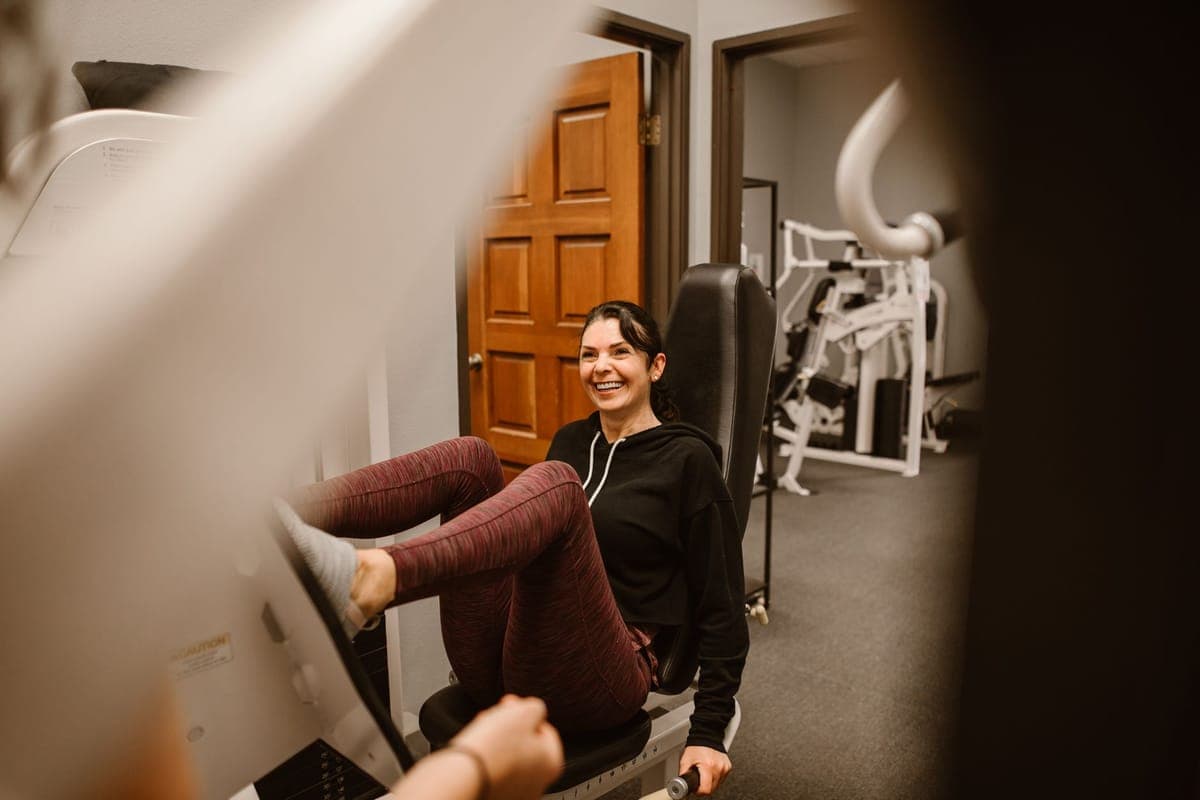
Walking when you feel ready, more strenuous exercise after your six-week check, and a smarter ramp-up in between.
How soon after birth can you exercise?
The short answer: walking when you feel ready, and more strenuous exercise after your six-week check, once your GP or women's health physiotherapist has cleared you. Many obstetricians and midwives recommend waiting at least six weeks before starting anything more strenuous than walking, and if you've had a caesarean, your body needs at least six weeks to heal before you ramp up.
That's the floor, not the ceiling. Some women feel physically ready earlier, others later, and "ready" means more than just clear from your doctor. It means your bleeding has settled, your pelvic floor is responding, any abdominal separation is being monitored, and you actually have the energy and support to show up. The question isn't really *when can I start*, it's *what's the smartest way to ease back in*.
Why your body needs a staged return
Pregnancy and birth are athletic events, even when they go smoothly. Your abdominal wall stretched to accommodate a growing baby. Your pelvic floor carried nine months of load and then pushed, or was pushed, through labour. Your hormones, particularly relaxin and oestrogen, kept your ligaments and joints laxer than usual, which is why many women feel wobblier in their first postpartum weeks.
Diastasis recti, the gap between your right and left abdominal wall muscles, is common during and after pregnancy for exactly that reason. Up to 60% of women have diastasis recti six weeks after giving birth. It's not a failure or a flaw, it's a typical adaptation. What matters is how you rebuild around it.
Your pelvic floor takes a hit too. One in three women experience involuntary loss of urine, called urinary incontinence, in the first three months after giving birth. Sneezing, laughing, jumping and lifting can all trigger a small leak, and a lot of women quietly accept that as their new normal. It shouldn't be. Pelvic floor work, breath retraining and a graded loading plan can help, but the specifics depend on your body, so this is one to discuss with a women's health physiotherapist.
What the evidence says about exercising after birth
The benefits of returning to movement aren't hand-wavy wellness talk. Regular exercise after pregnancy can support weight management, help strengthen abdominal muscles that were stretched during pregnancy, reduce bladder leakage, boost energy, support sleep, relieve stress, and may help reduce symptoms of postpartum depression. Note the language: support, may help, associated with. Exercise is not a treatment for postnatal depression, and if your mental health feels consistently low, please talk to your GP.
One common worry is breastfeeding. Breastfeeding burns additional calories, but you still need to get physical activity on top. The good news: exercise won't affect the quality or quantity of your breastmilk, so you don't need to choose between feeding your baby and moving your body. Comfort is another matter. A well-fitted, supportive sports bra and feeding or pumping before a session makes life easier.
Common mistakes women make in the first six weeks
The first is rushing back to high-intensity work because the pregnancy is "over". Six weeks is the standard medical minimum for a reason: your tissues are still healing, your pelvic floor is still recovering, and your deep abdominal system isn't reliably switched back on. Crunches, heavy lifting, running and high-impact HIIT can all backfire if you start them too soon, not because you're weak, but because the load goes somewhere it shouldn't.
The second mistake is the opposite: doing nothing, then going from zero to a 45-minute session the first time you feel a flicker of energy. Postpartum deconditioning is real. Joints, tendons and your cardiovascular system need a ramp.
The third is skipping pelvic floor work because it feels awkward, boring, or invisible. Pelvic floor exercises won't show up in the mirror, but they're the foundation of everything else: running, lifting, jumping, sneezing without crossing your legs. A women's health physiotherapist can assess you properly and give you a tailored programme, which is far more useful than a generic app routine.
The fourth is dragging a pram you can't safely run with. Most babies aren't ready to ride in a jogging stroller until they are six to eight months old, so if running is on your list, it's pram-free, gym-based, or saved for later.
How life stage changes the picture
The first four weeks are about recovery, not fitness. Walks, breathing drills, gentle pelvic floor activation, sleep when you can, eat properly. If you had a straightforward vaginal birth and feel well, walking is usually fine within days. If you had a caesarean, the six-week rule is firmer, and your scar tissue needs time.
Weeks six to twelve are where most women start structured work, cleared by your GP or women's health physiotherapist at your 6-week check or later. This is the window for rebuilding deep core, glutes and posterior chain. Low-impact strength, stationary cycling, swimming once bleeding has fully stopped, and walking with progressive duration. It's not the window for maxing out.
Three to six months postpartum is when many women can tolerate moderate intensity work, including running and heavier lifting, provided pelvic floor symptoms are managed and abdominal separation is closing appropriately. Some women return to running sooner; some wait longer. There is no trophy for early.
Beyond six months, you're essentially training a postpartum body rather than a freshly postpartum one, but breastfeeding, sleep deprivation and the demands of a small human still shape what "intensity" looks like. Many women train in shorter blocks, often 25 to 35 minutes, and use a more flexible weekly structure.
What "strenuous" actually means after birth
Strenuous means anything that spikes your intra-abdominal pressure sharply or repeatedly. Running, jumping, heavy deadlifts, deep weighted squats, sit-ups, full planks with load, burpees, hill sprints. None of these are banned forever, but they're a poor starting point.
Gentle means walking, breathing with rib expansion, pelvic floor contractions, supported kneeling work, light bodyweight movement that doesn't make you brace or hold your breath. You can build from gentle to moderate by adding load, then speed, then impact, in that order, not all at once.
A useful check: if you're holding your breath to complete a rep, the rep is too hard right now.
What to do this week
1. Book your six-week postnatal check if you haven't already, and ask your GP or women's health physiotherapist to assess your pelvic floor and abdominal separation before you start anything more strenuous than walking.
2. Walk daily, starting at a duration that feels easy and adding five to ten minutes each week. Wear supportive shoes. Bring water. Leave the pram at home if you'd actually like a break.
3. Start pelvic floor exercises three times a day. Lift, hold, fully release. If you're not sure you're doing them correctly, see a women's health physiotherapist for a proper assessment.
4. Feed or pump before any workout if you're breastfeeding, and wear a supportive bra that doesn't compress milk ducts.
5. Skip the jogging pram for now. Most babies aren't ready for one until six to eight months, so plan pram-free or home workouts for early running return.
6. Sleep, eat, and ask for help. Postpartum recovery isn't just exercise programming; it's rest, protein, iron-rich food, and someone holding the baby while you shower.
7. If you experience pelvic heaviness, leaking that doesn't improve, abdominal doming during movement, or sharp pain, stop and book in with your GP or women's health physiotherapist. These are signals, not setbacks.
Educational content only. Not a substitute for medical advice. Talk to your doctor about your specific situation.
References
- Lesser IA, Nienhuis CP, Hatfield GL. (2023). Moms on the move: A qualitative exploration of a postpartum group exercise program on physical activity behaviour at three distinct time points.. International journal of qualitative studies on health and well-being
- Sanchez-Garcia JC, Aguilar-Cordero MJ, Montiel-Troya M, Marín-Jiménez AE, Cortes-Martin J, Rodriguez-Blanque R. (2022). Quality of Life in the Postpartum Recovery of Women Who Practice Hypopressive Exercise: Randomized Clinical Trial.. Journal of clinical medicine
Common Questions
When can you start exercising after giving birth?
Most guidelines suggest gentle walking can begin within the first few weeks when you feel physically ready, while more strenuous activity such as running, heavy lifting, or high-intensity intervals is typically held until after your six-week postnatal check. Your GP or obstetrician will confirm whether your tissues have healed enough, particularly if you had a caesarean, stitches, or significant perineal trauma. The six-week mark is a medical minimum, not a deadline, so some women will wait longer and that is equally valid.
Can I exercise before my six-week postpartum check?
Light walking and gentle breath work are generally considered safe in the early weeks, provided your bleeding has settled and you feel comfortable. Anything that raises your heart rate significantly, loads your pelvic floor heavily, or creates intra-abdominal pressure, such as crunches, heavy lifting, or running, is usually best postponed until you have been cleared. If you are unsure, a women's health physiotherapist can assess your pelvic floor and abdominal separation well before the six-week mark and give you a tailored starting point.
When can I exercise after a caesarean birth?
After a caesarean, your abdominal incision needs at least six weeks to heal before you return to anything more strenuous than walking. Your obstetrician will usually check your wound at the six-week appointment and advise when you can progress. In the meantime, gentle walking, pelvic floor activation, and diaphragmatic breathing are typically safe, but you should avoid lifting anything heavier than your baby and stop any movement that pulls on the incision or causes pain. Returning to running or heavy lifting is generally a staged process over several months rather than a sudden switch back on.
Does exercise affect breast milk supply?
Research suggests that moderate exercise does not affect the quality or quantity of breast milk, so you do not need to choose between feeding your baby and moving your body. The main practical considerations are comfort and hydration: a well-fitted, supportive sports bra, feeding or pumping before a session, and drinking plenty of water. If you notice any change in supply, it is more likely linked to hydration, sleep, or feeding frequency than the exercise itself, so talk to your GP or a lactation consultant if you are concerned.
Is postpartum exercise safe for diastasis recti?
Movement is safe and helpful for diastasis recti, but the type of exercise matters in the early months. Deep core and pelvic floor retraining, breath work, and low-load movement are generally appropriate, while crunches, full planks, and heavy lifting may worsen the separation if started too soon. A women's health physiotherapist can assess the gap between your abdominal muscles and prescribe a graded loading programme. Talk to your doctor about your specific situation, especially if you notice doming along your midline when you sit up or lift.
Jess Mizzi, CPT
Certified Personal Trainer and founder of FitForHer. Specialises in women's life-stage specific fitness — postnatal recovery, perimenopause, and menopause. About Jess →
Medical disclaimer: This article is for informational purposes only and does not constitute medical advice. Always consult a qualified healthcare professional before making changes to your exercise or nutrition programme.