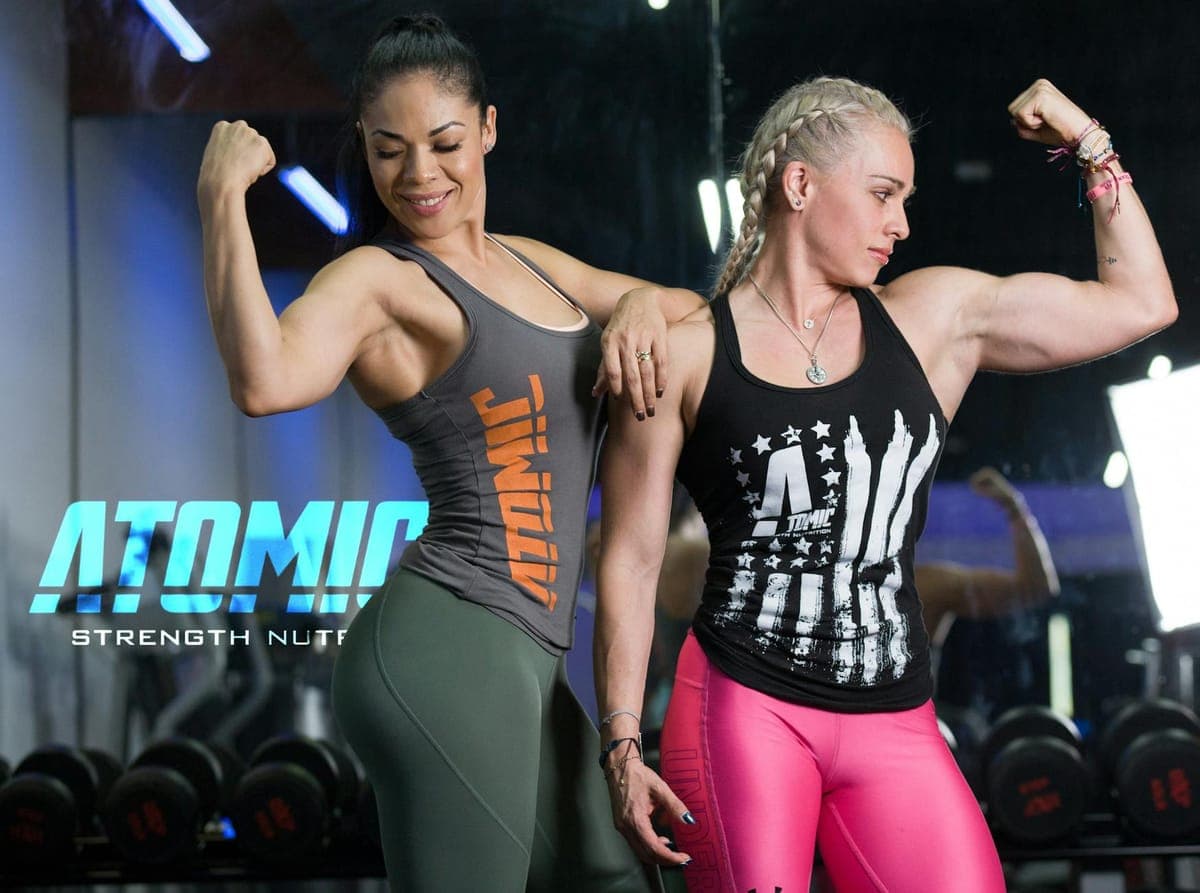
You're leaving your biggest performance gains on the table if you're skimping on sleep—and it's costing you nothing to fix.
What Happens When You Sleep Determines What Happens On The Field
You train hard. You fuel your body properly. You follow your program. But there's one recovery tool you might be overlooking, and it costs nothing. Sleep isn't just rest. It's when your body actually gets faster, stronger, and more resilient.
Research consistently shows sleep is a critical component of athletic performance and recovery. For female athletes, this becomes even more significant. Your body faces demands that differ from your male counterparts, and understanding how sleep supports your specific needs can be the difference between plateauing and progressing.
What Sleep Actually Does For Your Performance
Sleep plays a vital role in athletic performance, facilitating physical recovery, mental resilience, and metabolic health. This isn't about feeling rested. It's about biological processes that only happen when you're unconscious.
During sleep, particularly during deep non-rapid eye movement (NREM) stages, growth hormone secretion peaks. This matters for you because growth hormone facilitates muscle repair and tissue recovery after intense training sessions. That workout you completed yesterday? Your muscles are still rebuilding while you read this. Without adequate deep sleep, that reconstruction process gets cut short.
Sleep also supports immune function. You already know that training breaks you down. Sleep rebuilds your immune defenses so you're not missing sessions due to illness. And cognitive focus? That comes from quality sleep too. When your brain has fully rested, decision-making sharpens and reaction times stay quick.
Why Your Sleep Might Be Working Against You
Here's where things get specific to you. Female athletes often face unique challenges that may hinder their ability to achieve optimal sleep. These aren't excuses. They're biological realities worth understanding.
Female athletes must deal with unique factors like hormonal variations during menstrual cycles, pregnancy, and menopause, which can significantly disrupt sleep patterns and impact athletic performance. Fluctuations in reproductive hormones across these life stages have been shown to influence sleep quality, thermoregulation, and fatigue. Your body temperature, energy levels, and ability to fall and stay asleep shift across your cycle and across your lifespan.
Some women notice they sleep more deeply in certain phases. Others struggle with insomnia and restless nights during others. Neither response is wrong. It's your hormones doing what they do. The problem arises when you expect uniform sleep quality and don't adjust your expectations or habits accordingly.
The Real Cost Of Skimping On Sleep
Lack of sleep has been reported to impair reaction times, endurance, and accuracy, which are critical in many sports. You might not notice the dropoff immediately. Sleep deprivation builds up gradually, and its effects compound.
Sleep deprivation is associated with increased injury rates. That's not fear-based messaging. It's documented research. When your reaction time slows by even fractions of a second, when your coordination falters, when your decision-making clouds, your risk of getting hurt goes up.
Beyond injury, poor sleep affects your next workout. You can't load as heavy. Your explosiveness drops. Your mental game suffers. You might attribute this to overtraining or bad luck, when the actual culprit was insufficient sleep the night before.
What You Can Actually Do About It
Understanding the problem is useful. Knowing what to do matters more.
Start by tracking your sleep patterns across your menstrual cycle. You might discover that certain weeks require longer sleep windows or earlier bedtimes. This isn't about being fragile. It's about working with your physiology instead of against it.
Prioritize sleep hygiene consistently, not just when you're in a competition prep phase. Keep your bedroom cool because thermoregulation shifts during sleep, and hormonal fluctuations make temperature management harder for female bodies. Maintain a consistent sleep and wake schedule even on days without training.
Consider sleep as part of your training load. An eight-hour training week means nothing if you're running on five hours of sleep. Your recovery happens while you're unconscious. Protecting that time is protecting your investment.
The Bottom Line
You can't outwork poor sleep. Every hard session, every meal timed correctly, every recovery protocol means less if you're consistently shortchanging your sleep. This doesn't require perfection. It requires intention.
Start with one change. Maybe that's a consistent bedtime. Maybe that's a cooler bedroom. Maybe it's tracking your sleep alongside your cycle to see the patterns. Small adjustments compound. Your body wants to perform. Give it the recovery window it needs, and watch what happens.
References
- Halson SL. (2014). Sleep in elite athletes and nutritional interventions to enhance sleep. Sports Medicine. 44(Suppl 1):S13-S23.
- Walsh NP, Halson SL, Sargent C, et al. (2021). Sleep and the athlete: narrative review and 2021 expert consensus recommendations. British Journal of Sports Medicine. 55(7):356-368.
- Fullagar HH, Duffield R, Skorski S, Coutts AJ, Julian R, Meyer T. (2015). Sleep and Recovery in Team Sport: Current Sleep-Related Issues Facing Professional Team-Sport Athletes. International Journal of Sports Physiology and Performance. 10(8):950-957.
- Power CJ, Fox JL, Elliott-Sale KJ, Bender AM, Dalbo VJ, Scanlan AT. (2024). Waking Up to the Issue! Research Inattention and Sex-Related Differences Warrant More Sleep Studies in Female Athletes. Sports Medicine. 54(3):565-583.
- Rice SM, Purcell R, De Silva S, Mawren D, McGorry PD, Parker AG. (2016). The Mental Health of Elite Athletes: A Narrative Systematic Review. Sports Medicine. 46(9):1333-1353.
- Jeon B, Baek J. (2023). Menstrual disturbances and its association with sleep disturbances: a systematic review. BMC Women's Health. 23(1):470.
- McNulty KL, Elliott-Sale KJ, Dolan E, et al. (2020). The Effects of Menstrual Cycle Phase on Exercise Performance in Eumenorrheic Women: A Systematic Review and Meta-Analysis. Sports Medicine. 50(10):1813-1827.
- Garbazza C, Hackethal S, Riccardi S, et al. (2020). Polysomnographic features of pregnancy: A systematic review. Sleep Medicine Reviews. 50:101249.
- Maki PM, Panay N, Simon JA. (2024). Sleep disturbance associated with the menopause. Menopause. 31(8):724-733.
- Haufe A, Baker FC, Leeners B. (2022). The role of ovarian hormones in the pathophysiology of perimenopausal sleep disturbances: A systematic review. Sleep Medicine Reviews. 66:101710.
- Charest J, Grandner MA. (2022). Sleep and Athletic Performance: Impacts on Physical Performance, Mental Performance, Injury Risk and Recovery, and Mental Health: An Update. Sleep Medicine Clinics. 17(2):263-282.
- Van Cauter E, Plat L. (1996). Physiology of growth hormone secretion during sleep. Journal of Pediatrics. 128(5 Pt 2):S32-S37.
- Reyner LA, Horne JA. (2013). Sleep restriction and serving accuracy in performance tennis players, and effects of caffeine. Physiology & Behavior. 120:93-96.
- Souissi N, Chtourou H, Aloui A, et al. (2013). Effects of time-of-day and partial sleep deprivation on short-term maximal performances of judo competitors. Journal of Strength and Conditioning Research. 27(9):2473-2480.
Common Questions
How much sleep do female athletes actually need for optimal performance?
Most female athletes benefit from 7-9 hours of sleep per night, with some performance-focused athletes requiring up to 9-10 hours during heavy training periods. Quality matters as much as quantity—aiming for 85-90% sleep efficiency and sufficient time in deep NREM sleep ensures adequate growth hormone release for muscle repair. If you're training intensely, prioritize extending your sleep window rather than cutting it short for early morning sessions.
How do menstrual cycle hormone fluctuations affect female athlete sleep quality?
Hormonal shifts throughout your menstrual cycle significantly impact sleep architecture. During the luteal phase (after ovulation), progesterone rises and can increase sleepiness, but also raises body temperature, making it harder to fall asleep and reducing deep sleep quality. Estrogen fluctuations affect serotonin production, influencing mood and sleep regulation. Understanding these patterns helps you adjust expectations and prioritize sleep hygiene during phases when you're biologically more susceptible to disruption.
What are the most effective sleep strategies for female athletes with busy training schedules?
Consistency is king—maintain the same sleep and wake times even on rest days to regulate your circadian rhythm. Create a cool sleeping environment (65-68°F) since female hormones increase skin temperature during certain cycle phases. Avoid eating large meals within 2-3 hours of bedtime, limit caffeine after noon, and consider magnesium supplementation if you're experiencing restless sleep. Pre-sleep routines like gentle stretching or reading signal your body that it's time to wind down.
Can poor sleep really undermine my training efforts even if I'm eating and training correctly?
Absolutely. Sleep deprivation sabotages your efforts through multiple pathways: growth hormone secretion drops significantly without adequate deep sleep, meaning your muscles don't fully repair; cortisol levels rise, promoting muscle breakdown and fat storage; insulin sensitivity decreases, making your nutrition less effective at fueling recovery; and reaction time and decision-making suffer, increasing injury risk and reducing performance quality. Research shows athletes sleeping under 7 hours are 1.7 times more likely to get injured.
How does sleep affect female athlete recovery differently than male athletes?
Female athletes face unique recovery demands due to hormonal profiles that influence sleep architecture and recovery processes. Estrogen supports muscle protein synthesis, but its fluctuation means your recovery capacity varies across your cycle. Women also tend to have higher sleep fragmentation (more nighttime awakenings), partly due to hormonal influences on thermoregulation. This means female athletes may need to be more intentional about sleep quality and may benefit from longer sleep periods to achieve equivalent recovery outcomes.
Jess Mizzi, CPT
Certified Personal Trainer and founder of FitForHer. Specialises in women's life-stage specific fitness — postnatal recovery, perimenopause, and menopause. About Jess →
Medical disclaimer: This article is for informational purposes only and does not constitute medical advice. Always consult a qualified healthcare professional before making changes to your exercise or nutrition programme.