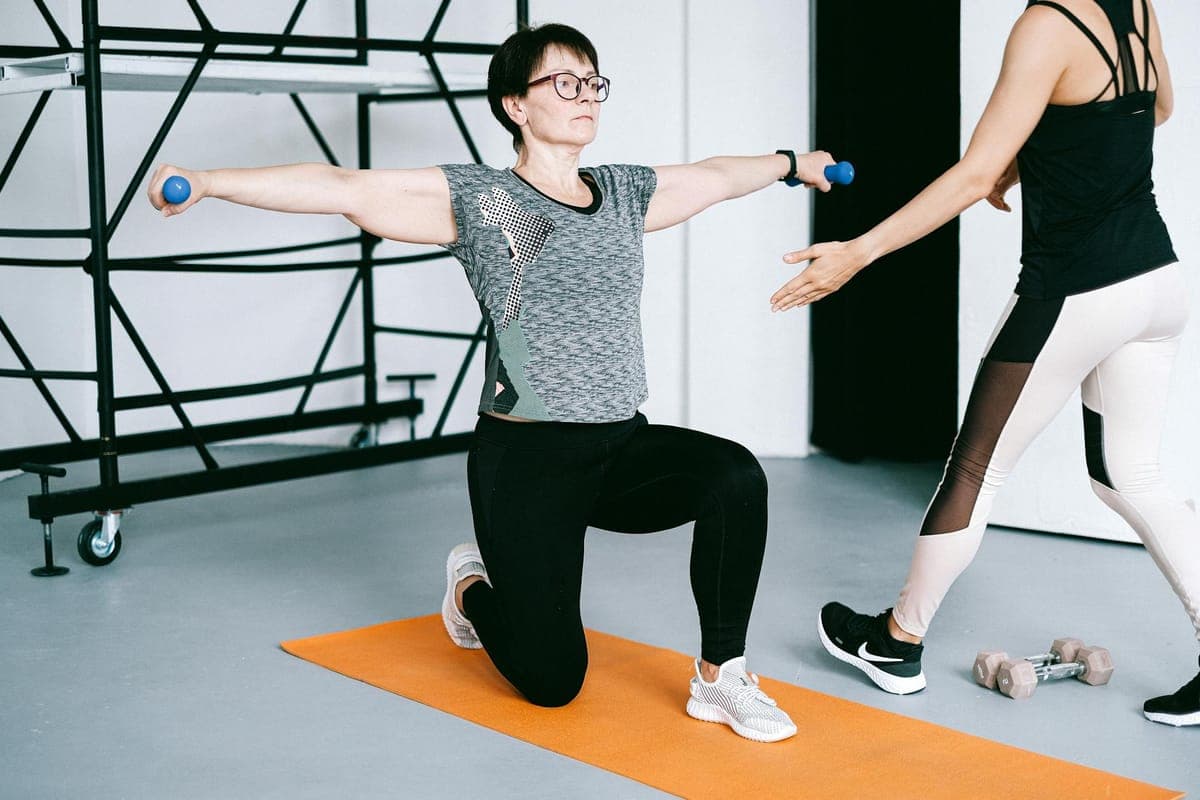
The right exercise routine may be your most powerful tool against bone loss—and research reveals exactly what works.
A growing concern for Australian women
Every year, hip fractures result in death or permanent disability for thousands of women. Globally, hip fractures are projected to rise from roughly 2.6 million annually in 2025 to 4.5 million by 2050. Within one year of a hip fracture, around 20% of patients will succumb to a range of complications, and roughly 50% of patients will have disability. For Australian women, the question isn't whether this will affect someone they know—it's whether they're doing what they can now to protect themselves.
Why bone health changes after menopause
After menopause, ovarian function declines and estrogen levels drop significantly. This hormonal shift accelerates bone mass loss, making bones progressively more fragile. The numbers are striking: in China, the incidence of postmenopausal osteoporosis is approximately 25% among perimenopausal women, 29.1% among women over 50, and 51.6% among those over 65. While these figures come from Chinese populations, Australian women face similar age-related trajectories.
Bones are living tissue. They constantly break down and rebuild. After menopause, the breakdown accelerates beyond the body's ability to rebuild. This is why weight-bearing exercise becomes so important—it provides the mechanical loading that signals bones to strengthen.
What the research actually shows
A systematic review examined 49 papers, encompassing 3360 people across eight interventions. The researchers pooled data from randomised controlled trials to compare how different types of exercise affect bone mineral density at two key sites: the lumbar spine and the femoral neck.
Exercise intervention significantly and effectively alleviated bone mineral density loss in postmenopausal women. The results were clear across multiple modalities:
For the lumbar spine, aerobic exercise combined with resistance training produced the strongest effect, with a mean difference of 32.35. Aerobic exercise alone showed a mean difference of 22.33, while resistance training alone achieved 16.98. All three approaches demonstrated meaningful benefits.
For the femoral neck (the hip area most vulnerable to fracture), aerobic plus resistance training again delivered the best results, with a mean difference of 140. Whole body vibration also showed a significant effect, with a mean difference of 26.07.
Your best move: combine cardio with resistance work
The evidence points clearly toward one approach. Mixed training—incorporating both aerobic exercise and resistance training—outperformed every other intervention tested. It delivered the largest gains at both the spine and the hip.
This doesn't mean you need an elaborate program. It means your exercise routine should include:
- Weight-bearing cardiovascular activity ( brisk walking, jogging, stair climbing, dancing) - Resistance training that loads the major muscle groups (squats, lunges, push-ups, rows, hip hinges) - Progressive overload over time, gradually increasing weight or resistance as you get stronger
If you're currently doing only one type of exercise, adding the other is likely to amplify your bone-protective benefits. The research suggests that doing both together produces results greater than either alone.
Getting started
You don't need a gym membership to start. Bodyweight squats, walking lunges, step-ups onto a sturdy platform, and push-ups against a wall or bench all provide meaningful loading for bones. A brisk 30-minute walk most days of the week delivers the aerobic component.
If you're new to resistance training, prioritise proper technique over heavy loads. A women's health physio can assess your current movement capacity and help you build a program suited to your body and experience level.
For those who prefer structured options, group circuit classes, swimming, or cycling combined with gym-based strength sessions all work. What matters is consistency—the bone-building stimulus comes from regular, repeated loading over months and years.
Exercise is not a guarantee against fractures, and individual results vary based on many factors including genetics, nutrition, and other health conditions. But for Australian women navigating menopause and beyond, building movement into daily life is one of the most evidence-based steps you can take.
Educational content only. Not a substitute for medical advice. Talk to your doctor about your specific situation.
References
- Li X, Zhu J, Xu L, Zhang H, Fu X, Wang Y. (2025). Effect of different types of exercise on bone mineral density in postmenopausal women: a systematic review and network meta-analysis. Scientific Reports. 15(1):11740.
- Shojaa M, von Stengel S, Kohl M, Schoene D, Kemmler W. (2020). Effects of dynamic resistance exercise on bone mineral density in postmenopausal women: a systematic review and meta-analysis. Osteoporosis International. 31(8):1427-1444.
- Dong Y, Zhang Y, Song K, Kang H, Ye D, Li F. (2023). Epidemiology and Global Burden of Disease of Hip Fractures From 1990 to 2019. Clinical Orthopaedics and Related Research. 481(6):1209-1220.
- Cheng CH, Chen LR, Chen KH. (2022). Osteoporosis Due to Hormone Imbalance: Effects of Estrogen Deficiency and Glucocorticoid Overuse on Bone Turnover. International Journal of Molecular Sciences. 23(3):1376.
- Weaver CM, Alexander DD, Boushey CJ, et al. (2016). Calcium plus vitamin D supplementation and risk of fractures: an updated meta-analysis from the National Osteoporosis Foundation. Osteoporosis International. 27(1):367-376.
Common Questions
Why does menopause affect bone health so significantly?
After menopause, estrogen levels drop substantially, which accelerates the natural process of bone breakdown. Bones are living tissue that constantly undergoes remodeling, but this hormonal shift causes breakdown to outpace rebuilding. This means bones gradually become more fragile over time. The good news is that weight-bearing exercise provides mechanical loading that signals bones to strengthen, helping counteract this natural process. Talk to your doctor about your specific situation and whether bone density testing is appropriate for you.
What's the most effective exercise approach for bone health after menopause?
Research suggests that combining aerobic exercise with resistance training delivers the strongest benefits for bone mineral density at both the spine and hip. Studies show this mixed approach outperformed aerobic exercise alone or resistance training alone at key measurement sites. The combination appears to work synergistically—cardiovascular activity provides impact loading while resistance training creates muscular tension on the bones. Including both modalities in your routine is likely to provide greater benefit than either approach in isolation.
Do I need expensive equipment or a gym membership to protect my bone health?
No, you don't need specialised equipment to support bone health through exercise. Weight-bearing activities like brisk walking, stair climbing, and dancing can be done anywhere. For resistance training, bodyweight exercises such as squats, lunges, push-ups, and hip hinges effectively load the major muscle groups. Progressive overload—gradually increasing difficulty over time—is what matters most, whether that's adding repetitions, adjusting tempo, or using household items as makeshift weights. Consistency with appropriate challenge is more important than equipment.
Is walking alone enough to maintain strong bones after menopause?
While brisk walking provides beneficial weight-bearing stimulus and is a great starting point, research indicates that combining cardiovascular activity with resistance training produces superior results for bone mineral density. Walking primarily loads the lower body, whereas a well-rounded program should address all major muscle groups including the upper back and spine. Adding resistance training two to three times per week alongside regular walking may provide more comprehensive protection. Consider speaking with a women's health physiotherapist about designing a program suited to your needs.
At what age should I start prioritising bone-strengthening exercise?
It's never too early to build bone-healthy habits, and the best time to start is before significant bone loss occurs. Peak bone mass is typically reached in the early thirties, after which gradual decline begins. The accelerated loss after menopause makes midlife an particularly important window for intervention. Even if bone loss has already begun, research demonstrates that postmenopausal women can still benefit from appropriate exercise. Starting now—even in your forties or fifties—can help slow further decline and support long-term mobility. Talk to your doctor about your specific situation for personalised guidance.
Jess Mizzi, CPT
Certified Personal Trainer and founder of FitForHer. Specialises in women's life-stage specific fitness — postnatal recovery, perimenopause, and menopause. About Jess →
Medical disclaimer: This article is for informational purposes only and does not constitute medical advice. Always consult a qualified healthcare professional before making changes to your exercise or nutrition programme.