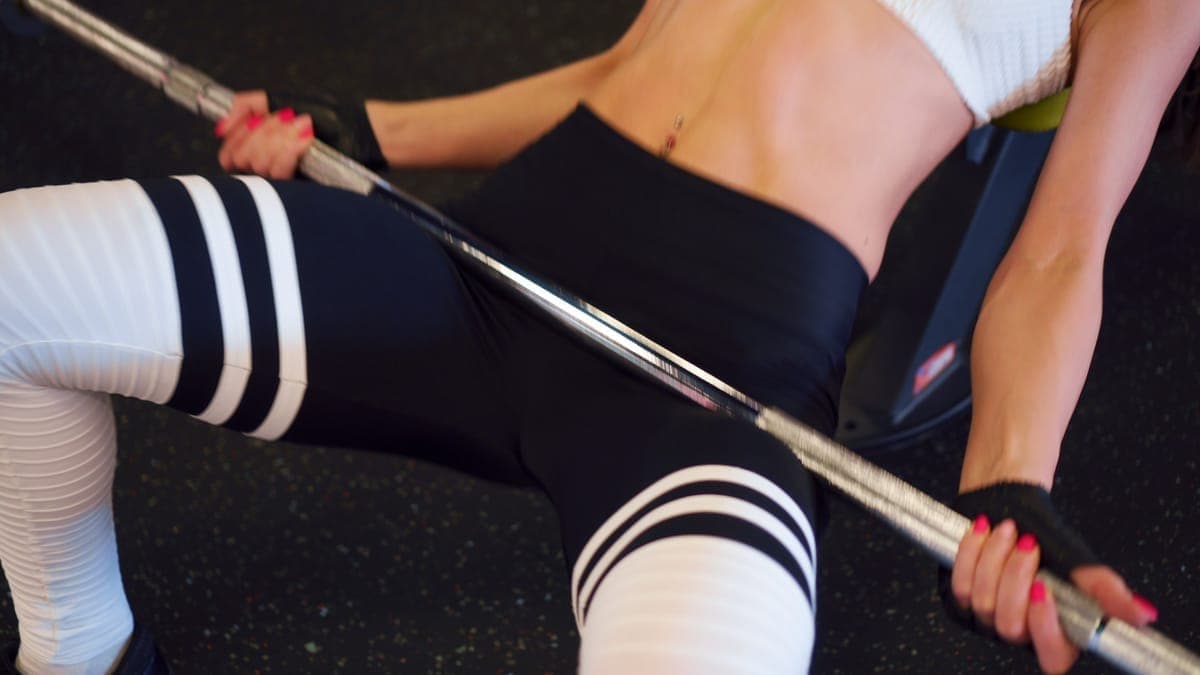
After menopause, your bones lose oestrogen protection at an accelerating rate. The research is clear: strength training doesn't just slow this process — it can reverse it.
What Menopause Does to Your Bones
The primary driver of bone loss in menopause is the sharp drop in oestrogen. Oestrogen plays a critical role in bone health — it suppresses the activity of osteoclasts, the cells that break down bone tissue, while supporting osteoblasts, the cells that build it back up. When oestrogen levels fall during menopause, this protective effect is dramatically reduced.
Research published in the Journal of Clinical Endocrinology & Metabolism followed women through the menopause transition and found that bone mineral density declines most rapidly in the first few years after menopause — at a rate of roughly 1-3% per year. Over a decade, that's a potential loss of 10-20% of your total bone mass, concentrated particularly in the spine, hip, and wrist.
This isn't just about osteoporosis diagnoses. Even moderate bone density loss — called osteopenia — increases fracture risk during falls, which can be life-changing for older women. A hip fracture in an older woman is one of the leading causes of loss of independence in later life.
Why Walking Alone Isn't Protecting Your Bones
There's a widespread belief that weight-bearing cardio — walking, jogging, dancing — is sufficient for bone health. And these activities are good for you. But when it comes to actually building or preserving bone density, they're not enough.
Bone is living tissue that responds to mechanical stress. It adapts by becoming denser when subjected to loads that exceed what it regularly experiences. The key word is exceed — if your daily routine doesn't challenge your skeleton beyond its normal loading, bone has little reason to maintain its density.
This is why the evidence consistently points to resistance training as superior for bone health. A 2025 systematic review and meta-analysis in the Journal of Orthopaedic Surgery and Research analysed optimal resistance training parameters for improving bone density in postmenopausal women. The conclusion: resistance training works, and the greater the load, the greater the stimulus for bone adaptation.
The landmark LIFTMOR trial (published in Osteoporosis International) specifically studied high-intensity resistance and impact training in postmenopausal women with low to very low bone mass. After 8 months, participants showed significant improvements in bone density at the hip and spine — with no adverse effects.
How Strength Training Protects Bone: The Science
Strength training benefits bone through a process called mechano-transduction. When your muscles contract against resistance, they pull on the bones they're attached to. This mechanical loading creates tiny stresses in the bone tissue, which signals osteoblasts — the bone-building cells — to lay down new bone matrix.
The greater the load, the stronger this signal. This is why lifting heavier weights produces better bone outcomes than lifting very light ones. The body prioritises maintaining bone that is being meaningfully used.
Beyond the direct mechanical effect, resistance training also builds muscle. More muscle mass means more force transmitted to bone with every contraction. And muscle itself has a metabolic protective effect — the inflammatory cascade associated with low muscle mass accelerates bone loss.
The Exercises That Matter Most
For bone health, the most important movements are compound exercises that load the hip, spine, and wrist — the sites most vulnerable to fracture.
The strongest evidence supports:
Hip: Squats, hip thrusts, and step-ups load the proximal femur — the most common site of osteoporotic fracture. The hip joint experiences forces several times your body weight during these movements, providing a strong stimulus for bone adaptation.
Spine: Loaded spinal flexion exercises (within pain-free range), as well as traps and rhomboid work via rows and deadlifts, load the vertebrae. The back extensors are critical for posture and reducing the forward-flexed posture that can develop with vertebral bone loss.
Wrist: Grip-heavy exercises like farmer's carries, deadlifts, and rows all load the wrist and forearm bones, protecting the most common fracture site in older women during falls.
The LIFTMOR protocol that produced measurable results used supervised sessions with heavy progressive loading — primarily squats, deadlifts, and hip presses, performed at 80-85% of one-rep max.
Protein, Calcium, and Vitamin D: The Supporting Cast
Resistance training provides the mechanical signal to build bone, but your body needs the raw materials to act on that signal. Three nutrients are particularly important during menopause.
Protein is the primary building block of bone matrix. As with muscle, anabolic resistance — the body's reduced efficiency at using dietary protein for tissue repair — increases during and after menopause. Research suggests women in this life stage should aim for 1.2-1.6g of protein per kilogram of bodyweight daily. Spread across meals, this provides the amino acids bone requires for ongoing remodelling.
Calcium provides the mineral component of bone. Australian guidelines recommend 1,300mg daily for women over 50 — achievable through 3-4 serves of dairy, calcium-set tofu, sardines with bones, or leafy greens like kale and bok choy. Many women don't meet this through diet alone and benefit from a supplement.
Vitamin D enables calcium absorption in the gut. Without adequate vitamin D, much of the calcium you consume passes through unused. Australians are particularly susceptible to deficiency in winter months at higher latitudes. A daily supplement of 10-20 micrograms (400-800 IU) is commonly recommended for women over 50, with testing to confirm status.
What a Realistic Program Looks Like
You don't need to live in a gym to protect your bones. Two to three structured resistance sessions per week, targeting the major muscle groups with meaningful load, is sufficient to maintain — and in many cases improve — bone density.
A practical starting point:
Session A: Squats or step-ups + dumbbell rows + hip thrusts Session B: Deadlifts or kettlebell swings + shoulder press + walking lunges
Start at a load that challenges the final few reps of each set (an RPE of 7-8), and progress by adding weight or reps every 1-2 weeks. Form matters more than load — particularly for squats and deadlifts, where poor technique increases injury risk.
If you're new to lifting, working with an accredited exercise physiologist for the first few sessions to establish safe, effective form is strongly recommended — especially if you know you have low bone density or osteopenia.
References
- Watson SL, Weeks BK, Weis LJ, Harding AT, Horan SA, Beck BR. (2018). High-Intensity Resistance and Impact Training Improves Bone Mineral Density and Physical Function in Postmenopausal Women With Osteopenia and Osteoporosis: The LIFTMOR Randomized Controlled Trial. Journal of Bone and Mineral Research. 33(2):211-220.
- Watson SL, Weeks BK, Weis LJ, Horan SA, Beck BR. (2015). Heavy resistance training is safe and improves bone, function, and stature in postmenopausal women with low to very low bone mass: novel early findings from the LIFTMOR trial. Osteoporosis International. 26(12):2889-2894.
- Shojaa M, von Stengel S, Kohl M, Schoene D, Kemmler W. (2020). Effects of dynamic resistance exercise on bone mineral density in postmenopausal women: a systematic review and meta-analysis with special emphasis on exercise parameters. Osteoporosis International. 31(8):1427-1444.
- Cheng CH, Chen LR, Chen KH. (2022). Osteoporosis Due to Hormone Imbalance: An Overview of the Effects of Estrogen Deficiency and Glucocorticoid Overuse on Bone Turnover. International Journal of Molecular Sciences. 23(3):1376.
Common Questions
Can I really rebuild bone after osteoporosis has started?
Yes. The LIFTMOR trial showed significant bone density improvements in postmenopausal women with osteopenia and osteoporosis through high-intensity resistance training. It's never too late to start.
Is it safe to lift heavy weights with low bone density?
With proper form and a gradual build-up, yes. The LIFTMOR research specifically studied women with low to very low bone mass doing heavy lifting — and found it was safe and effective. Start with a physiotherapist or accredited exercise physiologist if you're concerned.
How much calcium and vitamin D do I need during menopause?
Australian guidelines recommend 1,300mg of calcium daily for women over 50 and 10-20 micrograms (400-800 IU) of vitamin D daily. Food first is ideal — dairy, leafy greens, sardines with bones. Many women need a supplement to hit these targets.
Will lifting weights make me bulky?
No. Bulking requires a significant calorie surplus and specific training protocols. The hormonal environment during and after menopause (low testosterone, low growth hormone) makes it extremely difficult for women to build large amounts of muscle. You will get stronger and more defined — not bigger.
Jess Mizzi, CPT
Certified Personal Trainer and founder of FitForHer. Specialises in women's life-stage specific fitness — postnatal recovery, perimenopause, and menopause. About Jess →
Medical disclaimer: This article is for informational purposes only and does not constitute medical advice. Always consult a qualified healthcare professional before making changes to your exercise or nutrition programme.