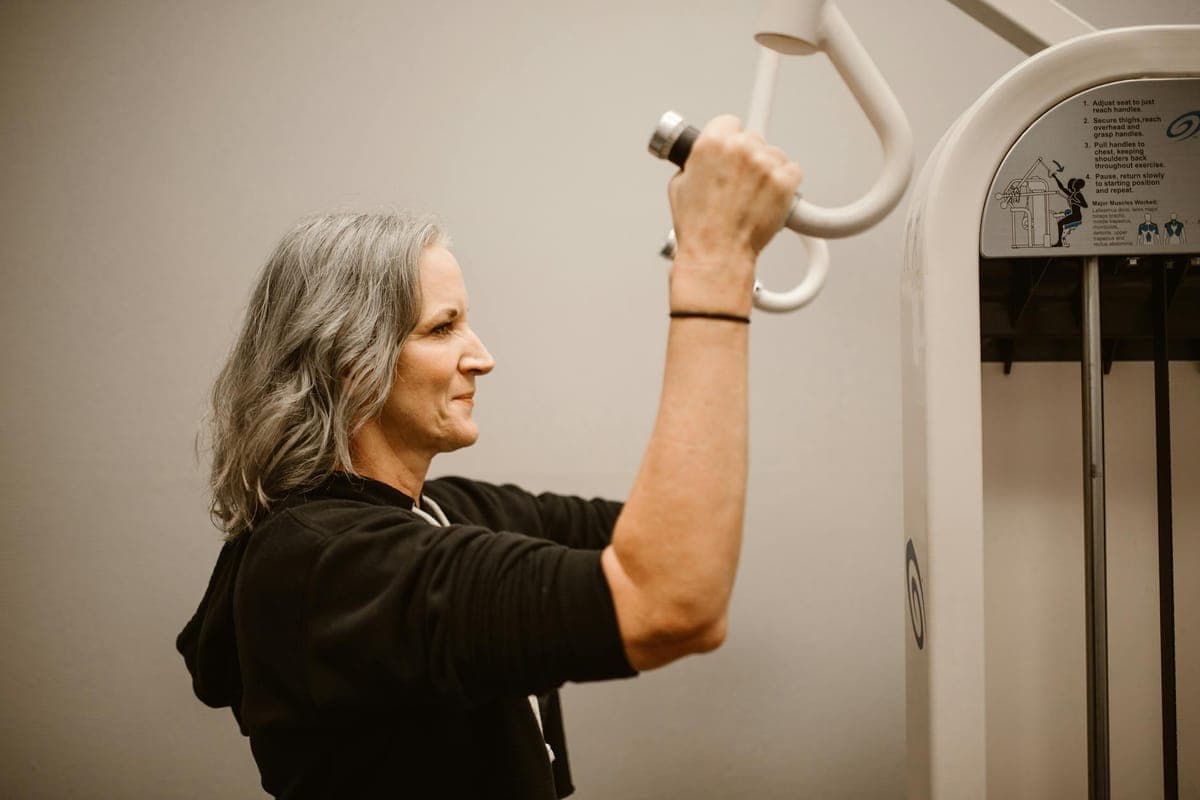
During menopause, your bones are quietly losing density—here's the science-backed exercise protocol that fights back.
The Numbers You Need to Know
Here's a fact that deserves more attention: according to the National Osteoporosis Foundation, women can lose up to 20% of their bone density in the five to seven years following menopause. Let that sink in for a moment.
Your skeleton isn't the static structure you might assume. It's living tissue, constantly being broken down and rebuilt. Until perimenopause hits. Then the balance shifts, and breakdown wins.
The Study of Women's Health Across the Nation—the SWAN study, one of the largest ongoing investigations into women's midlife health—documents what happens next. Bone loss accelerates sharply during late perimenopause and early postmenopause, averaging about 2% per year. That compounds to around 10% loss over a decade, with the spine and hip taking the hardest hits. Texas Health Resources puts it in starker terms: women lose around one-third of hip bone density over a lifetime.
Without intervention, you're looking at about 1–2% each year during menopause, according to research published by Basat et. al in 2013. That might sound manageable. But add it up across the years before and after your final period, and you have a quiet crisis happening inside your bones—one that typically isn't detected until a fracture sends you to the hospital.
Why Your Bones Need a Push
Bone doesn't just respond to movement. It responds to demand. Specifically, it responds to impact loading—force transmitted through your skeleton that tells your bones "we need you to stay strong."
Here's how that breaks down in real numbers. Walking creates a ground reaction force of 1.5x your bodyweight. Running creates a ground reaction force of 2.5x your bodyweight. Jumping rope lands at roughly 15% less than running.
All useful. None of it enough.
Jumping exercises which create impact greater than three times your body weight stimulate bone formation. That's the threshold your skeleton is waiting for. And here's the part that changes the game: jumping exercises have been shown to improve bone density in both pre-menopausal and post-menopausal women. This isn't just prevention for the future. It works for where you are right now.
The Drop Jump Protocol
This is where the real signal gets sent. A drop jump from an 8 inch—20 centimeter—step creates a ground reaction force of 4x your bodyweight on impact. The rebound pushes that to 5x your bodyweight. That controlled, explosive descent-and-launch cycle tells your femurs, your spine, your hips: adapt or break.
Research, again from Basat et. al, found that 30 drop jumps with rebound 30 times, performed 3 times per week, produced clinically meaningful gains. And in bone health terms, a 1% gain in bone density over six months is clinically meaningful. That's not a small number when you're fighting a 1–2% annual loss.
The goal is impact greater than three times your bodyweight in short, controlled bursts. That means quality over quantity. That means landing mechanics matter more than how many reps you cram into a session.
More Than Just Jumping
Drop jumps aren't the whole answer. They shouldn't be the only tool in your kit either.
Heavy resistance training, sprint intervals, and plyometric work send the strongest signals to bones to stay strong. These different loading patterns target different skeletal sites and create varied osteogenic responses. Your spine responds to different demands than your hips. Your lower body responds differently than your upper body.
This is why a complete approach—combining impact training with strength work and, where appropriate, high-intensity intervals—gives you the broadest protection. No single exercise mode does everything. But the evidence is clear: you need the signals that demand more from your bone tissue, and you need them consistently.
What You Can Actually Do
Here's your framework, not a prescription that requires a gym membership or perfect joints.
Start with where you are. If you're new to impact training, build up gradually. A drop jump from an 8-inch box is an advanced stimulus—your joints, tendons, and current fitness level all factor into whether you begin there or work up from lower boxes and modified movements.
For most women, three sessions per week is the minimum effective dose. Each session should include enough high-impact work to accumulate meaningful loading. The Basat protocol used 30 drop jumps with rebound, performed three times weekly. That's your starting point to research and adapt with qualified guidance.
Pair this with strength training. Prioritize compound movements—squats, deadlifts, step-ups, presses—that load your spine and hips under heavy resistance. The combination of impact loading and load-bearing strength work covers more ground than either alone.
If you have existing joint issues, osteoporosis diagnosis, or are unsure where to start, work with a physical therapist or qualified strength coach who understands bone loading protocols. Not every program suits every body. But the research is settled on this: the signals must be sent, and the sooner you start sending them, the more density you protect.
The window between perimenopause and early postmenopause matters most. That's when the acceleration happens. That's when intervention delivers the most return. Don't wait for a diagnosis. Don't wait for symptoms. Your bones are already responding to what's coming. Give them something to respond to.
References
- Basat H, Esmaeilzadeh S, Eskiyurt N. (2013). The effects of strengthening and high-impact exercises on bone metabolism and quality of life in postmenopausal women: a randomized controlled trial. Journal of Back and Musculoskeletal Rehabilitation. 26(4):427-435.
- Bassey EJ, Rothwell MC, Littlewood JJ, Pye DW. (1998). Pre- and postmenopausal women have different bone mineral density responses to the same high-impact exercise. Journal of Bone and Mineral Research. 13(12):1805-1813.
- Greendale GA, Sowers M, Han W, et al. (2012). Bone mineral density loss in relation to the final menstrual period in a multiethnic cohort: results from the Study of Women's Health Across the Nation (SWAN). Journal of Bone and Mineral Research. 27(1):111-118.
- Finkelstein JS, Brockwell SE, Mehta V, Greendale GA, et al. (2008). Bone mineral density changes during the menopause transition in a multiethnic cohort of women. Journal of Clinical Endocrinology & Metabolism. 93(3):861-868.
- Zhao R, Zhao M, Zhang L. (2014). Efficiency of jumping exercise in improving bone mineral density among premenopausal women: a meta-analysis. Sports Medicine. 44(10):1393-1402.
- Florence GE, Oosthuyse T, Bosch AN. (2024). Skeletal site-specific effects of jump training on bone mineral density in adults: a systematic review and meta-analysis. Journal of Sports Sciences. 41(23):2063-2076.
- Clissold TL, Cronin JB, De Souza MJ, Wilson D, Winwood PW. (2020). Bilateral multidirectional jumps with reactive jump-landings achieve osteogenic thresholds with and without instruction in premenopausal women. Clinical Biomechanics. 73:1-8.
Common Questions
How much bone density do women actually lose during menopause?
Research shows women can lose up to 20% of their bone density in the five to seven years following menopause, with the SWAN study documenting approximately 2% annual loss during late perimenopause and early postmenopause. The spine and hip are particularly affected, losing around one-third of hip bone density over a lifetime. This silent process typically goes undetected until a fracture occurs, making prevention critical.
What type of exercise is most effective for building bone density after menopause?
Impact loading exercises that create ground reaction forces greater than three times your bodyweight are most effective at stimulating bone formation. Walking produces only 1.5x bodyweight force and running about 2.5x—both useful but insufficient. Drop jumps from an 8-inch step generate 4-5x bodyweight force, making them the most potent bone-building exercise option for postmenopausal women.
How do drop jumps specifically help with bone density?
Drop jumps create a controlled descent followed by an explosive rebound, transmitting force through your femurs, spine, and hips that signals your bones to adapt and strengthen. The research by Basat et al. found that 30 drop jumps with rebound, performed three times per week, produced clinically meaningful bone density gains. A 1% improvement over six months is considered clinically significant when you're fighting 1-2% annual loss.
Is the drop jump protocol safe for beginners or those with joint concerns?
Proper technique is essential for safety—focus on landing mechanics, soft controlled landings, and maintaining good posture throughout. Start with lower platforms and master the form before progressing. If you have existing joint issues, osteoporosis, or are new to exercise, consult a physiotherapist or certified exercise professional before beginning. They can help modify the protocol or suggest gentler impact alternatives.
How often should I do bone-building exercises to see results?
Research supports performing impact exercises three times per week with at least one rest day between sessions for bone adaptation and recovery. Consistency matters more than volume—a 1% gain in bone density over six months is clinically meaningful, and this protocol has the research to back it. Combine with adequate protein, vitamin D, and calcium intake for optimal bone health support.
Jess Mizzi, CPT
Certified Personal Trainer and founder of FitForHer. Specialises in women's life-stage specific fitness — postnatal recovery, perimenopause, and menopause. About Jess →
Medical disclaimer: This article is for informational purposes only and does not constitute medical advice. Always consult a qualified healthcare professional before making changes to your exercise or nutrition programme.