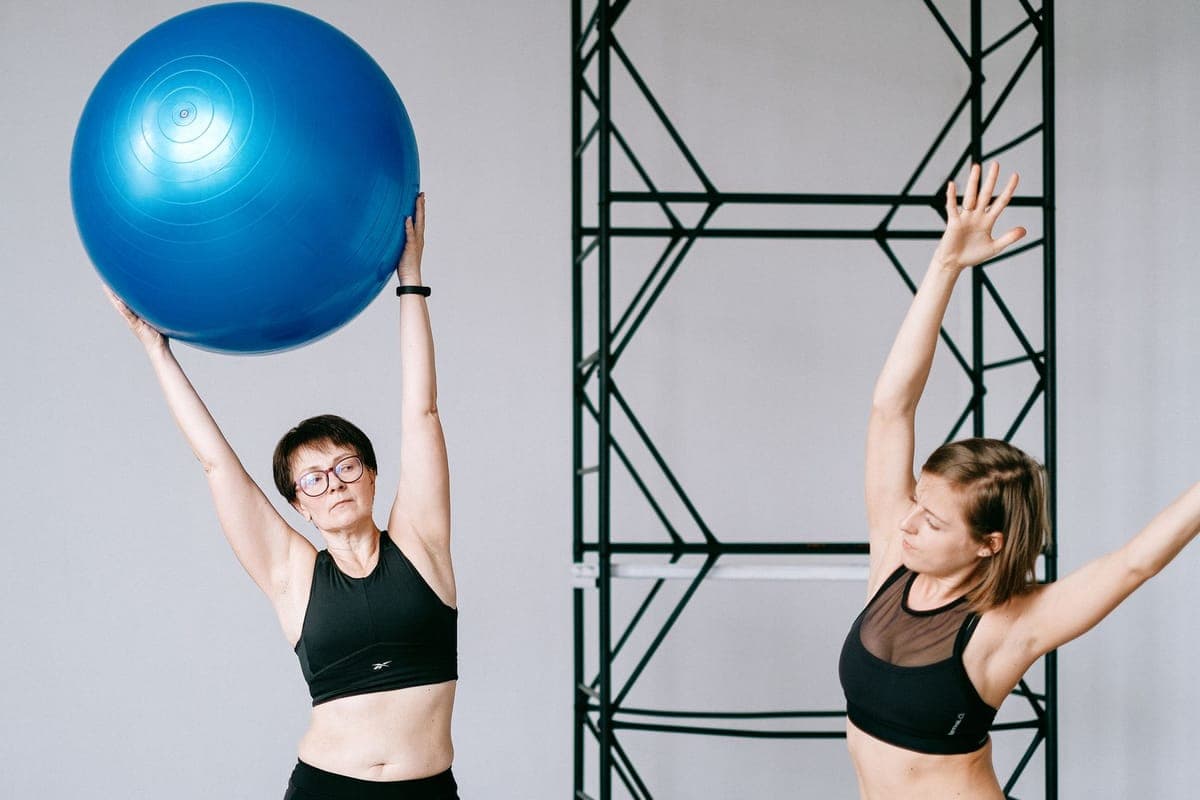
Strength training is the foundation, but a layered plan covering cardio, mobility and recovery works harder during perimenopause than any single workout.
The short answer on the best exercise for perimenopause
If you want one workout to anchor your week during perimenopause, make it strength training. Aerobic work, mobility, and yoga all have a place, but resistance training is the modality with the most direct overlap with what your body is asking for in this life stage. A one-size-fits-all workout plan likely won't be as effective as one targeted specifically focused on those experiencing perimenopause.
Why strength first? Because muscle is the asset doing the heaviest work behind the scenes. It is what keeps your metabolism humming, your bones dense, and your joints supported. Without putting in the work to keep it, we can lose up to 5% of muscle per decade by the age of 30, with the rate of decline increasing significantly after the age of 65, per a sarcopenia overview referenced via WebMD. Perimenopause doesn't create that loss, but the hormonal shifts that come with it can speed up the slide if you aren't actively pushing back.
The second piece is honest: no single workout will resolve the full collection of symptoms you might be juggling right now. The right plan is layered. Strength is the base, and cardio, mobility, and mind-body work sit on top of it depending on what your body is asking for. The rest of this article breaks down how to build that layered plan, what the evidence actually supports, and where to be cautious.
Why perimenopause changes the exercise equation
Perimenopause is the transition window before your final period, and it can run for several years. Oestrogen and progesterone are fluctuating rather than simply dropping, which is why symptoms can feel unpredictable from month to month.
That hormonal shift has a few direct knock-on effects for training. First, the body's relationship with muscle changes. The natural loss of muscle that happens with age becomes harder to outrun, and the loss accelerates meaningfully after 65. So building and maintaining muscle during perimenopause is one of the highest-leverage things you can do for the decades ahead.
Second, body composition shifts. Many women notice weight gain, particularly around the midsection, even without changing how they eat. Strength training during menopause specifically may help to reduce 'meno belly' and the overall weight gain that is often associated with changing hormones, per the research summaries FFH draws on. Read that carefully: it is framed as may help and is associated with, not as a cure.
Third, the brain and mood piece. Menopause can be associated with an increased risk for changes in mental health, such as increased anxiety, depression, and overall low mood. Exercise is consistently associated with better mood outcomes, but that is different from claiming it treats depression or anxiety. If your low mood is persistent or interfering with daily life, that's a conversation for your GP.
What the evidence actually says about exercise and perimenopause symptoms
The symptoms that send most women searching for answers tend to cluster around four areas: hot flashes, sleep, mood, and libido. Here is what the research summaries used for this article say, in plain language.
Hot flashes. Around 75% of menopausal women report sudden, periodic increases in body temperature, otherwise known as hot flashes, per a Johns Hopkins Medicine menopause overview. Exercise appears to help. In one study, women who started exercising regularly experienced a 60% reduction in the frequency of hot flashes, cited in a women's mental health resource. Aerobic exercise, in particular, has been associated with reductions in vasomotor symptom frequency in observational research. No exercise protocol eliminates hot flashes for everyone, and individual responses vary.
Sleep. A similar number of women report an increase in sleep disturbances once menopause hits, per a PMC article on sleep disturbances. The mechanism is partly hormonal and partly downstream of night sweats, mood shifts, and racing thoughts. Movement during the day tends to support better sleep onset and quality for most people, and yoga in particular has been studied here. Women who attended yoga classes experienced less insomnia than the control group of women, who did not attend, in a study summarised in the Harvard Health newsletter on yoga.
Libido and sexual function. More than half of menopausal women suffer from low libido, per a PMC article on female sexual function. The drivers are layered: hormonal, psychological, relational, and physical. Yoga has shown promising results in one specific study. In that study, 3 out of 4 women who committed to a 12-week, one-hour daily yoga regimen reported increases in sexual desire, arousal, lubrication, and orgasm, as well as a decrease in pain, with women over age 45 claiming the largest improvements across all focus areas, per the Harvard Health newsletter. That is one study, with a demanding one-hour-daily protocol, so treat it as encouraging rather than prescriptive.
Mood. As above, exercise is associated with improved mood in this population. Yoga, walking, swimming, and resistance training all have evidence behind them for general mood benefits. None of this replaces clinical care for anxiety or depression, which deserve a GP conversation.
Common mistakes when training in perimenopause
A few patterns show up repeatedly in the women I hear from, and they tend to slow progress rather than speed it up.
Doing only cardio. Steady-state cardio has its place, but if it is doing all the work in your week, you are leaving muscle and bone on the table. Perimenopause is the time to add, not replace.
Training too aggressively. The temptation to "shred" or "outrun" the changes happening in your body can lead to overtraining, disrupted sleep, and elevated cortisol, all of which can worsen perimenopause symptoms. More is not always better; consistency is.
Ignoring recovery. Sleep is when a lot of the hormonal and muscular adaptation happens. If your sleep is wrecked, your training is working with a smaller budget than you think. Build recovery into your plan as deliberately as you build sessions.
Following plans designed for a different life stage. A workout built for a 25-year-old athlete or a 70-year-old beginner is not necessarily right for a 45-year-old navigating perimenopause. A one-size-fits-all workout plan likely won't be as effective as one targeted specifically for those experiencing perimenopause. Translation: personalisation matters.
Skipping pelvic floor work. Perimenopause is a good time to start, not finish, paying attention to your pelvic floor. If you have specific symptoms, a women's health physiotherapist is the right person to assess and guide you. Exercise can support pelvic floor function; it does not replace assessment.
How this differs across life stages
The same general principles of strength training, aerobic conditioning, mobility, and recovery apply across adulthood. What shifts in perimenopause is the ratio and the priority.
In your 30s, you can usually get away with less precision. Sleep rebounds faster, muscle recovers quicker, and small dips in training don't show up immediately. You can lose up to 5% of muscle per decade by the age of 30 even before perimenopause enters the picture, which is why strength work earlier pays dividends later.
In perimenopause, the priority is preserving and building muscle, protecting bone density, and managing symptoms that interfere with consistency. Recovery becomes a more active project, not a passive hope.
Post-menopause, the same pillars hold, with more emphasis on balance, joint-friendly loading, and bone-protective work. The rate of muscle loss increases significantly after the age of 65, so the women who arrive at that decade with more muscle in the bank tend to handle it better.
If you are in your late 30s or early 40s and reading this ahead of symptoms, the message is the same. Strength now is a hedge against later.
What to do this week
A practical, layered starting point, not a complete program.
1. Book two strength sessions this week. Aim for 30 to 45 minutes each, covering the major movement patterns: squat or hinge, push, pull, and a loaded carry or core bracing element. Use a weight that feels challenging by the last three or four reps of a set. If you are new to lifting, a women's health physiotherapist or a qualified strength coach can set you up with a starting program.
2. Add one zone-two aerobic session. This is work you can hold a conversation during: brisk walking, easy cycling, swimming, rowing. Forty-five minutes is plenty. This is the modality associated with the 60% reduction in hot flashes in the study cited above.
3. Try a yoga or mobility session on a third day. Twenty to forty-five minutes. A consistent practice has been associated with reduced insomnia in study settings and with sexual function improvements in a 12-week daily protocol, though you do not need an hour a day to benefit.
4. Audit your sleep and recovery. Pick one sleep lever to pull this week: a consistent bedtime, a cooler bedroom, less screen time before sleep, or a wind-down routine. Sleep is the multiplier on everything else.
5. Check in with your team. If symptoms are intruding on daily life, talk to your GP. For pelvic floor concerns, see a women's health physiotherapist. For nutrition questions, an Accredited Practising Dietitian is your best resource for individualised guidance.
6. Reassess in four weeks. Track how you feel across sleep, mood, hot flashes, energy, and strength in the gym. Adjust from there.
One final note before you start. If you are postnatal, get clearance from your GP or women's health physiotherapist at your 6-week check or later before returning to or beginning a structured program.
Educational content only. Not a substitute for medical advice. Talk to your doctor about your specific situation.
References
Common Questions
What is the best exercise for perimenopause?
Strength training is widely considered the most valuable anchor for perimenopause workouts because it directly supports the things hormonal changes tend to undermine, including muscle mass, bone density and metabolic health. Resistance work does not need to mean heavy barbells; bodyweight movements, dumbbells, resistance bands and machines all count. Pair strength sessions with aerobic exercise for heart health, mobility work for joint comfort and mind-body practices such as yoga for sleep and stress. A layered weekly plan that prioritises strength, then adds the other pieces to taste, tends to be more sustainable than any single workout on its own.
How often should I strength train during perimenopause?
Most general guidance for women in this life stage points to two to three strength sessions per week, covering all major muscle groups, as a sensible starting point. Sessions of 30 to 45 minutes are usually enough, especially when paired with adequate recovery and sleep. Spacing sessions across the week, rather than stacking them, gives your body time to adapt and reduces fatigue when symptoms are flaring. If you are new to resistance work or returning after a break, starting with one session a week and building gradually is a reasonable approach. A women's health physiotherapist or an accredited exercise professional can help you tailor frequency to your training history and any symptoms you are managing.
Can exercise help with perimenopause hot flashes and sleep problems?
Evidence suggests regular exercise is associated with fewer and less frequent hot flashes for many women, along with improvements in sleep onset and overall sleep quality. Aerobic activity and yoga have both been studied in this area, with observational research linking consistent movement to better sleep outcomes and reduced vasomotor symptom frequency. That said, no exercise protocol eliminates hot flashes for everyone, and individual responses vary quite a bit. Pairing daytime movement with good sleep hygiene, a cool bedroom, and a conversation with your GP about persistent symptoms tends to give the best results.
Does strength training help with perimenopause weight gain and belly fat?
Strength training during perimenopause may help to reduce weight gain, particularly around the midsection, that is often associated with changing hormones. Muscle is metabolically active, so preserving and building it supports a healthier resting metabolic rate, which can make body composition easier to manage. Cardio still has a role for heart health and calorie expenditure, but on its own it tends not to offset the muscle and bone changes of this life stage. Pair resistance work with adequate protein across meals and a sleep routine that supports recovery. Talk to your GP or an Accredited Practising Dietitian about your specific situation if weight changes feel rapid or distressing.
Is it safe to do intense workouts during perimenopause?
For most women without specific medical conditions, moderate to challenging strength and aerobic work is safe and beneficial during perimenopause. The bigger risk for many women is doing too little, not doing too much, since the muscle, bone and cardiovascular protection that exercise offers becomes more important in this life stage. That said, recovery needs can shift, especially when sleep is poor or stress is high, so listening to your body on any given day matters. If you have symptoms such as heavy bleeding, significant joint pain, or new cardiac concerns, talk to your GP before pushing intensity. A gradual build, with deload weeks when life gets hectic, is a sustainable approach.
Jess Mizzi, CPT
Certified Personal Trainer and founder of FitForHer. Specialises in women's life-stage specific fitness — postnatal recovery, perimenopause, and menopause. About Jess →
Medical disclaimer: This article is for informational purposes only and does not constitute medical advice. Always consult a qualified healthcare professional before making changes to your exercise or nutrition programme.