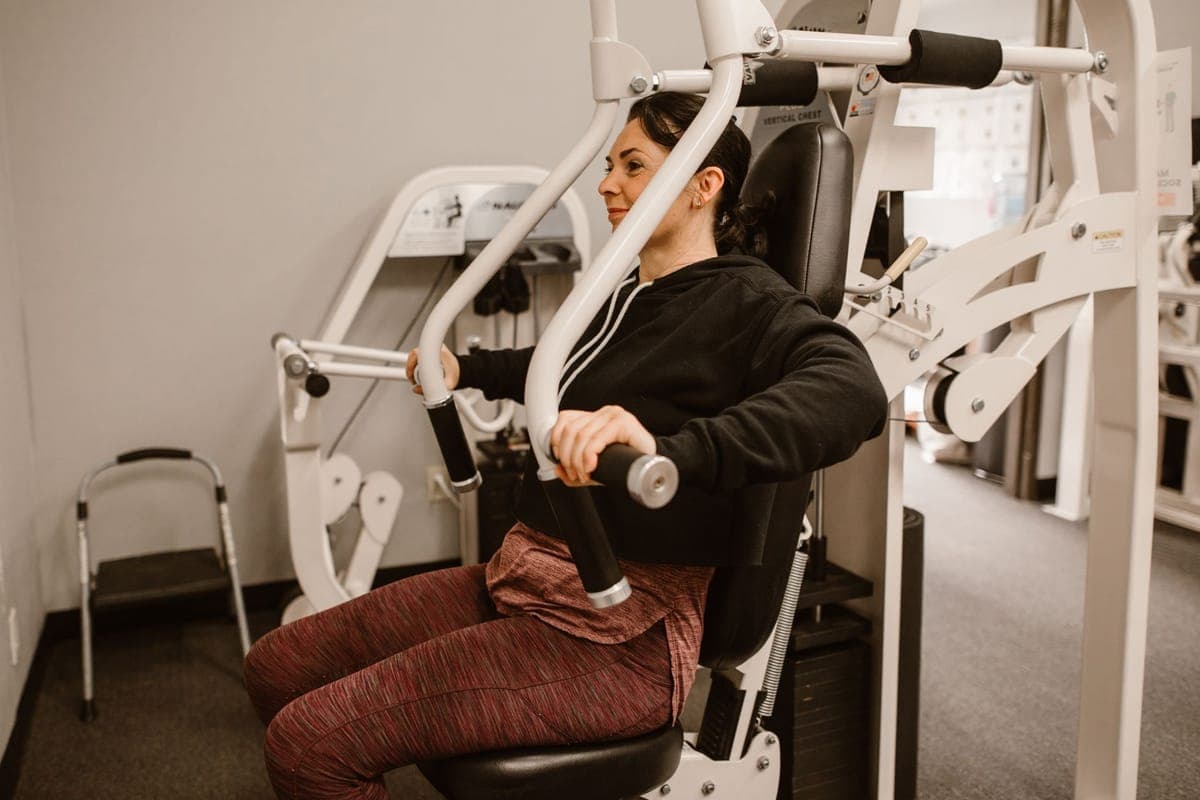
There's no single workout that fixes PCOS, but there's a clear shape to what helps, and it's more flexible than the internet suggests.
The best exercise for PCOS isn't one thing, and that's actually good news
If you've just been told you have PCOS, or you've been managing it for years, the question on your mind is usually some version of this: what is the best exercise for PCOS? Honest answer: there isn't a single workout that unlocks the condition. But there is a clear, evidence-informed shape to what helps, and it's more flexible than the internet usually lets on.
PCOS is a hormonal and metabolic condition that can affect people of any age who have ovaries. It's more common than many people realise, with an estimated 11 to 13% of women worldwide affected, according to a Hinge Health article on the condition. There's no cure, but there are many ways to manage symptoms, and regular movement can play an important role in that picture.
The newest framing is worth knowing too. In May 2026, the condition was renamed polyendocrine metabolic ovarian syndrome (PMOS) to more accurately reflect what it is: an endocrine and metabolic disorder, not just a reproductive one. The name change matters because it shifts the conversation away from "ovary problem" and toward "metabolic and hormonal system problem," which is closer to how the condition actually behaves day to day.
Why movement works: the metabolic piece most people skip
The mechanism that ties PCOS together for many women is insulin resistance. Insulin resistance is common with PCOS and can contribute to higher insulin and androgen levels, which then shape symptoms like irregular cycles, acne, hair changes, and weight changes around the middle.
Exercise helps here because muscle is metabolically active. When you build and use muscle, your body becomes more responsive to insulin, so it doesn't need to pump out as much to do the same job. Over time, that can support more stable blood sugar, more stable energy, and a less androgen-heavy hormonal environment. None of this is overnight, and the response is individual, but the direction is consistent with what researchers see.
This is also why the conversation has moved away from "just do more cardio" and toward strength and aerobic work combined. Both have a role. They do different jobs.
What the evidence actually says about exercise and PCOS
Two patterns show up consistently in the research.
First, strength training using weights, resistance bands, or your own body weight two to three times per week can help build muscle and support metabolic health. Muscle is the tissue that pulls glucose out of the blood, and more of it gives you a bigger buffer on the days your meals, sleep, or stress are less than perfect.
Second, you can gradually work toward 150 to 300 minutes of moderate-intensity aerobic activity per week. "Moderate" here means you can still talk in sentences, but you're working. A brisk walk, a cycle, a swim, a dance class, lapping the pool while your kids swim, all of it counts.
Neither of those targets is a magic number. They are dose ranges used in international physical activity guidelines, and they describe where the benefits tend to show up. Going from nothing to a 20-minute walk three times a week is a bigger change, proportionally, than adding a fourth session to someone already training five days.
A lot of women with PCOS also do better when they layer in gentle, restorative movement: walking after meals, mobility work, yoga, swimming. These aren't bonuses. They support the stress and recovery side of the picture, which matters more than most programs acknowledge.
The mistake that quietly makes PCOS harder to manage
The most common exercise mistake with PCOS isn't doing too little. It's doing too much of the wrong thing, in the wrong context.
Doing excessive high-intensity exercise without enough rest, or while under-eating severely, can elevate cortisol, the stress hormone, and potentially worsen insulin resistance and hormonal imbalances. That's the opposite of what you want. It can also flatten your energy, disrupt sleep, and make the next session feel punishing, which sets off another bad cycle.
A simple frame: if your training is leaving you hungrier, more anxious, sleeping worse, and missing periods, the program is too aggressive, not you. Dial back, add food, swap a high-intensity session for a walk, and reassess in two to three weeks.
This is also why the daily check-in matters more than the weekly plan. Hormones are so variable that it's better to ask, "How is my body doing today?" instead of focusing on what you did yesterday or last week. A heavy training block during a high-stress work week might be the wrong week to push. A lighter week after a bad flare might be the week a walk does more than a HIIT class.
How this looks across life stages
PCOS behaves differently depending on where you are hormonally, and so does the exercise response.
In your twenties and thirties, the work is often about building a base: consistent strength training, building aerobic capacity, and stabilising blood sugar through regular meals and movement. This is the stage where the metabolic benefits of strength training compound fastest, because you're building muscle on a body that recovers quickly.
In your forties, the picture shifts. Perimenopause is its own hormonal transition, and layering PCOS on top of it can make symptoms louder. The exercise answer doesn't change much, but the recovery requirement does. The same workout that felt easy at 32 might need an extra rest day at 44. Strength training becomes even more important because muscle is one of the best defences against the metabolic slowdown of this decade.
If you're trying to conceive, or thinking about it, the conversation gets more specific. This is where working with a healthcare provider, such as an OB-GYN or endocrinologist, as well as an Accredited Practising Dietitian who specialises in endocrine conditions, becomes worth its weight in gold. Exercise in this phase is generally about supporting ovulation and metabolic health, not pushing performance, and the plan should be tailored to where your body is right now.
If you're postpartum and managing PCOS, the priorities reset again. The clearance point is your GP or women's health physiotherapist at your six-week check or later. From there, rebuilding slowly, with strength work that respects abdominal recovery, is the path. Returning to intense exercise too early can set back both recovery and hormonal stability.
Common misconceptions worth clearing up
A few things keep coming up in conversations with women managing PCOS that are worth correcting.
You don't need to lose weight to "fix" PCOS. Weight is a poor goal metric for this condition because hormonal and metabolic improvements can happen without significant weight change, and weight-focused goals often pull women toward the under-eating trap that makes insulin resistance worse.
Lifting weights won't make you "bulky." This is a stubborn one. Building muscle is the point, and the visual outcome most women fear doesn't match what actually happens when women strength train at a moderate dose a few times a week.
Cardio isn't the answer on its own. Long cardio sessions without strength work can actually drive the cortisol and under-fuelling pattern that worsens symptoms. Pair them.
You don't need a perfect plan to start. The research shows the best exercise for PCOS is the one you can do consistently, recover from, and adjust based on how your body is responding this week.
What to do this week
Here's a concrete starting point. Pick what fits your current week and don't add more if your body is asking for less.
Strength training, two to three sessions this week. Forty-ish minutes. Pick moves that use your legs, your back, and your chest or push-pull work. Squats or leg presses, hinges like a Romanian deadlift or hip hinge, a row, a push-up variation, and a loaded carry if you have access to something heavy. Bands and bodyweight are fine for most of these.
Aerobic movement, building toward 150 to 300 minutes across the week. Start where you are. If that's two 20-minute walks, that's two 20-minute walks. Add a minute or two each week if it feels good. Brisk walking after meals tends to do more for blood sugar than the same walk done later.
Recovery built in, not bolted on. One or two genuinely easy days. Sleep protected as best you can. Meals timed so you're not training fasted and not training stuffed. A short walk or stretch session on rest days is fine and often helpful.
One check-in per day. A 30-second scan: how's my energy, how's my hunger, how's my mood. Adjust the day's plan to the answer, not the other way around.
One conversation. Book or keep an appointment with your GP, an endocrinologist, or an Accredited Practising Dietitian who works with endocrine conditions to make sure your training and food plan line up with your specific picture. If you're trying to conceive or you're postpartum, this is the week to loop in your OB-GYN and a women's health physiotherapist too.
One small experiment. Pick one thing to track for two weeks: post-meal walks, sleep duration, or strength session frequency. See what changes. Use that, not the scale, as your progress marker.
The shape of the answer, week to week, stays roughly the same: strength training a few times a week, aerobic movement you can recover from, recovery taken seriously, and a team around you that includes your GP, your women's health physiotherapist where relevant, and an Accredited Practising Dietitian. The details inside that shape shift with your hormones, your sleep, your stress, and your season of life. That's not a failure of the plan. That's the plan working.
Educational content only. Not a substitute for medical advice. Talk to your doctor about your specific situation.
References
- Teede, H. J., Mahnaz Bahri Khomami, Morman, R., Laven, J. S. E., Joham, A. E., Costello, M. F., Patil, M., Rees, D. A., Berry, L., Cree, M. G., Zhao, H., Norman, R. J., Anuja Dokras, & Terhi Piltonen. (2026). Polyendocrine metabolic ovarian syndrome, the new name for polycystic ovary syndrome: A multistep global consensus process. The Lancet, 0(0). doi:10.1016/S0140-6736(26)00717-8
- Wang, J., Wang, B., Li, C., Meng, T., Liu, C., Chen, J., & Guo, Y. (2025). Evolving global trends in PCOS burden: A three-decade analysis (1990–2021) with projections to 2036 among adolescents and young adults. Frontiers in Endocrinology, 16. doi:10.3389/fendo.2025.1569694
- Piltonen, T. T., Kuusiniemi, E., & Teede, H. (2026). Ovarian cysts in polycystic ovary syndrome. JAMA Internal Medicine. doi:10.1001/jamainternmed.2026.1370
- Ghafari, A., Maftoohi, M., Samarin, M. E., Barani, S., Banimohammad, M., & Samie, R. (2025). The last update on polycystic ovary syndrome(PCOS), diagnosis criteria, and novel treatment. Endocrine and Metabolic Science, 17, 100228. doi:10.1016/j.endmts.2025.100228
- Sabag, A., Patten, R. K., Moreno-Asso, A., Colombo, G. E., Bouzo, X. D., Moran, L. J., Harrison, C., Kazemi, M., Mousa, A., Tay, C. T., Hirschberg, A. L., Redman, L. M., & Teede, H. J. (2024). Exercise in the Management of Polycystic Ovary Syndrome: a position statement from exercise and sport science Australia. Journal of Science and Medicine in Sport, 27(10). doi:10.1016/j.jsams.2024.05.015
Common Questions
What is the best exercise for PCOS?
There isn't one single best exercise for PCOS, and that's actually good news. Evidence suggests a combination of strength training two to three times per week and gradually building toward 150 to 300 minutes of moderate-intensity aerobic activity each week. Adding gentle, restorative movement like walking after meals, yoga, or swimming supports recovery and stress regulation. The best programme is one you can repeat consistently without spiking cortisol or leaving you exhausted.
Is cardio or strength training better for PCOS?
Both have a role, and the research points to combining them rather than choosing one. Strength training helps build muscle, and muscle is the tissue that pulls glucose out of the blood, which supports insulin sensitivity over time. Aerobic activity supports cardiovascular health, mood, and energy expenditure. The mistake many women make is doing excessive high-intensity cardio without enough rest or fuel, which can raise cortisol and potentially worsen hormonal imbalance. A balanced weekly mix tends to work better than either style alone.
Can exercise alone fix PCOS?
Exercise is one important piece of the picture, but it's not a standalone fix. PCOS is a hormonal and metabolic condition, and management typically involves movement, nutrition, sleep, stress regulation, and sometimes medical support. Regular physical activity may support more stable blood sugar, better insulin sensitivity, and a less androgen-heavy hormonal environment, though responses are individual. Talk to your doctor about your specific situation, and consider working with an Accredited Practising Dietitian alongside an exercise professional who understands PCOS.
How many days a week should I work out with PCOS?
Most evidence-based recommendations suggest strength training on two to three non-consecutive days per week, paired with aerobic activity spread across most other days. If you're starting from a low baseline, a 20-minute walk three times a week is a meaningful first step and a bigger relative change than adding sessions to someone already training often. The goal is sustainable frequency rather than maximum intensity, especially if high-intensity work leaves you more hungry, anxious, or sleep-deprived. Listen to your body's daily signals and adjust the week as needed.
Can too much exercise make PCOS worse?
Yes, this is a common and under-recognised issue. Doing excessive high-intensity training without adequate rest or nutrition can elevate cortisol, which may worsen insulin resistance and hormonal imbalance rather than improve them. Warning signs include feeling hungrier but not recovering, disrupted sleep, rising anxiety, missing periods, and flat energy between sessions. If you notice these patterns, dial back intensity, add fuel around your training, and swap a hard session for a walk. Reassess after two to three weeks, and talk to your doctor if symptoms persist.
Jess Mizzi, CPT
Certified Personal Trainer and founder of FitForHer. Specialises in women's life-stage specific fitness — postnatal recovery, perimenopause, and menopause. About Jess →
Medical disclaimer: This article is for informational purposes only and does not constitute medical advice. Always consult a qualified healthcare professional before making changes to your exercise or nutrition programme.